
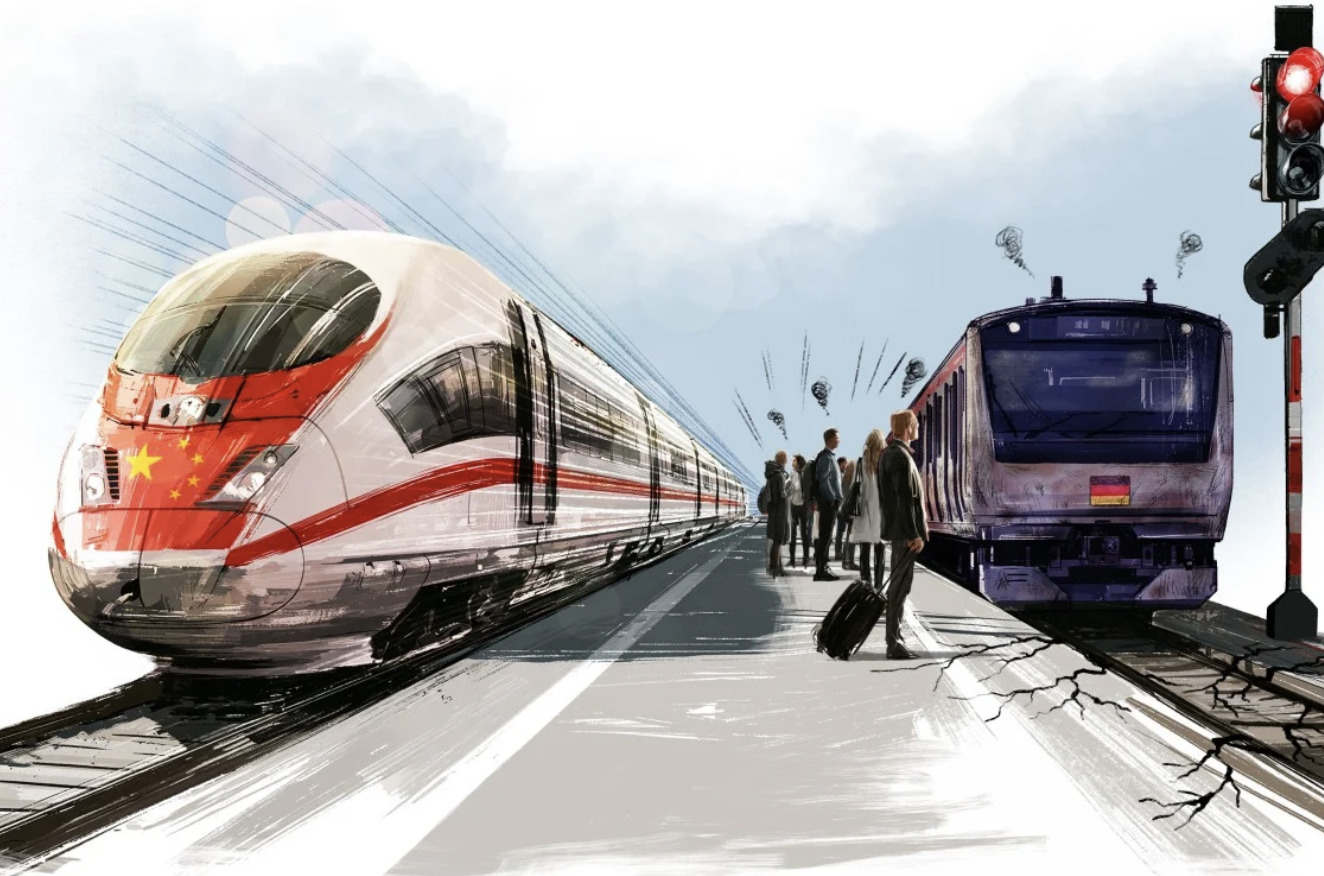
A Stark Contrast in Rail Quality
Currently, the stark contrast between China and Germany’s railway systems highlights significant infrastructure gaps. Specifically, twenty-one years ago, Germany’s empty, clean, and highly punctual trains deeply impressed international visitors. Furthermore, Germany was a major technology exporter, officially selling China 60 high-speed trains back in 2005. Consequently, China has rapidly built the world’s largest high-speed railway network, consistently keeping over 95 percent of trains on time. Ultimately, delays have sadly become routine across Germany’s aging and overloaded network, with punctuality plummeting to 52.6 percent this summer.
Sustained Funding vs. Budget Limits
Meanwhile, China successfully sustains massive infrastructure development through heavy government backing and long-term planning. For instance, Beijing has consistently topped 700 billion yuan in annual railway investment for the past decade. In addition, central budgets and a specific railway construction fund guarantee stable, uninterrupted financing. Conversely, Germany operates under strict constitutional provisions that have tightly limited government borrowing since 2011. Therefore, the German operator Deutsche Bahn struggles to maintain profitability while simultaneously managing an aging, crumbling rail network.
Infrastructure Underinvestment
Moreover, analysts confirm that years of severe underinvestment have finally caught up with Germany’s transport sector. In fact, passenger traffic has surged over 45 percent since the mid-1990s, while the network actually shrank. Similarly, fast and slow trains are forced to share the same tracks, causing disruptive delays to ripple everywhere. However, reversing this decline carries a massive cost, currently estimated at €106 billion just to replace worn-out equipment. As a result, even though Berlin set up a special infrastructure fund, underlying labor shortages still completely overwhelm the entire system.
Economic Impacts and Competitiveness
On the other hand, this severe infrastructure crisis actively harms German business competitiveness on the global stage. Particularly, a record 84 percent of surveyed German firms reported that poor transport infrastructure regularly hampers their daily operations. Additionally, among those affected companies, 71 percent specifically pointed to the failing railway network as a major obstacle. For example, business executives continuously complain about late trains, deteriorating roads, and hundreds of vital bridges needing immediate rebuilding. In conclusion, experts warn that political short-term thinking prevents Germany from sustaining essential investments beyond standard four-year election cycles.
Reference
Huang, H. (2026, September 29). In Focus | How years of thin investment have stalled Germany’s rail network as China’s speeds ahead. South China Morning Post. https://www.scmp.com/economy/global-economy/article/3369202/how-years-thin-investment-have-stalled-germanys-rail-network-chinas-speeds-ahead