
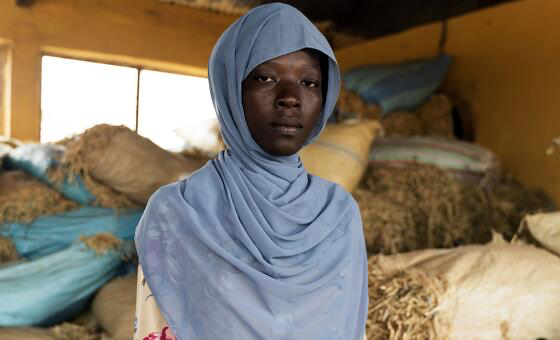
As internal conflicts continue to fragment regional security across East Africa, the intensifying Sudan displacement crisis hunger emergency has reached a dangerous tipping point. United Nations humanitarian officials confirmed that over 100,000 internally displaced persons (IDPs) are now crowding into temporary shelters in the strategic city of El Obeid. Forced to flee active combat zones, these vulnerable populations face critical shortages of life-saving provisions within severely underfunded relief camps.
A Mass Exodus Floods Overburdened Regional Camps
To evaluate the true scale of this unfolding catastrophe, aid workers are monitoring the dramatic influx of families arriving from surrounding conflict sectors. El Obeid, the capital of North Kordofan state, has transformed into a massive refuge point for civilians escaping continuous fighting.
According to the UN World Food Programme, severe resource shortages mean that field teams cannot keep pace with the massive daily arrivals.
The rapid population surge has completely overwhelmed the city’s baseline infrastructure. Local water purification networks, medical clinics, and essential fuel reserves are near total exhaustion. Consequently, the Sudan displacement crisis hunger metrics are spiking rapidly as internal refugees compete for highly limited survival assets.
The World’s Largest Internal Displacement Tragedy
This localized bottleneck in North Kordofan reflects a much wider, systemic failure of regional stability networks. The ongoing war has displaced over ten million people, officially making it the largest internal displacement crisis on Earth.
Currently, nearly 20 million citizens across the country are classified as acutely food insecure. UN agencies are attempting to deliver emergency aid to roughly five million of the most vulnerable individuals who face catastrophic starvation risks. However, ongoing fighting and severe budget limitations prevent fields teams from accessing the remaining fifteen million people in need. As a result, acute malnutrition rates among infants are climbing to unprecedented levels.
Severe Funding Deficits Stop Essential Aid Flows
For international development organizations and global humanitarian entities, this crisis presents an immense operational challenge. The international aid appeal for the region remains heavily underfunded, receiving less than a third of the capital required to run baseline operations.
Furthermore, maintaining this extreme funding gap forces field workers to implement strict rationing protocols. Families frequently receive less than half of their mandatory daily caloric intake simply because physical food stores are empty. The UN strongly emphasizes that without an immediate cash injection from global donors, aid operations in North Kordofan face a complete shutdown by next month. Ultimately, leaving these camps unsupplied guarantees a massive, preventable spike in mortality rates.
The Complicated Path to Regional Food Security
Re-establishing secure agricultural production and rebuilding broken transport corridors will require a prolonged period of diplomatic mediation and verified ceasefires. The traditional aid frameworks are entirely inadequate for managing a crisis of this geographic scale.
Moving forward, international stakeholders must prioritize establishing secure, unhindered humanitarian access routes to the interior states. Success in this highly volatile environment requires setting up independent supply paths that bypass active combat areas completely. Ultimately, the pressing challenge for global leadership is fully funding these emergency food lines before the remaining local buffers completely collapse into permanent ruin.
United Nations. (2026). Hunger deepens for displaced families in Sudan’s El Obeid. Welcome to the United Nations. https://www.un.org/en/hunger-deepens-displaced-families-sudan%E2%80%99s-el-obeid