
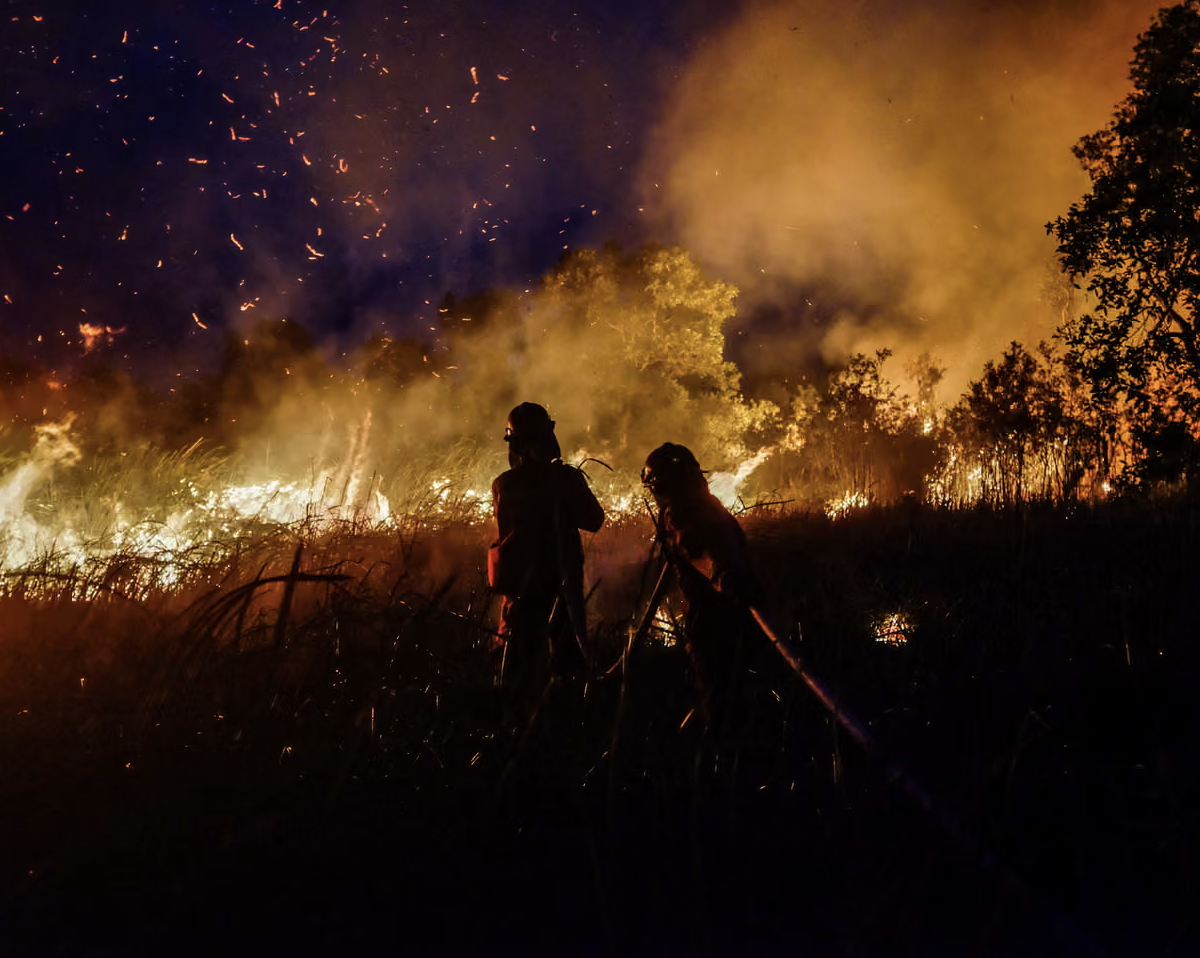
In Indonesia’s Kalimantan, fires have ravaged tens of thousands of acres, with suffocating smoke reaching Malaysia and putting Singapore on alert. Suwadi, a resident of Indonesian Borneo, can barely see five metres in front of him when he steps outside. Each breath, he says, feels “like smoking a cigarette.” It has been like this for weeks.
In West Kalimantan, there has been a spike in emergency room visits. About 5,000 people have arrived with respiratory symptoms each week since July, compared with 500 per week in the first half of the year. Some classes have been suspended, with parents urging schools to switch to online learning.
Fires each year in Kalimantan are often blamed on “slash and burn” techniques used to clear land for palm oil plantations. Authorities say this year’s “super” El Niño may be intensifying the blazes, with the weather phenomenon expected to peak in September. Experts have warned the worst could be yet to come as the dry season continues into October. Rains that could extinguish the fires look unlikely before November.
The haze is fast becoming a regional issue. Malaysia and Brunei have agreed to raise it at ASEAN. On Tuesday, Kuala Lumpur was the most polluted city on earth, followed by Jakarta, according to IQAir. Almost 600 schools in Sarawak closed due to hot and dry conditions. Singapore went on alert.
Forestry ministry data shows that nearly 94,000 hectares have burned nationwide in July alone. On Monday, President Prabowo Subianto ordered authorities to revoke business permits of corporations suspected of directing land clearing. Police arrested 72 people suspected of starting fires. Most are accused of deliberately burning land to clear areas for plantations.
But some Indonesians have expressed frustration at what they see as government inaction against the companies allegedly involved. Indonesia’s rainforests are home to peatland ecosystems, which should be naturally resilient to fire when water tables remain high. However, drainage networks built to clear land have robbed the soil of its natural capacity to retain water.
Fires on degraded peatlands are more difficult to control because they burn deep underground and produce thick, acrid smoke. A professor in climate change stated: “If authorities only act after hotspots appear, they will forever be playing catch-up. True prevention must address the soil itself by halting the conversion of peatlands and actively restoring degraded areas.”
On Monday, another fire broke out near the factory where Suwadi works. With houses burning and smoke everywhere, Suwadi says he is afraid for the future of the region. “The fire is getting dangerously close to homes,” he says. “People are in panic now.”
Reference
The Guardian, “‘Like smoking a cigarette’: Indonesia chokes on haze as blazes intensify amid super ‘El Niño’,” published August 25, 2026.