
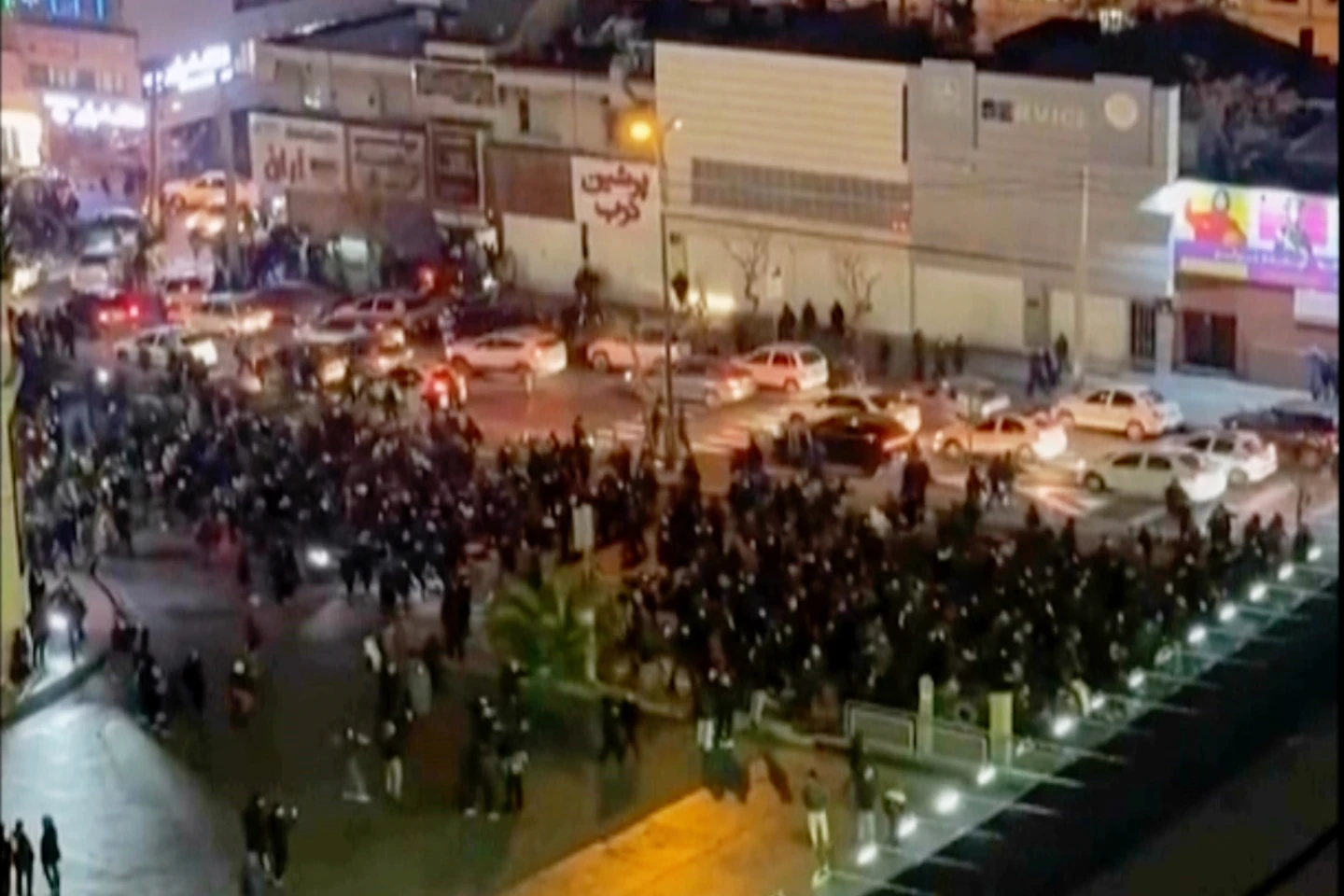
This frame grab from a video released Friday, Jan. 9, 2026, by Iranian state television shows cars driving past burning vehicles during a night of mass protests in Tehran, Iran.
Iran’s leadership signaled a hardening response to nationwide protests as demonstrations intensified and the reported death toll climbed to at least 50. Supreme Leader Ayatollah Ali Khamenei publicly rejected Trump’s pledge to support protesters, accusing Washington of bloodshed and portraying demonstrators as tools of foreign enemies. State media echoed this framing, labeling protesters “terrorists,” while Iran’s judiciary warned of harsh, uncompromising punishment. The rhetoric pointed toward a familiar pattern: a looming, forceful crackdown as unrest spread and international scrutiny mounted.
Internet cut off
As protests escalated, Iranian authorities severed internet access and international communications, sharply limiting outside visibility into events on the ground. Despite the blackout, activists shared videos showing crowds chanting against the government amid fires and debris in Tehran and other cities. Officials blamed violence on alleged U.S. and Israeli “agents,” acknowledging casualties without providing details. The communications shutdown obscured the scale of the unrest but underscored its seriousness. Protests began over economic collapse but evolved into one of the most significant challenges to the regime in years. Human rights groups reported dozens killed and thousands detained, warning that the blackout likely enabled security forces to act with impunity.
This frame grab from a video released by Iran state TV shows vehicles burning amid night of mass protests in Tehran, Iran,
Thursday night protest preceded internet shutdown
The demonstrations surged after former Crown Prince Reza Pahlavi called on Iranians to take to the streets at a specific hour, prompting coordinated chants across neighborhoods in Tehran and beyond. Protesters shouted slogans against the Islamic Republic and voiced nostalgia for the pre-1979 monarchy, signaling deep anger that went beyond economic grievances. As communications went dark, Pahlavi appealed to European leaders to help restore connectivity so the world could witness the protests. The blackout was framed as an attempt to silence a population demanding change.
Trump renews threat over protester deaths
Trump reiterated warnings that Iran would face severe consequences if security forces killed peaceful demonstrators. A threat that carries added weight after recent U.S. actions elsewhere in the region. While Iranian officials appeared cautious about an immediate, sweeping crackdown, Trump suggested pressure was building inside Iran’s leadership itself with sanctions biting, the currency collapsing, and protests spreading despite repression. Now, the standoff between Iran’s rulers, its citizens and an emboldened U.S. administration entered a volatile new phase. It will be marked by rising casualties, shrinking space for dissent and escalating international tension.
Reference
Gambrell, J. (2026, January 9). Iran signals a crackdown on protesters is coming | AP News. AP News. https://apnews.com/article/iran-protests-us-israel-war-economy-54e4024a0b9e6a9f3ab49153c8e28f05?user_email=bd2c428b35d2f2d999bc6f7e665bad1355a8dd3247b2afc8121729c30cd9a01a&utm_medium=APNews_Alerts&utm_source=Sailthru_AP&utm_campaign=NewsAlert_Jan09_2026_04:27AM&utm_term=AP%20News%20Alerts