
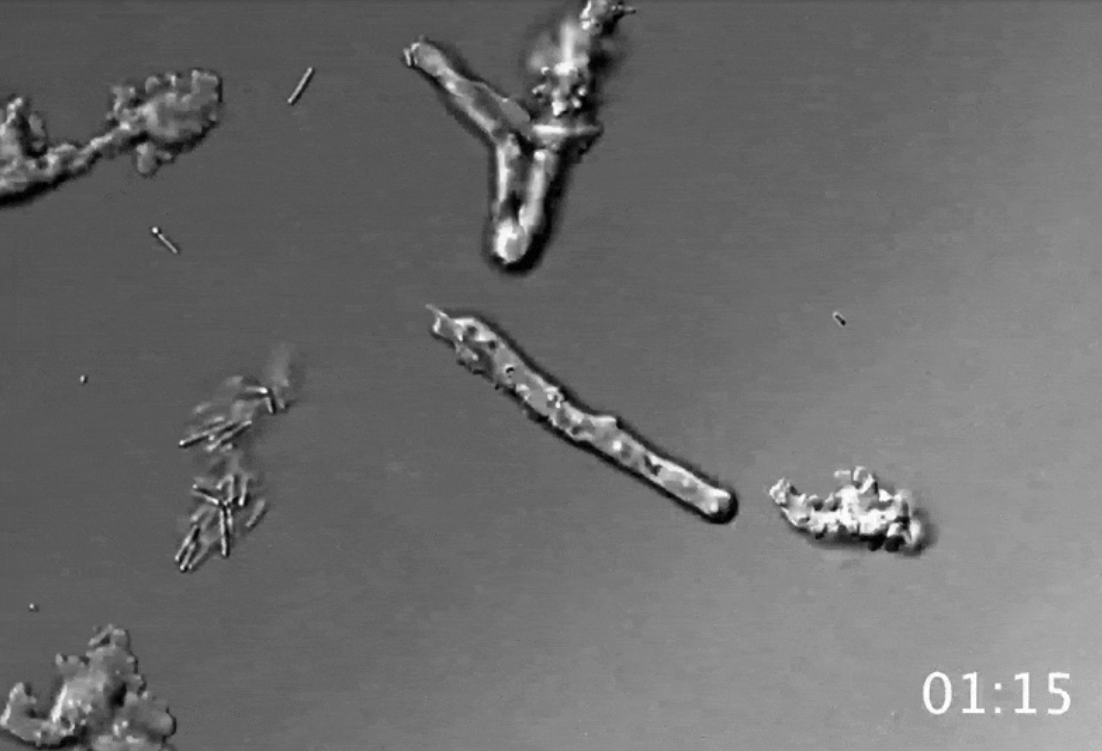
A newly discovered amoeba has challenged previous assumptions about the temperature limits of complex life. The species, Incendiamoeba cascadensis, was found in a geothermal stream at Lassen Volcanic National Park in northern California. Unlike most organisms studied as extremophiles, this amoeba is a eukaryote, meaning that its cell contains a nucleus and other complex structures. Researchers discovered that it can reproduce at temperatures as high as 63 degrees Celsius, establishing a new upper temperature record for known eukaryotic life.
For decades, scientists believed that eukaryotic organisms could not tolerate temperatures much higher than approximately 60 degrees Celsius. High temperatures can damage proteins and other cellular components, making survival particularly difficult for organisms with complex cells. However, I. cascadensis demonstrated unexpected resistance to heat. In laboratory experiments, the amoeba remained active at temperatures up to 64 degrees Celsius and could form a protective coating that allowed it to survive exposure to temperatures reaching 70 degrees Celsius.
Furthermore, researchers examined the organism’s genome and proteome to investigate how it tolerates extreme heat. Their analysis suggests that many of its proteins have higher average melting temperatures than those found in a closely related amoeba. This characteristic could help explain how the organism maintains its cellular functions under conditions that would normally damage proteins. Consequently, studying this species could provide useful information about the biological mechanisms that allow cells to survive extreme environments.
Beyond its importance for biology, the discovery could have implications for astrobiology and biotechnology. Extremophiles help scientists understand the environmental limits in which life can exist, which may provide clues about the possibility of life in extreme environments beyond Earth. Additionally, heat-resistant proteins and enzymes could have practical applications in biotechnology and industry. Therefore, Incendiamoeba cascadensis not only expands our understanding of life on Earth but also raises new questions about where complex life might survive.
Link to the article: DOWNLOAD
Reference
- Thompson, A. (2026, September 23). Newly discovered ‘fire amoeba’ pushes the boundaries of life on Earth. Scientific American. Original article on Scientific American