
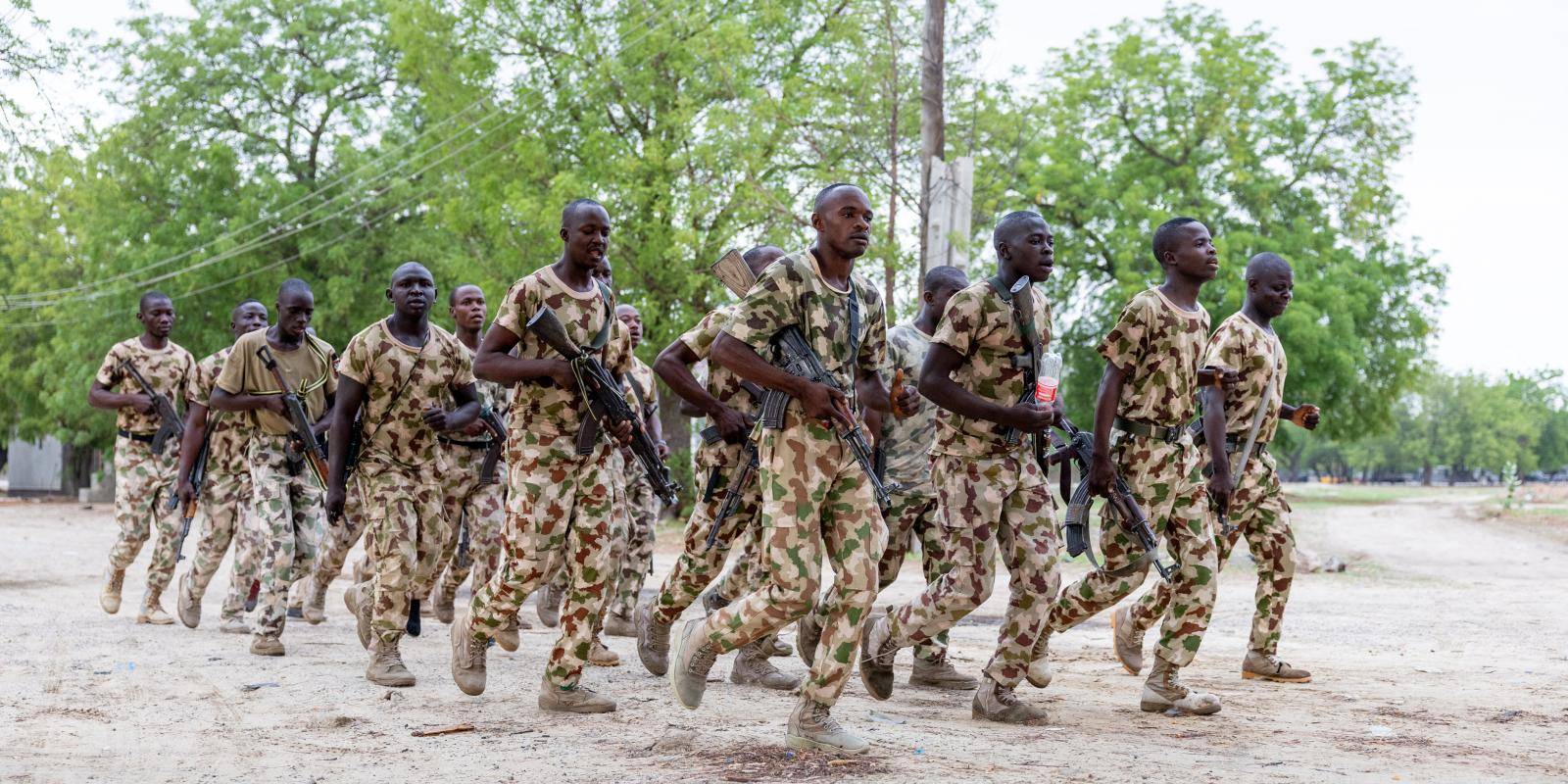
Nigeria’s decision to expand its army reflects the scale of a security crisis that has spread across the country. President Bola Tinubu announced four new military divisions and the recruitment of 28,000 additional soldiers following another mass school kidnapping.
The expansion responds to genuine pressures. With a population of roughly 240 million and only about 100,000 active soldiers, Nigeria faces insurgency, banditry, kidnappings and communal violence with limited military capacity.
In practical terms, a larger force could make an important difference. More troops in rural areas could protect vulnerable communities, disrupt insurgent hideouts and strengthen surveillance along Nigeria’s porous borders.
Greater capacity could also improve cooperation with neighbouring countries facing similar security threats. This has become increasingly important following the weakening of regional security cooperation in West Africa.
The Risk of Becoming Bigger but Not Better
Yet numbers alone cannot resolve the army’s deeper institutional problems. Poor leadership, inadequate training, equipment shortages, corruption and serious human rights concerns continue limiting its effectiveness.
Without meaningful reforms, the expansion could produce what the author describes as a form of “operational stagflation.” Nigeria’s army may become larger while its ability to address complex security threats remains largely unchanged.
Financing the expansion presents another challenge. Higher salaries and thousands of additional soldiers will require increased defence spending, potentially competing with investments in health, education and infrastructure.
Moreover, the army’s internal structure raises further concerns. A disproportionate number of officers hold senior ranks, leaving too many soldiers performing support duties instead of protecting vulnerable communities.
Reform as a Security Strategy
For this reason, military expansion must be accompanied by broader institutional reform. Nigeria’s fragmented security system contains numerous agencies that often compete rather than cooperate, wasting resources and weakening coordination.
Consolidating these institutions could relieve pressure on the army while strengthening the country’s struggling police forces. This becomes especially relevant as Nigeria considers allowing individual states to establish their own police services.
Well-trained state and federal police could assume routine internal security responsibilities, allowing military forces to focus on insurgency and other serious threats. Such reforms would also create opportunities for international partners to provide technical assistance, leadership training and intelligence support.
Ultimately, Nigeria’s security challenge cannot be measured simply by the number of soldiers it deploys. A larger army may offer greater capacity, but institutional weaknesses could limit its impact. The real test will be whether political leaders use this expansion to build a more capable security system rather than merely a larger one.
Reference: Page, M. (2026, August 25). Nigeria will need more than a bigger army to tackle security challenges. Chatham House. https://www.chathamhouse.org/2026/08/nigeria-will-need-more-bigger-army-tackle-security-challenges