
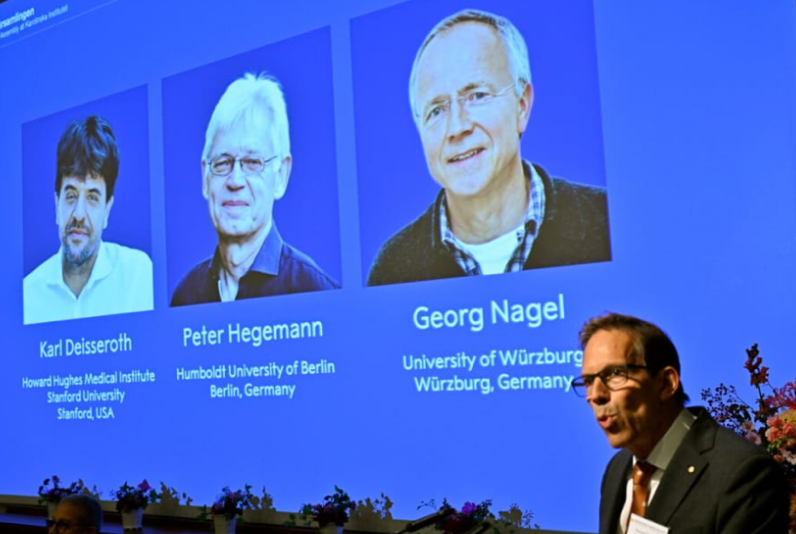
This year’s Nobel Prize in Physiology or Medicine was awarded to Karl Deisseroth, Peter Hegemann, and Georg Nagel for their groundbreaking work on light-gated ion channels and the development of optogenetics. Their combined research allows scientists to control specific brain circuits using light. Hegemann and Nagel originally discovered light-sensitive proteins in single-celled green algae, called channelrhodopsins, which function as light-activated switches. Deisseroth subsequently adapted these proteins for use in the mammalian brain, introducing them into neurons to turn specific cellular targets on or off with millisecond-level precision.
Technological Impact and Medical Applications
Prior to the advent of optogenetics, neuroscientists lacked precise methods to isolate and manipulate specific populations of brain cells without affecting surrounding tissue. Electrical stimulation, for instance, typically activated broad neuronal networks indiscriminately. By granting researchers control over individual cellular pathways, optogenetics has shifted neuroscience from passive observation to causal intervention. Scientists can now examine how distinct circuits generate specific behaviors, form memories, or induce emotional states such as fear and anxiety.
Furthermore, this breakthrough offers substantial clinical promise for treating complex neurological, psychiatric, and neurodegenerative conditions. By identifying exact cellular dysfunctions, researchers can map targets for conditions like Parkinson’s disease, epilepsy, addiction, chronic pain, and depression. Beyond brain function, optogenetic approaches are showing early promise in restoring visual perception in patients with severe retinal degeneration, and their underlying principles are expanding into fields like cardiology and immunology.
In conclusion, the 2026 Nobel Prize in Physiology or Medicine highlights how foundational research in single-celled organisms can fundamentally revolutionize human medicine. By creating a precise molecular switch, the laureates provided scientists with an indispensable tool to unravel the brain’s remaining mysteries and design targeted future therapies.
Reference
Associated Press. (2026, October 5). Nobel medicine prize goes to 3 scientists for shining light on brain activity. AP News. https://apnews.com/article/nobel-prize-medicine-sweden-2efe9ee7eae9d808fd49a6da1f53ceba