
Contingency Planning Memorandum — Council on Foreign Relations (February 2026)
Colombia’s Peace Process at a Critical Turning Point
Over the past decade, Colombia peace accords implementation has become a central test of whether the landmark 2016 agreement can translate into lasting stability and institutional presence in conflict-affected regions. Colombia has undergone a profound transformation over the last three decades, moving from one of the most violent countries in the world toward a more stable democracy. U.S. policy played a major role in this shift, particularly through Plan Colombia, which provided roughly $10 billion in security assistance and helped strengthen state institutions.
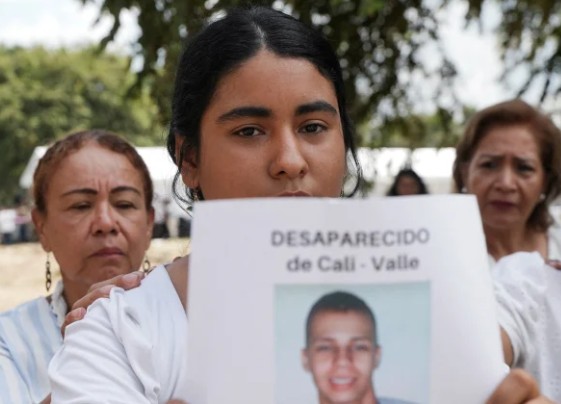
This cooperation later supported negotiations between the Colombian government and the Revolutionary Armed Forces of Colombia (FARC), culminating in the 2016 Peace Accords. The agreement sought to end one of the longest armed conflicts in the Western Hemisphere, which caused approximately 450,000 deaths and millions of victims, including those affected by forced displacement and disappearances.
However, Colombia peace accords implementation now faces serious challenges. Implementation of the accords has been slow and uneven, and violence has begun to increase again in rural areas where state presence remains limited. According to monitoring by the Kroc Institute for International Peace Studies, nearly half of the agreement’s commitments risk failing to meet the fifteen-year implementation timeline.
Rising Violence and Structural Drivers of Instability
Several structural factors are contributing to the deterioration of Colombia’s security environment. Armed groups have expanded their territorial presence, particularly in rural regions and along the border with Venezuela. These groups increasingly rely on illicit economic activities such as drug trafficking, illegal gold mining, and human trafficking to finance their operations.
Drug production is again becoming a central driver of conflict. Coca cultivation has increased significantly since the peace agreement, undermining efforts to reduce illicit economies in conflict-affected areas. At the same time, violence indicators (including kidnappings, massacres, and forced displacement) have risen in recent years, suggesting that the security situation is trending in the wrong direction.
Political dynamics also contribute to instability. Colombia’s 2026 congressional and presidential elections increase the risk of political violence. The assassination of Senator Miguel Uribe Turbay, a presidential pre-candidate, illustrates how fragile the security environment has become.
Two Scenarios That Could Collapse Colombia Peace Accords Implementation
The report outlines two plausible scenarios that could trigger the collapse of the 2016 peace process.
First, an internal breakdown of the reintegration process.
More than 11,000 former FARC combatants are currently participating in reintegration programs designed to help them transition into civilian life. However, targeted violence against demobilized fighters has increased. By the end of 2025, 487 former combatants had been killed since the agreement was signed. If these killings continue, many ex-combatants may conclude that remaining in the reintegration process is more dangerous than returning to armed groups.
Second, external destabilization linked to U.S. policy and regional crises.
The report highlights the potential destabilizing effects of U.S. military threats toward Colombia or intervention in neighboring Venezuela. Military action in Venezuela could produce spillover effects along the 1,370-mile Colombia–Venezuela border, where armed groups already operate and compete for control of trafficking routes. Additionally, further deterioration in Venezuela could generate a new wave of migration into Colombia, placing additional strain on government resources and border security.
Warning Indicators of Peace Process Deterioration
The report identifies several early indicators that could signal the weakening or collapse of the peace agreement.
One major warning sign would be political opposition to the agreement by mainstream political actors, including presidential candidates who propose dismantling or significantly modifying the peace framework. Even if the agreement cannot be formally abandoned due to constitutional constraints, political resistance could further slow implementation.
Another indicator would be increased violence against social leaders and human rights defenders, who play a key role in promoting peace implementation at the community level. Since the agreement was signed, more than 1,700 social leaders and activists have been killed, raising concerns about the state’s ability to provide security guarantees.
Economic pressures could also undermine the peace process. Implementing the accords requires approximately $41–42 billion over fifteen years, but Colombia had spent only about 15 percent of required funding by 2021, partly due to budget constraints, administrative inefficiencies, and corruption.
Implications for U.S. Interests
The collapse of the Colombian peace agreement would have significant consequences for the United States. Colombia is one of Washington’s most important partners in Latin America and plays a key role in regional security cooperation, democratic governance, and counternarcotics operations.
Renewed conflict could endanger tens of thousands of U.S. citizens living in Colombia, as well as tourists and American companies operating in the country. It could also increase coca cultivation and drug trafficking, strengthening armed groups and criminal networks throughout the region.
Beyond Colombia, instability could generate broader regional consequences. Violence could trigger large-scale displacement and migration flows, potentially affecting neighboring countries and increasing migration pressure toward the United States.
Perhaps most importantly, the collapse of the peace agreement would undermine one of the most widely cited successes of U.S. foreign policy in Latin America. Plan Colombia is often considered a rare example of sustained U.S. engagement producing long-term improvements in governance and security. Failure of the peace process could damage U.S. credibility as a reliable partner in international conflict resolution.
Policy Options to Sustain Colombia Peace Accords Implementation
The report proposes three broad policy approaches for the United States.
A hands-on approach, involving direct military intervention or aggressive security involvement, is considered highly risky. Such actions could undermine Colombian sovereignty, trigger nationalist backlash, and strengthen anti-American narratives used by armed groups.
A light-touch approach is viewed as the most effective option. Under this strategy, the United States would support Colombia diplomatically and economically while respecting its sovereignty. This includes engaging early with Colombia’s next president after the 2026 elections, reaffirming U.S. support for the peace agreement, and strengthening cooperation on regional security, migration management, and counter-organized crime efforts.
An indirect approach, relying on private-sector networks and international partners, could complement diplomatic efforts. Business organizations and international institutions could support economic development in conflict-affected regions and provide early warning signals if security conditions deteriorate.
Mitigating the Consequences if the Peace Process Fails
If the peace accords ultimately collapse, the United States should prioritize measures to contain the damage. One critical objective would be preventing demobilized former combatants from returning to armed conflict. Maintaining reintegration programs (even if other aspects of the peace process falter) could significantly reduce the scale of renewed violence.
Economic stabilization would also be essential. International financial institutions could provide emergency liquidity support to help Colombia manage fiscal pressures and avoid a broader economic crisis.
Finally, U.S. security cooperation could focus on stabilizing the most vulnerable regions, particularly those where armed groups compete for control and where displacement could escalate into a humanitarian crisis.
Vigil, R. (2026, February). Preventing renewed conflict in Colombia. Council on Foreign Relations. Contingency Planning Memorandum. https://www.cfr.org/reports/