
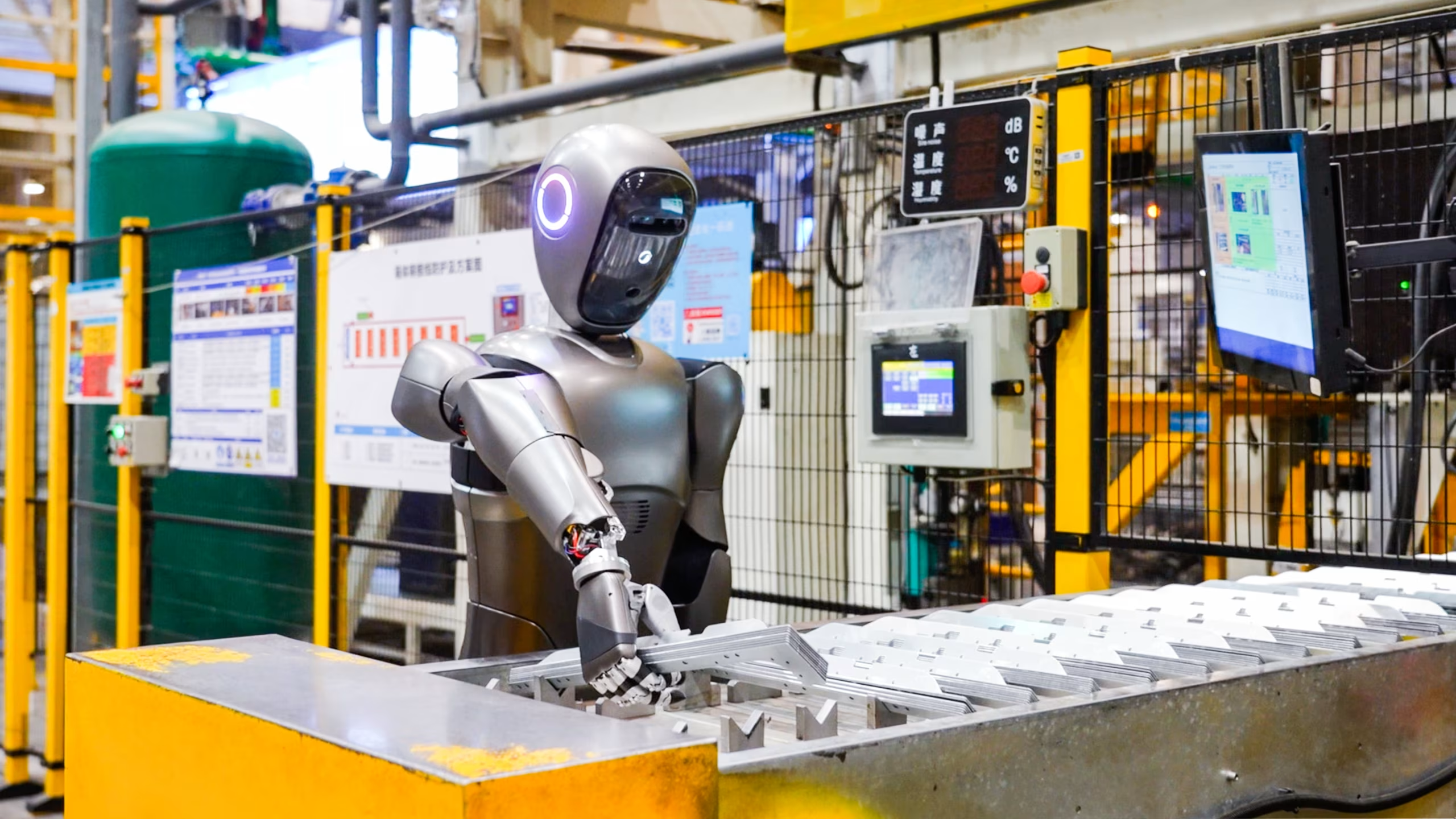
China’s approach to artificial intelligence diverges sharply from the grand visions promoted by Silicon Valley leaders like Sam Altman and Elon Musk. While American tech titans imagine AI curing cancer or eliminating poverty, China is channeling its efforts toward the immediate and practical goal of upgrading its manufacturing backbone, down to making better washing machines. Although Beijing’s long-term AI ambitions are equally bold, its short-term priority is protecting its status as the world’s factory floor amid rising wages, global skepticism toward Chinese exports, and pressure from U.S. tariffs. Billions in government and private investment are accelerating the transformation of everything from clothing design to port logistics.
AI-driven tools now slash design times, coordinate self-driving trucks at ports, and power “factory brains” that oversee 24/7 automated production. With a shrinking population, fewer young workers willing to enter factories, and geopolitical headwinds, China sees AI not as an optional but as a lifeline. Deploying it rapidly to maintain industrial dominance. Party leaders argue that embracing automation aggressively is essential for survival, with major firms like Baosteel already finding over a hundred AI applications and planning hundreds more.
Robot rollout
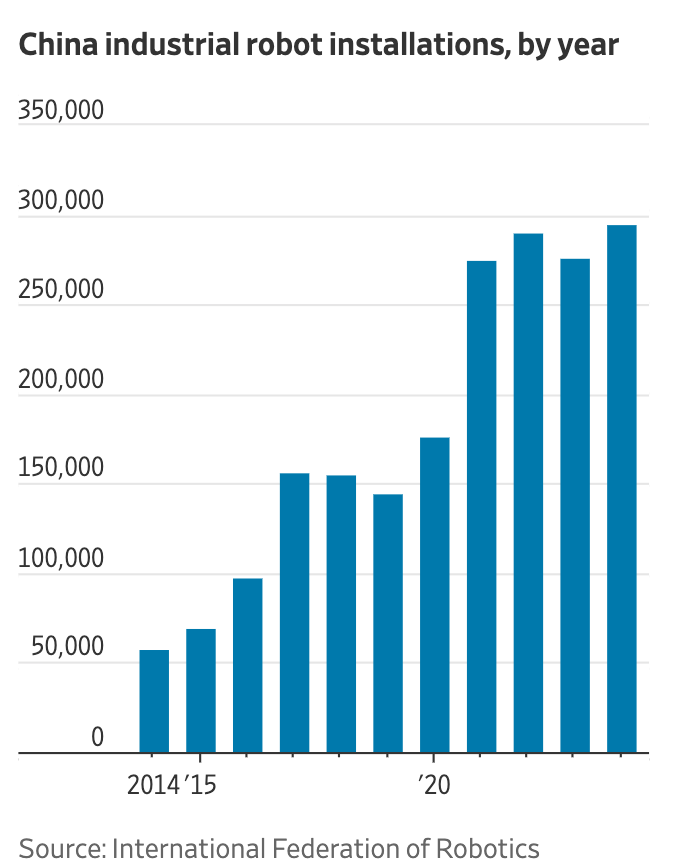
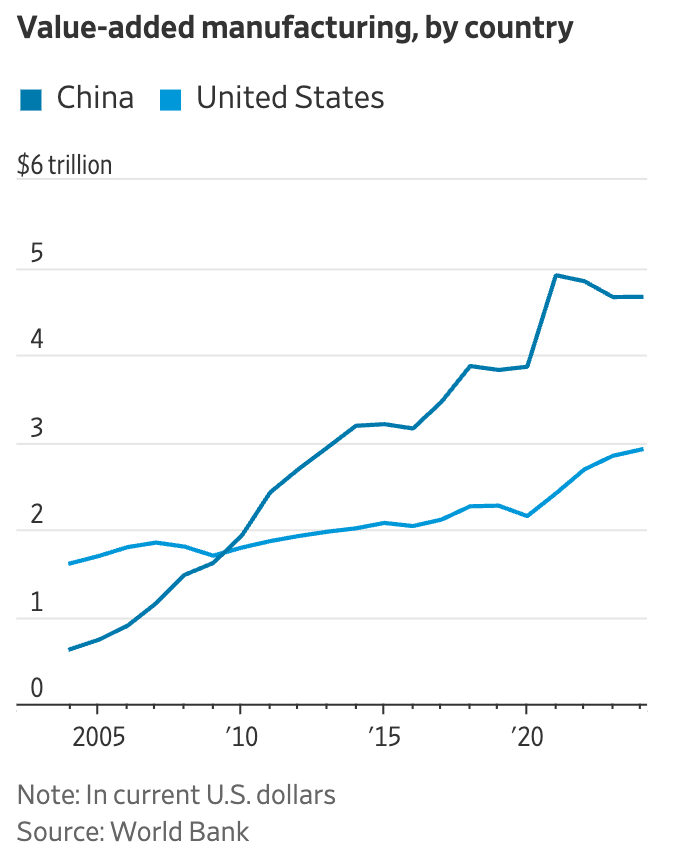
China is accelerating automation faster than any other country, installing far more industrial robots than the U.S. and surpassing two million operational units. AI-powered “dark factories” like Baosteel operate with minimal human intervention, drastically reducing the need for operators. This robotization is driven by the need to maintain China’s manufacturing dominance amid rising labor costs, worker shortages, and geopolitical pressure such as U.S. tariffs. Leaders believe AI is essential to prevent industrial decline, even if it risks eliminating jobs. Factors linked with the expected population shrink to offset losses. Although China still lags in frontier chips and AI models, its ability to deploy automation at scale gives it a significant advantage.

Factory Brains

China’s competitive edge lies in integrating AI into manufacturing at a massive scale. Companies like Midea use AI “factory brains”. Centralized systems that coordinate robots, inspections, and production tasks with human-like adaptability. This has dramatically increased efficiency, cutting processes from minutes to seconds and raising revenue per employee. AI-designed products, such as Bosideng’s apparel, slash development time and cost. Huawei plays a major role with its Pangu models, embedding AI in industries from cement to appliances. These tools improve quality prediction, reduce energy use, and save companies millions, though only after extensive trial and error. China’s openness to rapid deployment and a population highly optimistic about AI, allows nationwide adoption at speeds unmatched in the U.S.
“We are the future”
China is also transforming its export infrastructure. Ports like Tianjin now rely on AI scheduling, unmanned trucks, and automated cranes, cutting planning time from 24 hours to minutes and reducing labor needs by 60%. More than 88% of major equipment there is automated. Unlike the U.S., where unions restrict automation, China faces virtually no labor resistance. Ports are integrating models like PortGPT to analyze images and potentially replace safety officers. Half of the world’s fastest-turnaround ports are already in China, reflecting the country’s strategy of embedding AI across the entire supply chain. The overarching message is clear: China sees AI-driven automation as the key to sustaining its manufacturing supremacy and global influence.

Reference
Spegele, B. (2025, November 25). Robots and AI are already remaking the Chinese economy. The Wall Street Journal. https://www.wsj.com/tech/ai/ai-robots-china-manufacturing-89ae1b42?st=utyEpu