
The Transition from “Cordon Sanitaire” to Direct Engagement
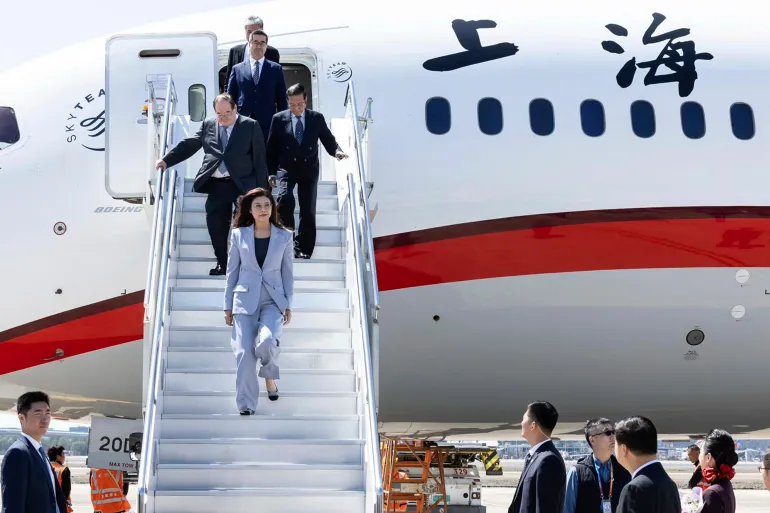
By April 2026, the cross-strait relationship has transitioned from a period of absolute diplomatic silence—a “cordon sanitaire”—to a controversial and “rare” direct engagement. The report highlights that Taiwan’s opposition leader has initiated a visit to Beijing, calling for reconciliation as a means to de-escalate the “Digital Westphalia” (Article #78) tensions. Consequently, the internal politics of Taiwan have become a battleground between “Sovereignty-First” and “Stability-First” doctrines. This suggests that the opposition is positioning itself as the only rational actor capable of preventing a “Strait of Hormuz-style” blockade in the South China Sea.
Origins and the “Middle Path” Strategy
Originally, the ruling administration in Taipei maintained a policy of “no concessions” under the shadow of increased Chinese military drills. However, the origin of this opposition visit lies in the Economic Fragility of 2025-2026, where the disruptions of the Iran war (Article #90) have made the Taiwanese public wary of any further trade shocks. For 2026, the “Middle Path” strategy seeks to restore communication channels that were severed during the previous administration. Furthermore, the report emphasizes that Beijing is using this visit to demonstrate its “Soft Power” capability, attempting to prove that it can negotiate peace with “reasonable” Taiwanese factions while maintaining a hardline stance against the current government.
The Structure of Unofficial Diplomacy
The structure of this visit is organized around three “informal” pillars:
- Economic De-risking: Discussing the restoration of direct flights and trade protocols that have been frozen by the tech-sovereignty wars.
- The “Safety Valve” Communication: Establishing a non-military “hotline” to prevent accidental skirmishes between the Chinese Navy and Taiwanese coast guard.
- Institutional Friction: The article highlights the intense domestic backlash in Taipei, where the ruling party views the visit as a “betrayal” of national sovereignty and a strategic victory for Beijing’s “United Front” tactics.
Synthesis of the “Peace vs. Sovereignty” Paradox
The successful utilization of this reconciliation attempt now faces a paradox where the “pursuit of peace” may inadvertently undermine Taiwanese Autonomy. This represents a fundamental tension in Political Science between “Peace through Strength” and “Peace through Interdependence.” There is a clear intent among the opposition to portray this as a “mission of mercy” for the economy, but the geopolitical reality is that it risks splitting the domestic consensus. Ultimately, it is clear that while the Middle East burns under the weight of ultimatums, East Asia is witnessing an attempt to use Internal Political Division as a tool for de-escalation; whether this leads to a “Finlandization” of Taiwan or a stable coexistence remains the defining question of 2026.
Reference
Al Jazeera. (2026, April 8). On rare China visit, Taiwan’s opposition leader calls for reconciliation. Al Jazeera News East Asia. https://www.aljazeera.com/news/2026/4/8/on-rare-china-visit-taiwans-opposition-leader-calls-for-reconciliation