
Andrew Yeo’s analysis, published by the Brookings Institution, examines how the war with Iran is creating a growing gap between the United States’ stated commitment to the Indo-Pacific and the policies it is currently pursuing. Although Washington continues to identify Asia as a central priority, the conflict in the Middle East has redirected military resources, affected economic relationships, and created uncertainty among American allies. Yeo argues that the main concern is not necessarily that the United States is abandoning Asia, but that its ability to maintain credible leadership in the region could gradually weaken.
The Costs of Strategic Diversion
One of the most important issues discussed in the article is the diversion of American military resources. The war with Iran has required the United States to move military assets and ammunition away from the Indo-Pacific. This creates a difficult strategic problem because American military capabilities cannot be used everywhere simultaneously. According to Yeo, countries such as China and North Korea are closely observing whether Washington can manage multiple security challenges at the same time.
The consequences also extend beyond military capabilities. U.S. allies in Asia, including Japan, South Korea, Australia, and the Philippines, are being encouraged to take greater responsibility for their own defense. While greater burden-sharing can strengthen regional security, Yeo warns that it can also create uncertainty if American policies make allies question Washington’s long-term commitment.
Implications for the Korean Peninsula
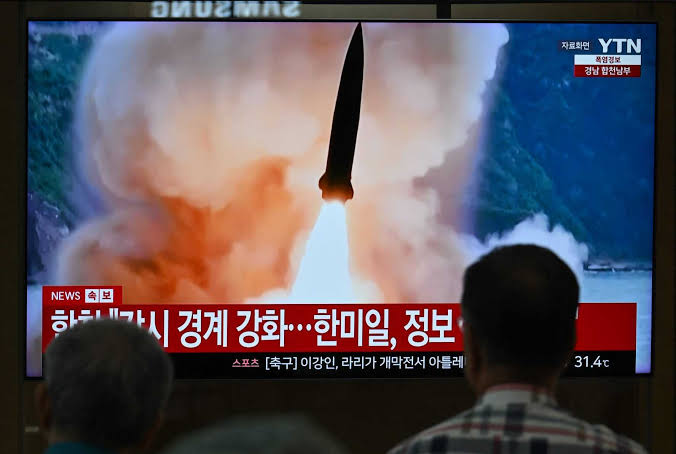
The Korean Peninsula provides one of the clearest examples of the war’s wider consequences. The reduction of some U.S.-South Korean military exercises could affect deterrence and raise concerns about the credibility of the alliance. More importantly, North Korea may interpret the conflict in Iran as evidence that nuclear weapons are essential for regime survival.
This creates a strategic paradox for Washington. A conflict intended to prevent nuclear proliferation in one region could encourage another state to strengthen its own nuclear capabilities. Yeo therefore emphasizes that the consequences of the Iran war cannot be isolated from broader security dynamics in Asia. The decisions made in the Middle East may influence the calculations of governments thousands of kilometers away.
The Challenge of Maintaining Alliances
Another important argument is that American influence depends not only on military power but also on reliable partnerships. Southeast Asian countries often attempt to maintain balanced relationships with both Washington and Beijing rather than choosing one side. If the United States appears increasingly focused on conflicts outside Asia while simultaneously imposing economic pressures on regional partners, these countries may become more interested in strengthening their relationships with China.
However, Yeo does not argue that China will automatically replace the United States. Instead, the greater concern is that Washington could gradually lose credibility if its partners begin to question its ability to provide security, economic opportunities, and political reliability.
Reconnecting Strategy and Resources
Yeo proposes several measures to reduce this strategic gap. The United States should establish clearer limits on the resources devoted to the Iran conflict, replenish military supplies relevant to Indo-Pacific contingencies, and reassure Asian allies that their defense commitments will not become bargaining tools in unrelated disputes. He also argues that Washington needs a clear exit strategy for the Iran war to prevent the conflict from becoming a long-term commitment.
A Test of American Leadership
Overall, the article provides an important analysis of the relationship between regional conflicts and global strategy. The Iran war demonstrates that foreign policy priorities cannot always be separated from one another. Even when Washington continues to identify the Indo-Pacific as its main strategic theater, actions in another region can affect its military capabilities, alliances, and credibility in Asia.
Yeo’s analysis suggests that the greatest danger is not an immediate American withdrawal from the Indo-Pacific, but a gradual erosion of the resources and partnerships necessary to maintain influence. For the United States, preserving its position in Asia will therefore require more than declaring the region a priority. It will require ensuring that its military resources, diplomatic commitments, and alliances consistently support that strategic objective.
Reference
Yeo, A. (2026, September 2). The Iran war and America’s widening strategy gap in Asia. Brookings Institution.