
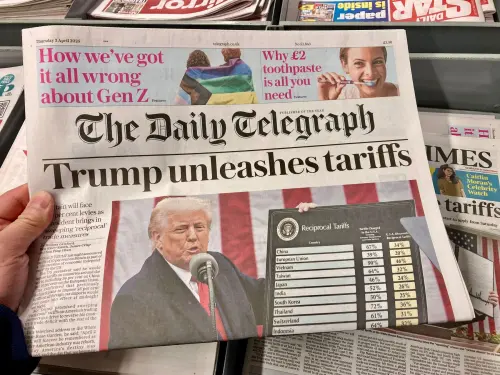
Changing Trade Policy Landscape
After decades of relative stability, U.S. trade policy shifted significantly beginning in 2018, marked by rising tariffs and increasing uncertainty for global trade flows.
Consequently, tariffs on imports increased sharply, particularly after January 2025, prompting several trading partners to impose retaliatory tariffs on U.S. exports.
Therefore, monitoring trade flows has become essential for understanding how governments, companies, and markets react to evolving tariff policies.
Purpose of the Trade Tracker
To clarify these developments, an interactive tracker allows users to analyze changes in U.S. trade flows, tariff levels, and trade-related prices over time.
Moreover, the tool connects economic data with specific policy actions, enabling users to observe how tariff decisions influence trade patterns.
Thus, the platform helps identify relationships between policy changes and fluctuations in imports, exports, and prices.
Trade Flows
First, the trade flows dashboard tracks the value of U.S. imports and exports of goods and services across countries, industries, and end-use categories.
Additionally, users can compare monthly and quarterly trade data to analyze patterns across trading partners or sectors.
Furthermore, the tool allows comparisons across time periods to identify structural shifts in global trade relationships.
Tariffs
Next, the tariffs dashboard estimates duties collected from imports and calculates weighted-average tariff rates by country and industry.
Consequently, analysts can observe how tariff policies affect industries differently depending on trading partners and product categories.
Similarly, calculated duties estimate the revenue generated from tariffs by combining import values with applicable duty rates.
Trade Prices
Meanwhile, the prices dashboard tracks changes in import and export price indices for internationally traded goods.
Thus, the system reveals how trade policy shifts influence price inflation across industries and countries.
Importantly, these indices reflect price changes at ports of transaction and exclude import duties themselves.
Interpreting Trade Policy Effects
Notably, the tracker allows users to overlay specific tariff actions to contextualize economic data within policy changes.
Therefore, analysts can observe how trade flows change immediately before or after new tariffs take effect.
For example, imports in certain industries surged just before tariffs were implemented, suggesting companies rushed purchases to avoid higher costs.
Legal Authorities Behind Tariffs
Different legal mechanisms authorize tariff policies, including provisions designed to protect industries, address unfair trade practices, or respond to national emergencies.
Accordingly, tariff actions in the tracker are categorized by legal authority to clarify the policy context behind each measure.
Data Sources and Methodology
The data comes primarily from official U.S. statistics, including the Census Bureau and the Bureau of Labor Statistics.
Furthermore, trade values, tariff estimates, and price indices are updated regularly to reflect the latest available information.
Therefore, the tracker provides a continuously updated framework for evaluating how tariff policies reshape international trade dynamics.
Source:
Bown, C. P., & Kolb, M. (2025). Tracking trade amid uncertain and changing tariff policies. Brookings Institution. https://www.brookings.edu/articles/tracking-trade-amid-uncertain-and-changing-tariff-policies/