
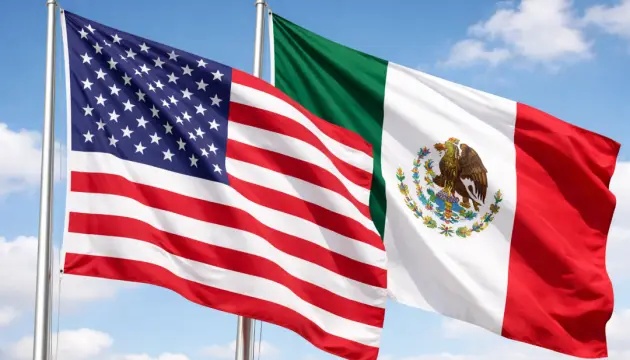
The crucial USMCA Joint Review will enter a decisive phase starting July 21, 2026. On this date, negotiating teams from the United States and Mexico will formally meet in Mexico City to convene for their third bilateral negotiating round. Specifically, this high-level encounter will last for three days and aims to advance discussions on critical issues within the shared commercial agenda.
Key Trade Sectors in the USMCA Joint Review
The bilateral working groups will concentrate their efforts on highly strategic economic sectors. Therefore, negotiators will debate thoroughly on the trade of steel and aluminum, derivative products, and the automotive industry. Furthermore, the agenda includes deep discussions regarding economic security, labor standards, agricultural trade, and the regulation of electronic payment services.
Consequently, the success of these three days of dialogue will shape the operational rules for the coming years. Ambassador Greer, representing the USTR, publicly thanked Mexico’s Secretary of Economy, Marcelo Ebrard, and his team for their collaboration. Greer highlighted mutual efforts to close regulatory loopholes that could otherwise allow non-Parties to free-ride on the agreement. To read the official press release, you can access the original bulletin directly from the USTR.
Reported Progress and Regulatory Upgrades
Despite the inherent complexities of a trilateral agreement, the USTR office recognized that Mexico has implemented significant improvements over the past several months. If you are interested in exploring the broader regional impact of these policies, feel free to read our previous analysis on North American economic development.
Regarding specific upgrades, Mexico recently published an updated measure regulating the export of dual-use items, aligning closely with US export controls to strengthen economic security. Additionally, substantial actions were taken to protect intellectual property by addressing piracy, pharmaceutical concerns, and border enforcement. Furthermore, customs facilitation saw notable progress after Mexico upgraded its single-window system and operationalized its customs broker agency program at all Mexican ports. Finally, the Mexican government is taking active environmental steps to halt the export of avocados grown on illegally deforested land and to control industrial wastewater discharge.
However, significant structural challenges identified in the National Trade Estimate Report still remain. Ultimately, the upcoming USMCA Joint Review meetings in Mexico City will serve as the definitive platform to consolidate these advancements and secure fair trade terms for manufacturers, farmers, and workers in both nations.
Office of the United States Trade Representative. (2026, July 17). United States and Mexico to convene in Mexico City for third bilateral negotiating round related to the joint review of the USMCA. https://ustr.gov/about/policy-offices/press-office/press-releases/2026/july/united-states-and-mexico-convene-mexico-city-third-bilateral-negotiating-round-related-joint-review