
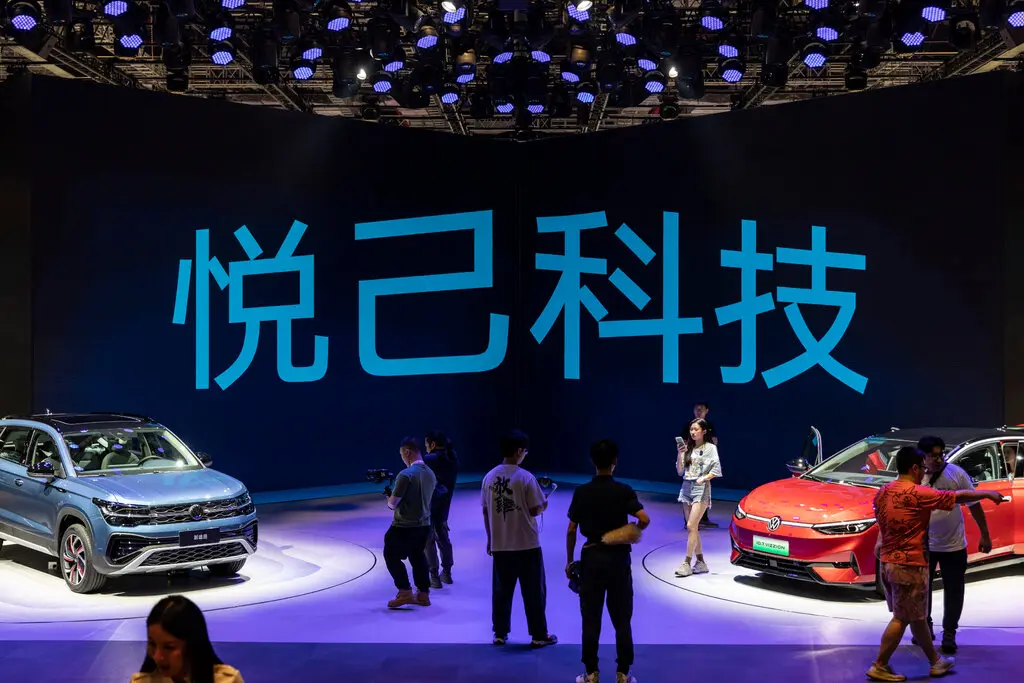
A Bold Decentralization Move to Combat Regional Stagnation
The internal organizational framework of Europe’s largest automotive manufacturer is undergoing an emergency transformation. According to an institutional corporate report by The New York Times, Volkswagen has officially finalized a sweeping, radical restructuring plan for its entire operations network inside China. For decades, major strategic and engineering decisions were dictated directly from the corporate headquarters in Wolfsburg, Germany. However, this rigid, centralized management model has proven too slow to respond to the hyper-competitive Asian market. Therefore, the board has approved a massive decentralization initiative to grant local executives near-total operational autonomy.
The Mechanics of the New Autonomous Regional Hub
The core of the restructuring strategy involves the creation of a fully independent regional management entity based in Hefei, Anhui province. Specifically, this new industrial hub, named Volkswagen China Technology Company (VCTC), will consolidate all local research, development, and procurement operations under one roof. By eliminating the need for constant, bureaucratic approvals from Germany, the automaker aims to slash its vehicle development timelines by over thirty percent. This structural streamlining will allow the company to design, test, and manufacture localized electric vehicles at a speed that matches its nimble domestic competitors.
Shifting Executive Power and Local Accountability
This radical management overhaul will result in a significant redistribution of executive power within the multinational group. Under the newly enacted protocols, the head of Volkswagen’s Chinese division will report directly to the global Chief Executive Officer, bypassing several layers of intermediate corporate bureaucracy. Furthermore, the local leadership team will assume full financial accountability for regional profit and loss margins. To ensure seamless execution, the automaker is replacing several legacy expatriate managers with experienced, local tech executives who possess deep roots within China’s digital software ecosystem.
Overhauling Joint Ventures and Local Component Sourcing
Beyond internal corporate hierarchies, the restructuring plan aggressively redefines Volkswagen’s relationship with its state-owned joint venture partners, SAIC and FAW. Historically, these partnerships were plagued by conflicting strategic goals and redundant manufacturing processes. To fix these operational inefficiencies, the German automaker is shifting its focus toward direct, localized supply chain procurement. VCTC will have the authority to bypass traditional global suppliers and source cutting-edge battery cells, semiconductors, and software modules directly from domestic Chinese vendors. This localized purchasing strategy aims to dramatically lower manufacturing costs.
Surviving an Industrial Watershed Moment
This high-stakes corporate shakeup unfolds during a defining watershed moment for global automotive history. Foreign legacy carmakers are realizing that surviving the electric transition requires a complete abandonment of Western-centric operational philosophies. While Volkswagen is investing billions of dollars to execute this emergency pivot, market analysts warn that decentralization carries inherent structural risks, including potential brand dilution and technology leakage. Nevertheless, company directors emphasize that maintaining the status quo would mean accepting a permanent decline in the world’s most lucrative car market.
International Relevance
The sweeping corporate restructuring of Volkswagen’s Chinese operations carries immense significance for international trade relations, industrial organizational theory, and the global economics of the clean energy transition. When a pillar of Western manufacturing chooses to grant unprecedented autonomy to an overseas subsidiary, it signals a profound breakdown of traditional colonial-style corporate governance models. Furthermore, this defensive pivot highlights the overwhelming economic gravity of China’s technological ecosystem, forcing other multinational conglomerates to consider similar localization strategies. By showing that survival in the modern era requires a deep integration with foreign tech supply chains, this historic restructuring will directly influence global investment flows, cross-border corporate mergers, and standard-setting for multinational operational compliance worldwide.
Reference: The New York Times. (2026, July 10). Volkswagen unveils radical restructuring plan for its struggling China business. https://www.nytimes.com/2026/07/10/business/volkswagen-china-problems-restructuring.html