
Current Status of Iran’s Nuclear Program
First, Iran does not currently possess a nuclear weapon, although it maintains extensive nuclear infrastructure and technical knowledge that could allow weapons development if political leaders choose to pursue it.
Moreover, Iran has operated a civilian nuclear energy program for more than fifty years while repeatedly asserting that its activities serve peaceful purposes rather than military goals.
However, revelations in the early 2000s about secret facilities raised global concerns about possible clandestine weapons research and triggered intense international monitoring and diplomatic negotiations.
Expansion After the Nuclear Deal
Next, the 2015 nuclear agreement aimed to limit Iran’s enrichment activities so producing weapons-grade material would take at least one year, providing time for international response.
Nevertheless, after the United States withdrew from the agreement in 2018, Iran gradually expanded uranium enrichment and restricted some international inspections of its nuclear facilities.
Consequently, Iran increased enrichment to about 60 percent purity, approaching the roughly 90 percent level required for nuclear weapons fuel.
Estimated Timeline for a Nuclear Weapon
Meanwhile, analysts estimate that Iran could produce enough fissile material for a nuclear weapon within several months, although weaponization could require additional time.
Some intelligence assessments even suggest the necessary enriched uranium could be produced within weeks under certain circumstances.
Therefore, experts consider Iran close to “breakout capacity,” meaning it could rapidly develop nuclear weapons if leaders decided to proceed.
Nuclear Infrastructure and Facilities
Furthermore, Iran conducts nuclear-related activities at more than a dozen locations across the country, including enrichment and research facilities.
The largest enrichment complex is located at Natanz, while the Bushehr plant operates as the country’s primary civilian nuclear power facility.
Additionally, international investigators have identified previously undeclared nuclear activities at sites such as Lavisan-Shian, Turquzabad, and Varamin.
Missile and Drone Capabilities
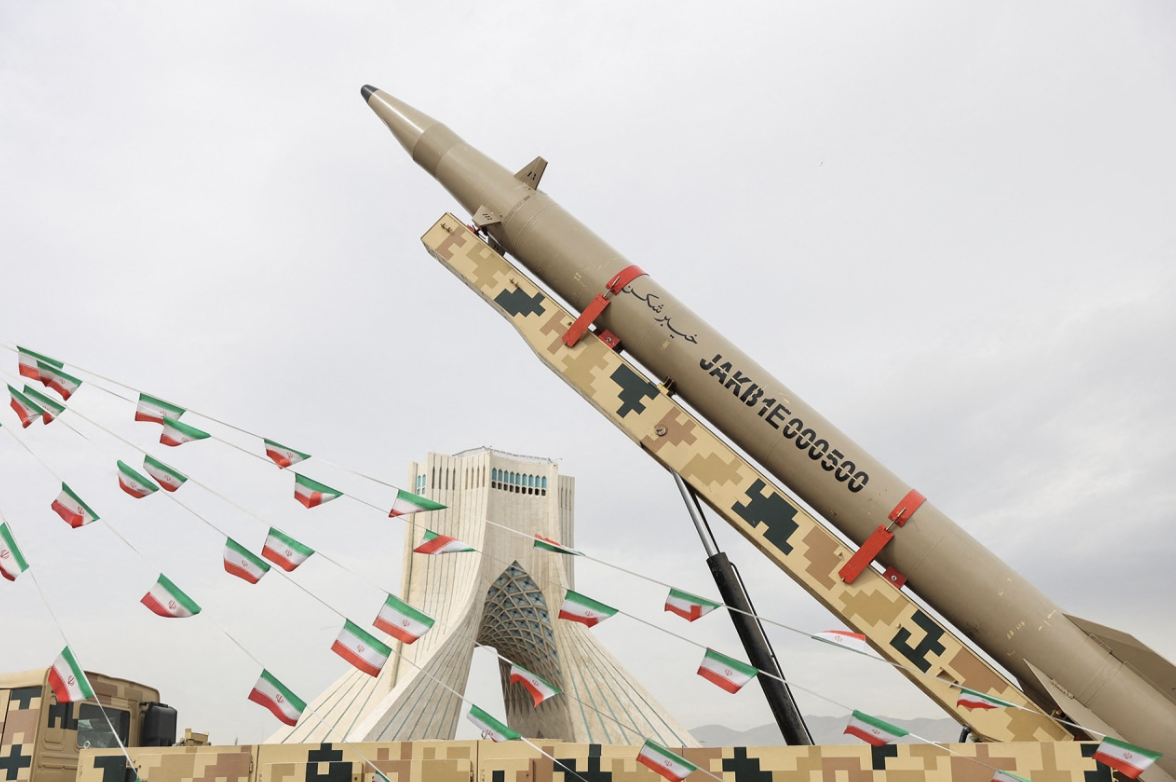
At the same time, Iran possesses one of the largest ballistic missile arsenals in the Middle East, alongside significant cruise missile and drone capabilities.
Its longest-range missiles reportedly reach approximately 2,000 kilometers, enabling strikes across the Middle East and parts of Europe.
Because ballistic missiles travel faster and follow high-arc trajectories, they are generally more difficult to intercept than drones or cruise missiles.
Demonstrations of Military Capability
For example, Iran launched large-scale attacks against Israel in 2024 using drones, cruise missiles, and ballistic missiles fired directly from Iranian territory.
Although many incoming weapons were intercepted, several missiles penetrated defenses, illustrating the potential scale of Iran’s missile capabilities.
Regional and Global Implications
Finally, many experts warn that a nuclear-armed Iran could significantly destabilize the Middle East and pose serious security challenges for the United States and its regional partners.
In addition, some analysts fear Iran’s acquisition of nuclear weapons could encourage other regional powers, particularly Saudi Arabia, to pursue their own nuclear programs.
Source:
Council on Foreign Relations. (2024). What are Iran’s nuclear and missile capabilities? https://www.cfr.org/articles/what-are-irans-nuclear-and-missile-capabilities