
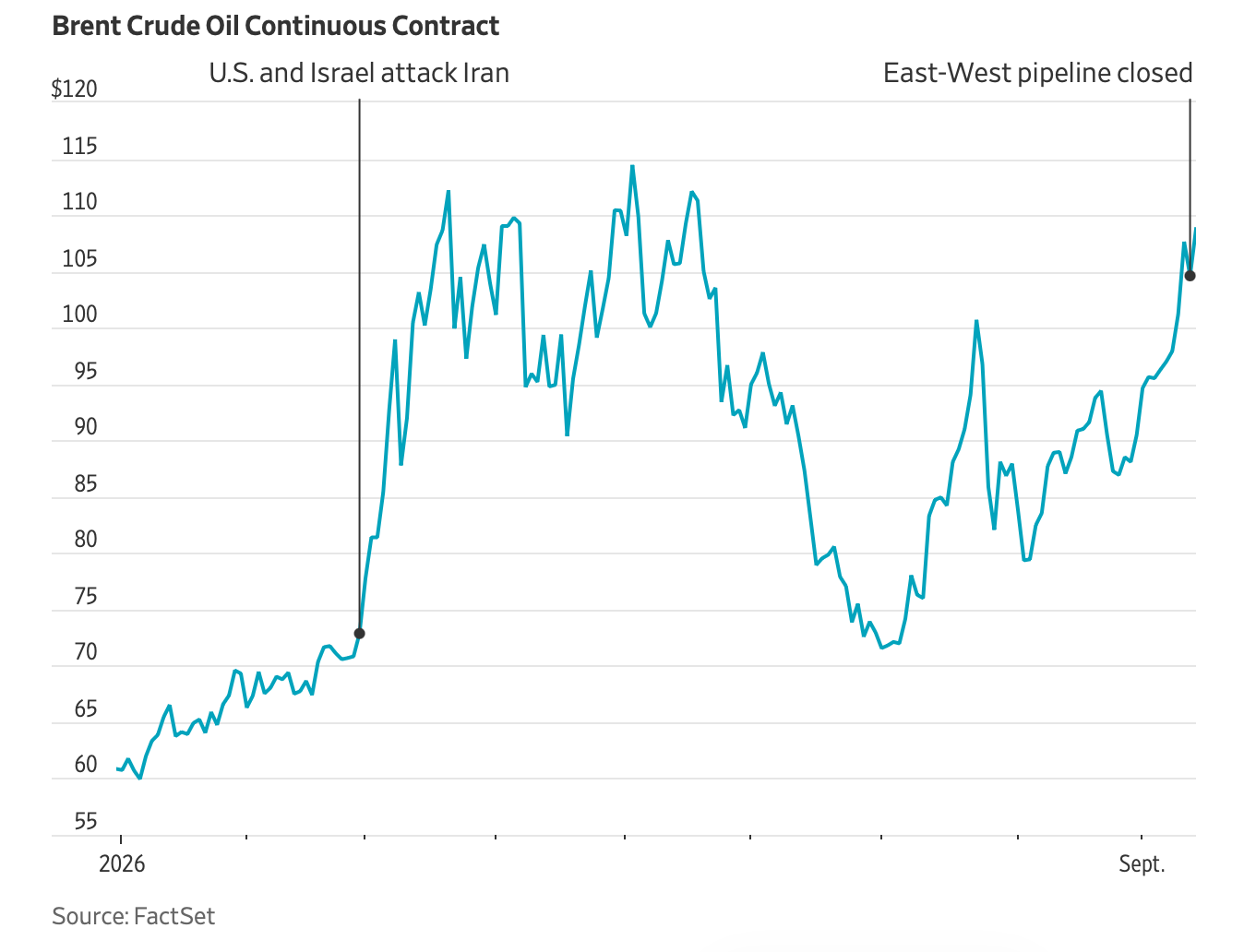
Saudi Arabia’s East-West pipeline links Persian Gulf fields directly to the Red Sea port of Yanbu. Specifically, this 750-mile infrastructure allows crude exports to bypass the Strait of Hormuz. However, recent drone strikes launched by Iran-backed Iraqi militias forced a precautionary shutdown. Consequently, the closure threatens to remove roughly 4 million barrels daily from global markets.
Financial and Energy Market Impact
Brent crude prices surged past $108 per barrel following the line suspension announcement. Furthermore, this supply disruption severely tightens global energy supply chains. Therefore, local Yanbu crude inventories of 9 million barrels offer a brief operational buffer. As a result, market analysts expect sustained inflationary pressure on refined fuels if repairs stall.
Geopolitical Implications and Regional Vulnerability
The incident highlights the high vulnerability of Saudi energy assets to targeted drone warfare. In addition, a partial restart of the dual-pipe network could mitigate immediate shortfalls. In contrast, the absence of alternative export bypasses severely constrains Saudi delivery capacity. Consequently, escalating regional conflict intensifies global economic uncertainty and drives oil price volatility.
Reference
Feng, R., Kantchev, G., & Said, S. (2026, 14 de septiembre). What is Saudi Arabia’s East-West pipeline and why is it rocking oil markets? The Wall Street Journal. https://www.wsj.com/world/middle-east/what-is-saudi-arabias-east-west-pipeline-and-why-is-it-rocking-oil-markets-3e9823a3