
India and China find themselves in a tightening geopolitical vise as President Trump’s new sanctions directly target Rosneft and Lukoil (Russia’s two largest oil producers and the main suppliers powering their economies). With both nations already facing steep U.S. tariffs, these sanctions threaten to escalate tensions further by potentially cutting off access to the U.S. financial system, a step that could be economically devastating. The ambiguity in Washington’s language, saying countries “may risk exposure” to sanctions, signals both a warning and a test of loyalty, especially for India, which is seeking closer ties with the U.S.
China has sharply rejected the move, denouncing it as illegal and unilateral, while India is treading more cautiously. New Delhi is attempting to balance its economic dependence on discounted Russian oil with its strategic desire to secure a trade deal with Washington. With Russian crude making up a third of India’s total oil imports and nearly 40% of its discounted post-war oil supply, any sudden disruption risks energy instability and domestic backlash. Yet Prime Minister Narendra Modi is under growing pressure as U.S. tariffs bite, making concessions on Russian oil a possible bargaining chip in negotiations with Trump.
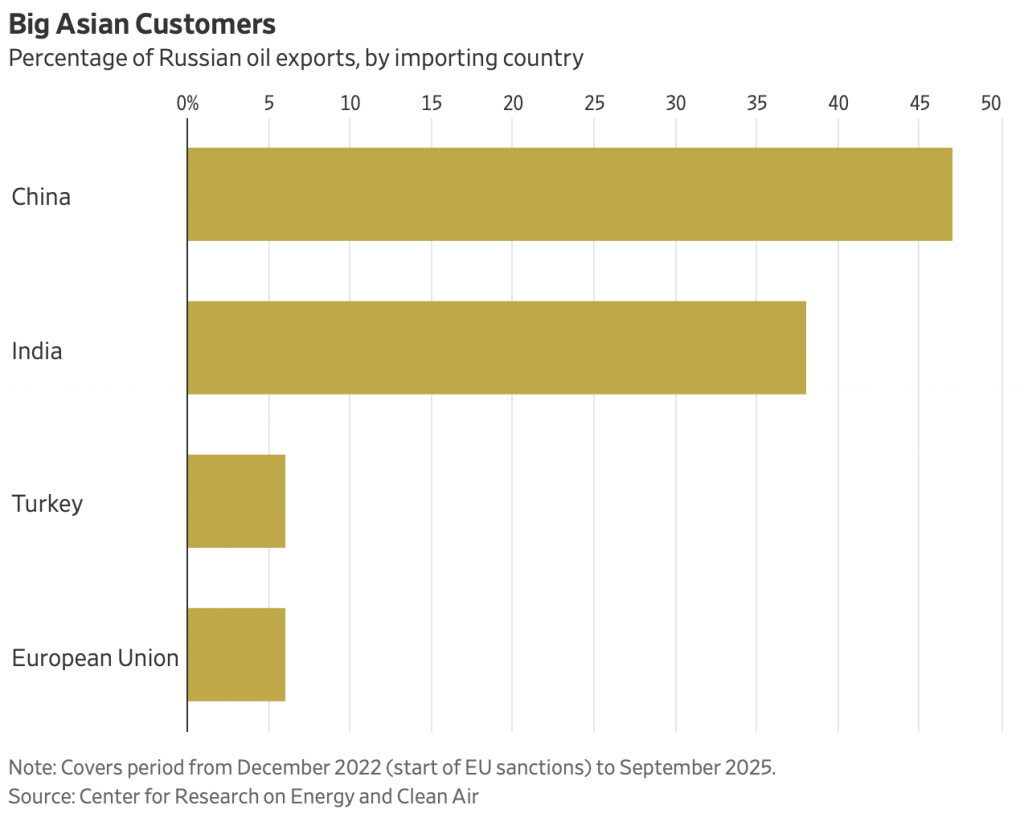
What complicates matters is that neither country can fully defy Washington without jeopardizing access to global finance. Analysts warn that major Indian and Chinese refiners could be forced to halt purchases from Rosneft and Lukoil if U.S. enforcement becomes strict. India may attempt a slow transition by sourcing more oil from the Middle East, Latin America, and even the U.S., but such a shift carries risks of price volatility. Meanwhile, China has built large reserves to cushion the shock, yet its reliance on Russian supplies remains too substantial to entirely ignore the sanctions.
Ultimately, these sanctions are more than an economic pressure tactic, they are a strategic move to fracture the Russia-India-China energy axis that has emerged since the Ukraine war. For India, this moment could redefine its foreign policy alignment: continue its pragmatic engagement with Russia or pivot decisively toward the U.S. to secure long-term trade and geopolitical gains. The stakes are high, and how these giants respond will not only shape global oil markets but also determine the next chapter in the world’s emerging multipolar order.
Reference:
Li, S. (2025, October 23). Will India and China Be Able to Resist U.S. Sanctions on Russian Oil? https://www.wsj.com/world/asia/india-china-trump-russia-sanctions-e4ba5b59?st=scnXVu