
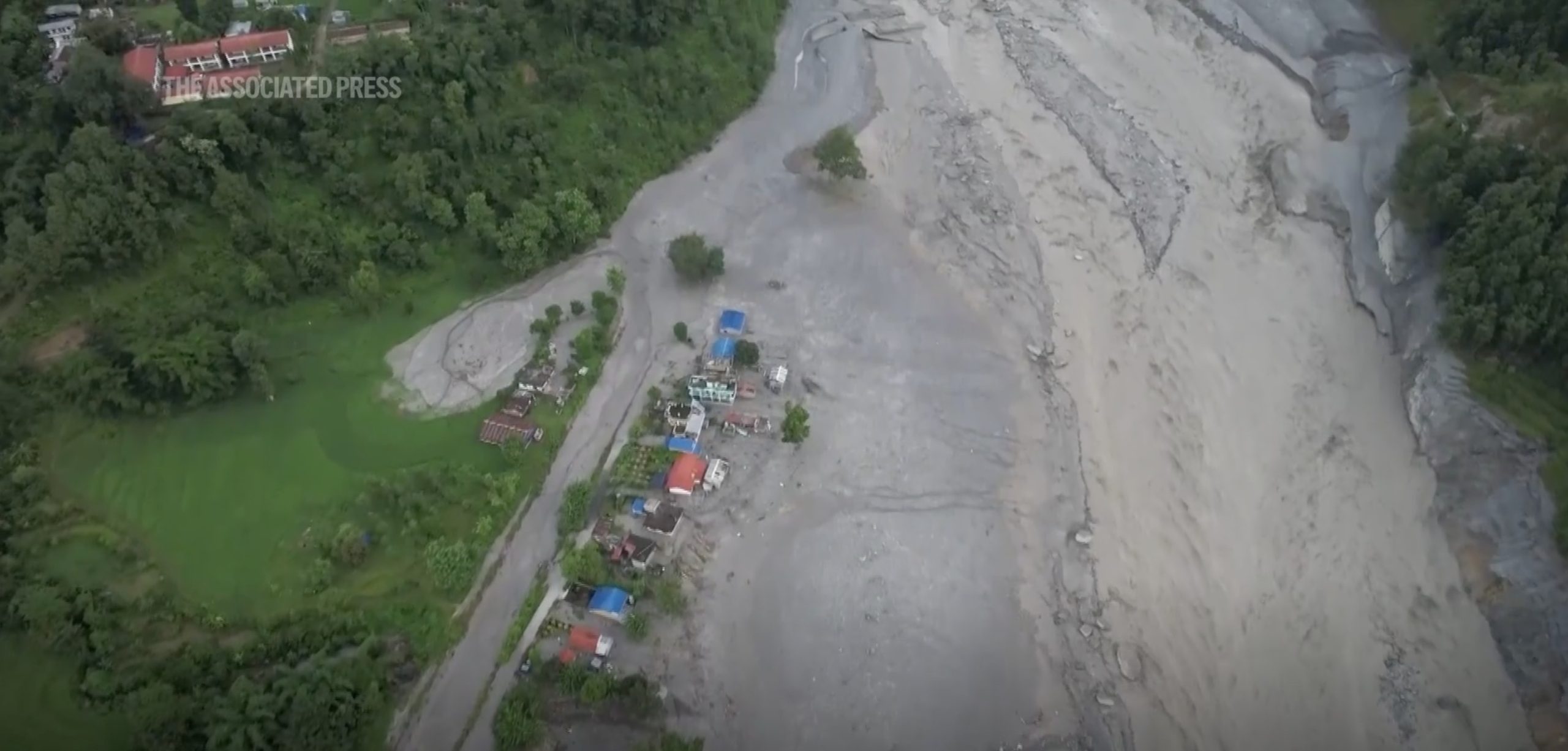
A Race to Reach Trapped Workers
Rescuers in Nepal were racing to reach hundreds of hydropower workers believed to be trapped inside tunnels filled with mud. The catastrophic floods along the Nepal-China border had killed more than 950 people, while over 4,400 remained missing. At least 900 workers were unaccounted for across 12 damaged projects in the Rasuwa and Nuwakot districts.
About 500 workers were thought to be inside large water-control tunnels. Some called for help when the disaster struck, but later contact remained uncertain. Experts said several workers might still have oxygen, although food and water were becoming urgent concerns. Six days after the flooding, officials feared that the possibility of finding survivors was rapidly declining.
Hydropower Sites Under Mud
At the Upper Trishuli-1 project, 576 people were missing, including around 300 believed trapped in a tunnel. Crews at Trishuli-3 were attempting to descend about 15 meters into another tunnel. Meanwhile, Nepal’s army reported recovering four bodies from three mud-filled passages. The scale of the structures offered some hope because the tunnels are large enough for trucks.
Elsewhere, workers cleared mud from a damaged power station in Dhading that supplies electricity to more than 20,000 people. On the Chinese side, recovery teams tried to rebuild the road leading to the Gyirong Port crossing. Days of rain had left sections beneath two to three meters of water. Chinese coverage emphasized deployments of firefighters and the military, but provided few details about victims.
Families Search Across the Border
Across Nepal, authorities counted 939 deaths and 3,925 missing people, including 592 foreigners. China reported 16 deaths and 546 missing, with many foreign nationals among them. The U.S. State Department said 80 Americans were missing and 13 had been rescued. Families traveled between rescue centers and morgues, often finding no information about their relatives.
One father searched for his son, who had led 49 Indian travelers returning from Mount Kailash. Their group disappeared after floodwaters swept through a Chinese immigration complex near the border. The disaster began when bedrock beneath a Himalayan glacier collapsed and carried part of the glacier with it. That rockfall registered as a magnitude 5.2 seismic event, sending water, rock and debris through valleys in Tibet and Nepal.
References
Kafle, S., & Wu, H. (2026, 31 agosto). Hundreds feared stuck in hydropower tunnels in Nepal after catastrophic flooding | AP News. AP News. https://apnews.com/article/nepal-tibet-china-flash-floods-744fe6e15ae7751e15efcd6dff70170c?user_email=bd2c428b35d2f2d999bc6f7e665bad1355a8dd3247b2afc8121729c30cd9a01a&utm_term=AP%20News%20Alerts&utm_source=app&utm_medium=android_share&utm_campaign=whatsapp