
A New Race Across the Melting North
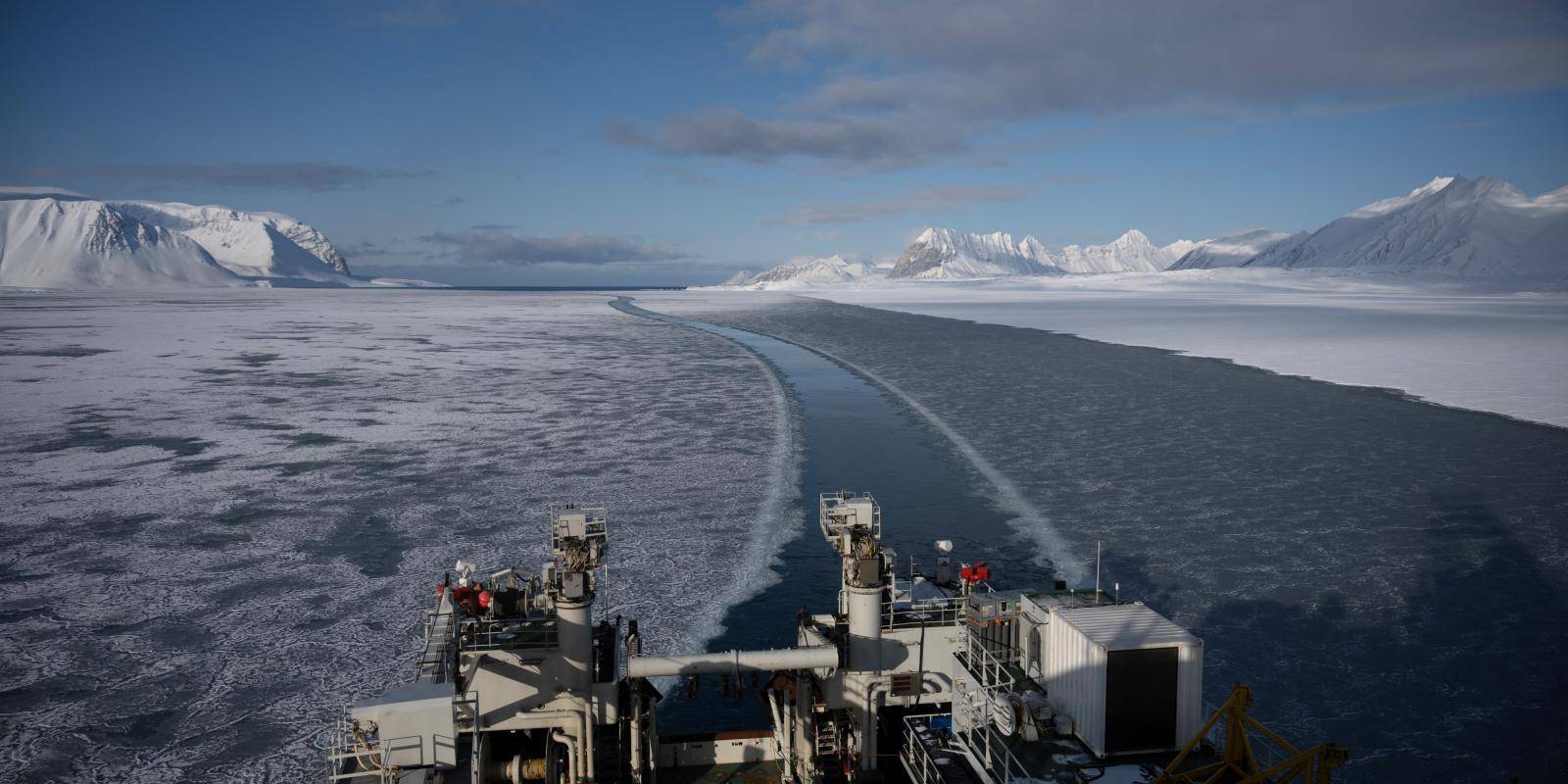
As Arctic ice retreats, a region once defined by distance and isolation is becoming a new arena of geopolitical competition. Opening sea routes and expanding access to resources have increased the strategic value of the High North, drawing greater attention from Russia, China, Europe and North America.
At the same time, the United States has weakened one of its own sources of influence. The Trump administration ended federal support for the Arctic Report Card, a major scientific project that had collected environmental data for two decades. The decision creates a gap in Arctic research, but it also offers Europe and Canada an opportunity to assume greater leadership.
Science as a Strategic Asset
This opportunity matters because scientific knowledge is increasingly tied to geopolitical power. Data on ice conditions, maritime routes and environmental change can shape military planning, commercial activity and future infrastructure. China appears to understand this connection clearly, having invested heavily in polar research despite being a non-Arctic state.
Meanwhile, geopolitical competition is already moving from strategy papers into physical activity. Russia has sent oil tankers through rarely used northern routes with nuclear-powered icebreaker support. Chinese shipping companies have also begun using Russia’s Northern Sea Route, reducing travel time between Asia and Europe.
These developments demonstrate how years of scientific investment can create practical advantages. China’s access to predictive ice data, for example, provides more than environmental knowledge; it supports the expansion of commercial and strategic activity across previously inaccessible waters.
Europe’s Arctic Moment
Against this changing landscape, Europe and Canada have begun increasing their presence in the region. Norway, France, Canada and the European Union are expanding their diplomatic engagement in Greenland, while NATO members have intensified discussions about Arctic security.
Military initiatives are also growing. Denmark has started training conscripts in Greenland, while the United Kingdom has contributed forces to NATO’s Arctic Sentry mission. These efforts reflect growing concerns about Russian and Chinese activity, but they also reveal Europe’s increasing responsibility for regional security.
The challenge, however, extends beyond deploying additional military forces. Europe and Canada need stronger systems for monitoring the region through satellites, underwater sensors and maritime patrols. They must also invest in Arctic research and create shared data infrastructures capable of replacing lost American scientific leadership.
Ultimately, security and science cannot be separated in the Arctic. Military power without reliable knowledge risks operating blindly, while scientific leadership without strategic capacity leaves critical information vulnerable to geopolitical competition. As the ice continues to disappear, Europe and Canada face an unusual opportunity: to shape the future of the Arctic before others define its rules for them.
Reference: Hudson-Dean, S. (2026, August 19). Melting ice and power shifts: Europe and Canada should seize their Arctic moment. Chatham House. https://www.chathamhouse.org/2026/08/melting-ice-and-power-shifts-europe-and-canada-should-seize-their-arctic-moment