
A historic fund amid declining international support.
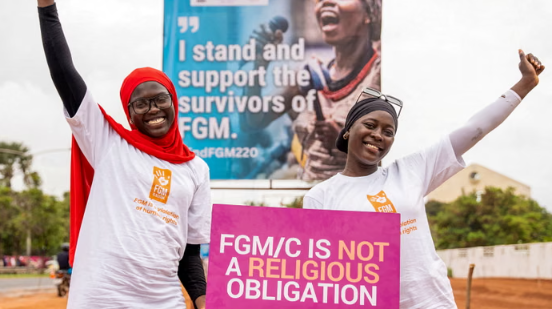
Frontline activists and survivors of female genital mutilation (FGM) have welcomed the launch of the Her Horizon Fund, an unprecedented philanthropic initiative worth $15.5 million. The fund seeks to raise $100 million from donors to reach a “tipping point” and help end FGM within a generation. The initiative arrives as women’s rights face growing political challenges and funding for community-based organizations declines. The UN has established 2030 as the target for eliminating FGM, but current progress is not on track. Funding for the joint UNFPA-UNICEF programme operating in 18 countries fell 45% last year, from $29.6 million to $16.3 million.
Survivors and local activists at the centre of change.
The Her Horizon Fund was established by the US-based Wallace Global Fund, which provided $14 million, while an anonymous donor contributed an additional $1.5 million. Advocates argue that direct resources for frontline organizations are essential because survivors and local activists understand their communities and can lead sustainable change. Somali-Irish activist and FGM survivor Ifrah Ahmed, founder of the Ifrah Foundation, welcomed the initiative after her organization lost $300,000 in UNFPA funding last year. Her foundation has supported efforts for anti-FGM legislation in Somalia, where the practice remains nearly universal.
Fragile legal progress and political resistance.
Although FGM is increasingly recognized as a human rights violation, advocates warn that legal progress remains fragile. Burkina Faso, The Gambia and Kenya have criminalized the practice, while Somalia has introduced anti-FGM laws in three of its seven federal member states. In two additional Somali states, bills banning FGM have received cabinet approval but await parliamentary consideration, with opposition from some religious leaders. Meanwhile, The Gambia’s Supreme Court is considering a constitutional challenge to the country’s 2015 ban, following a failed 2024 parliamentary attempt to repeal it. In Sierra Leone, the new Child Rights Act does not prohibit FGM despite sustained advocacy.
A global health and human rights emergency.
FGM involves the partial or total removal of female genitalia for non-medical reasons and has affected more than 230 million women and girls worldwide. More than 144 million affected women and girls live in Africa, 80 million in Asia and 6 million in the Middle East. The practice can cause severe pain, excessive bleeding and infections, as well as long-term complications during childbirth, chronic pain and psychological trauma. A 2025 study estimated that FGM contributes to approximately 44,000 deaths annually across 15 countries examined. Advocates therefore describe the practice as a global crisis, extreme gender-based violence and a public health emergency.
Reference
McVeigh, K. (2026, September 11). $15m fund launched to create ‘unstoppable momentum’ to end FGM worldwide. The Guardian. https://www.theguardian.com/global-development/2026/sep/11/15m-fund-launched-to-create-unstoppable-momentum-to-end-fgm-worldwide