
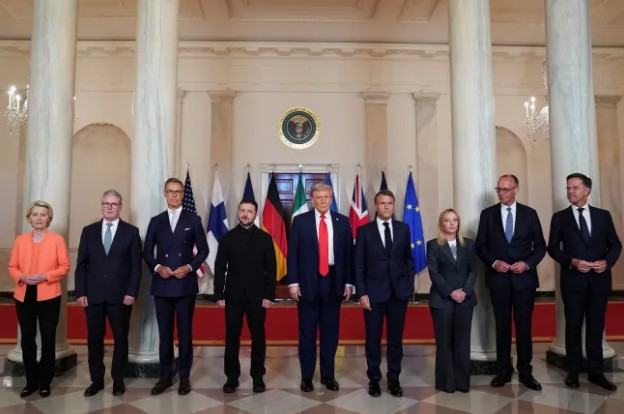
Can the Continent Escape Its Trump Trap?
Matthias Matthijs & Nathalie Tocci | Foreign Affairs, January/February 2026
The concept of the Europe Trump trap captures the continent’s growing dependence on unpredictable U.S. politics. In How Europe Lost, Matthias Matthijs and Nathalie Tocci argue that Europe’s strategic weakness stems not only from external pressure but also from internal fragmentation and economic stagnation.
Structural Dependence on the United States
The authors explain that Europe relied heavily on U.S. security guarantees, particularly through NATO, while underinvesting in its own defense capabilities. As a result, shifts in American leadership—especially during the Trump presidency—exposed structural vulnerabilities.
Moreover, political divisions within the European Union limited coordinated responses. Diverging national interests, energy dependence, and uneven economic performance weakened collective strategy.
The Limits of Strategic Autonomy
The article suggests that calls for European “strategic autonomy” gained urgency during periods of transatlantic tension. However, rhetoric has often outpaced implementation. Defense spending, industrial coordination, and foreign policy alignment remain inconsistent.
At the same time, the Europe Trump trap reflects a deeper dilemma: Europe seeks independence but remains intertwined with American military and economic power.
Escaping the Trap?
Matthijs and Tocci argue that Europe can regain strategic relevance if it strengthens internal cohesion, invests in defense capacity, and clarifies its geopolitical priorities. Institutional reform and economic modernization are central to this effort.
Ultimately, escaping the Europe Trump trap requires political will. Without deeper integration and strategic clarity, Europe risks continued marginalization in an increasingly competitive global order.
Reference
Matthijs, M., & Tocci, N. (2026). How Europe lost: Can the continent escape its Trump trap? Foreign Affairs, 105(1). https://www.foreignaffairs.com/