
The Erosion of Regional Neutrality and the Risk of Total War
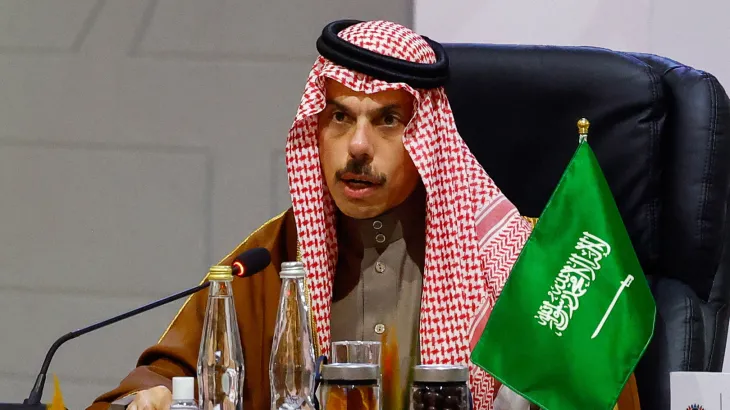
In March 2026, Saudi Foreign Minister Prince Faisal bin Farhan issued a stern warning that the Kingdom’s patience regarding Iranian-backed attacks is “not unlimited.” As the U.S.-Israeli coalition continues its air campaign against Iran, Tehran has responded by targeting energy infrastructure across the Gulf, hitting Saudi refineries and Qatari gas fields. Consequently, Riyadh has signaled that it can no longer maintain a neutral stance while its core economic assets are being systematically dismantled. This shift in rhetoric suggests that Saudi Arabia is preparing to move from purely defensive interceptions to active military retaliation, a decision that would transform a localized “decapitation” strike into a massive, multi-state regional conflict.
Origins and the Collapse of the 2023 Rapprochement
Originally, the 2023 restoration of diplomatic ties between Riyadh and Tehran was seen as a historic milestone that would prevent the Gulf from being used as a battleground. However, the origin of the current hostility lies in the February 28 escalation, where the U.S. and Israel launched “Operation Epic Fury,” prompting Iran to view any nation hosting U.S. bases as a legitimate target. As the war intensified, the “strategic patience” practiced by the Saudi leadership reached a breaking point following intelligence reports of planned strikes on critical water desalination plants. Furthermore, the report emphasizes that by failing to reign in its proxies in Yemen and Iraq, Tehran has effectively invalidated the non-aggression pacts that had stabilized the region for the previous three years.
Structure of Defensive Mobilization and Economic Bypassing
The structure of Saudi Arabia’s current strategy is organized around a dual-track approach of military readiness and logistical redirection. Specifically, the Kingdom has activated its “Joint Defense” protocols with the GCC, while simultaneously attempting to bypass the blocked Strait of Hormuz by ramping up exports through the East-West Pipeline to the Red Sea. Moreover, the article highlights the “strategic realignment” of Saudi air defenses, which are now prioritizing the protection of Vision 2030 “Giga-projects” over traditional military outposts. This structured defense creates a high-stakes environment where any single successful strike on a Saudi population center could trigger an immediate and massive aerial response against Iranian coastal infrastructure.
Synthesis of Regional Escalation and the Future of Gulf Security
The successful maintenance of Saudi security now faces a paradox where the more the Kingdom aligns with the U.S. mission to “reopen the Strait,” the more it becomes a primary target for Iranian retaliation. This objective is essential to understand because it signals the end of the “independent mediator” role that Riad had hoped to play in the new multipolar order. Simultaneously, there is a clear intent among Gulf leaders to demand a concrete security guarantee from Washington that goes beyond simple arms sales. Ultimately, the “Riyadh Ultimatum” provides a stable warning for the future: unless a diplomatic off-ramp is found quickly, the Middle East is on the verge of a “Great Power” war that will reshape global energy markets and national borders for a generation.
Reference
Al Jazeera. (2026, March 19). Saudi FM warns Iran that patience in Gulf not ‘unlimited’ amid attacks. Al Jazeera News. https://www.aljazeera.com/news/2026/3/19/saudi-fm-warns-iran-that-patience-in-gulf-not-unlimited-amid-attacks