
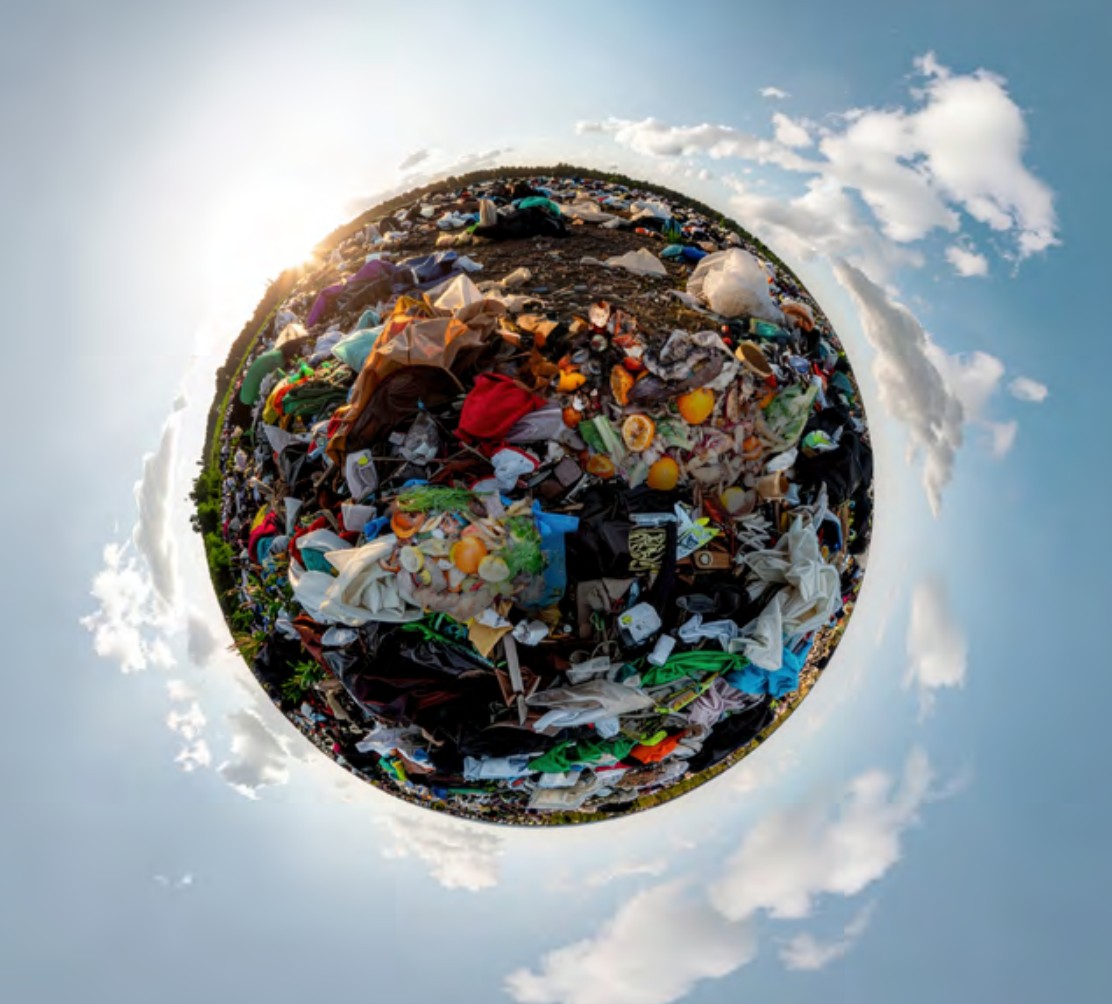
Global Snapshot of Solid Waste Management toward Circularity until 2050
What a Waste 3.0 is the third edition of the World Bank Group’s flagship solid waste series, following the 2012 and 2018 publications. It draws on data from 217 countries and economies and 262 cities to offer the most comprehensive publicly accessible dataset on municipal solid waste management. The report consolidates information on waste generation, composition, collection, treatment, and disposal, and presents trends by region and income group. It also covers legislation, private sector participation, employment, environmental impacts, and costs. The publication is intended as a technical reference to support evidence-based decision making across the waste sector and advance the transition toward circularity.
A Growing and Unequal Waste Crisis
Global waste generation is rising faster than previously projected. The 2018 edition estimated the world would produce 2.59 billion tonnes by 2030; however, 2.56 billion tonnes were already generated by 2022. Under a business-as-usual scenario, that figure is expected to reach 3.86 billion tonnes by 2050, a 50 percent increase. The fastest growth is projected in Sub-Saharan Africa (128 percent) and South Asia (97 percent). Distribution is deeply unequal: high-income countries represent only 16 percent of the global population yet generate 29 percent of the world’s waste. In contrast, low-income countries, with 9 percent of the population, produce just 4 percent. Food waste constitutes the largest share of municipal solid waste globally, at 38 percent, while plastics account for approximately 12.5 percent, of which 65 percent are single-use.
Collection and Treatment: Stark Disparities
Waste collection rates reveal sharp disparities across income levels. High-income countries achieve rates close to 100 percent, whereas low-income countries collect only 28 percent of their waste. South Asia and Sub-Saharan Africa have the lowest collection rates worldwide, at 67 and 31 percent respectively. Nearly all municipal solid waste in high-income countries is managed in controlled facilities, meeting SDG targets. By contrast, only 3 percent of waste in low-income countries receives controlled management. Globally, landfills remain the dominant disposal method at 29 percent, followed by materials recovery at 21 percent and incineration with energy recovery at 20 percent. The remaining 30 percent is either openly dumped or left uncollected. Nearly 29 percent of all plastic waste (or 93 million tonnes per year) is mismanaged, with middle-income countries accounting for 87 percent of unmanaged plastic waste worldwide.
Governance, Costs, and the Path toward Circularity
Nearly all countries have national legislation governing solid waste management, and 70 percent report having national strategies in place. Extended producer responsibility is increasingly adopted, though its practical implementation remains largely limited to high-income countries. Achieving universal and sustainable waste collection and management will require sustained public spending in the range of 0.3 to 0.8 percent of GDP. However, the costs of inaction (including worsened flooding, pollution, and foregone economic opportunities) are considerably higher. With strategic action, countries can cap total solid waste generation even as economies grow, expand collection coverage, and unlock millions of jobs across the circular economy value chain.
Reference
Cook, E., Ionkova, K., Bhada-Tata, P., Yadav, S., & van Woerden, F. (2026). What a Waste 3.0: Global snapshot of solid waste management toward circularity until 2050. World Bank. https://www.worldbank.org/en/publication/what-a-waste?cid=ECR_E_NewsletterWeekly_EN_EXT&deliveryName=DM277661