
The Surge in Brent Crude and the Failure of De-escalation Signals
On April 2, 2026, global oil prices surged by over 4%, with Brent crude reaching $118 per barrel, following a televised speech by the U.S. President. While the administration officially reiterated its “openness to a deal,” the market focused instead on the “Stone Age” ultimatum—the threat to dismantle Iran’s civilian power and water infrastructure if a ceasefire is not reached by April 6. Consequently, the brief period of “diplomatic optimism” that had stabilized prices in late March has evaporated. This suggests that traders and geopolitical analysts view the current “opening” not as a genuine peace overture, but as a final procedural step before a massive escalation of the air campaign.
Origins and the “Strategic Deadlock” of April 2026
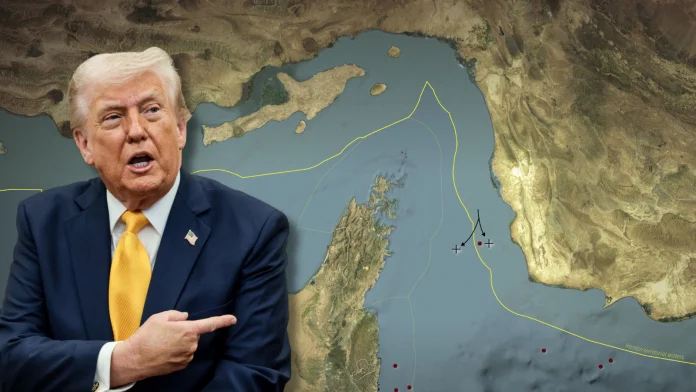
Originally, the U.S. military strategy was expected to achieve “rapid dominance” within the first 30 days of the conflict. However, the origin of the current “dimming hopes” for a swift end lies in the resiliency of Iran’s decentralized mobile missile units and its continued ability to harass shipping in the Gulf of Oman despite heavy bombardment. As the war enters its second month, the U.S. administration is facing internal pressure to “finish the job,” while international allies are increasingly wary of the total collapse of the Iranian state. Furthermore, the report emphasizes that the “15-point peace plan” offered by Washington is viewed by Tehran as a demand for unconditional surrender, creating a strategic deadlock where neither side can afford to blink without losing existential credibility.
Structure of the “War Inflation” and the European Energy Crisis
The structure of the current economic shock is organized around the “War Inflation” phenomenon, where energy costs are driving up the price of all consumer goods. Specifically, in the Eurozone, inflation has spiked to an annualized 7.2%, the highest since the initial 2022 energy crisis, as the loss of Iranian and regional transit volume creates a physical shortage of LNG. Moreover, the article highlights the “Supply Chain Contraction” in the automotive and chemical sectors, which rely on stable energy inputs. This structured crisis is forcing central banks to consider further interest rate hikes, even as the risk of a “war-induced recession” looms, creating a “stagflationary trap” for the global economy.
Synthesis of Military Overreach and the “Exit Strategy” Vacuum
The successful conclusion of the war now faces a paradox where the more the U.S. intensifies its strikes to “force” a deal, the more it radicalizes the Iranian defense apparatus, making a negotiated settlement less likely. This objective is essential to understand because it illustrates the “Escalation Ladder” problem: once the U.S. threatens civilian infrastructure (the “Stone Age” option), it leaves itself with no further non-nuclear options to apply pressure. Simultaneously, there is a clear intent among Republican hawks in Washington to see the conflict through to a “total victory,” despite the growing protests in major U.S. cities over fuel prices. Ultimately, the Reuters report provides a stable warning: the world is no longer looking for a “quick win,” but is bracing for a prolonged regional conflagration that could redefine global trade for years.
Reference Reuters. (2026, April 2). Hopes dim for swift end to Iran war after Trump speech; oil prices surge anew. Reuters Business & World News. https://www.reuters.com/world/asia-pacific/hopes-dim-swift-end-iran-war-after-trump-speech-oil-prices-surge-anew-2026-04-02/