
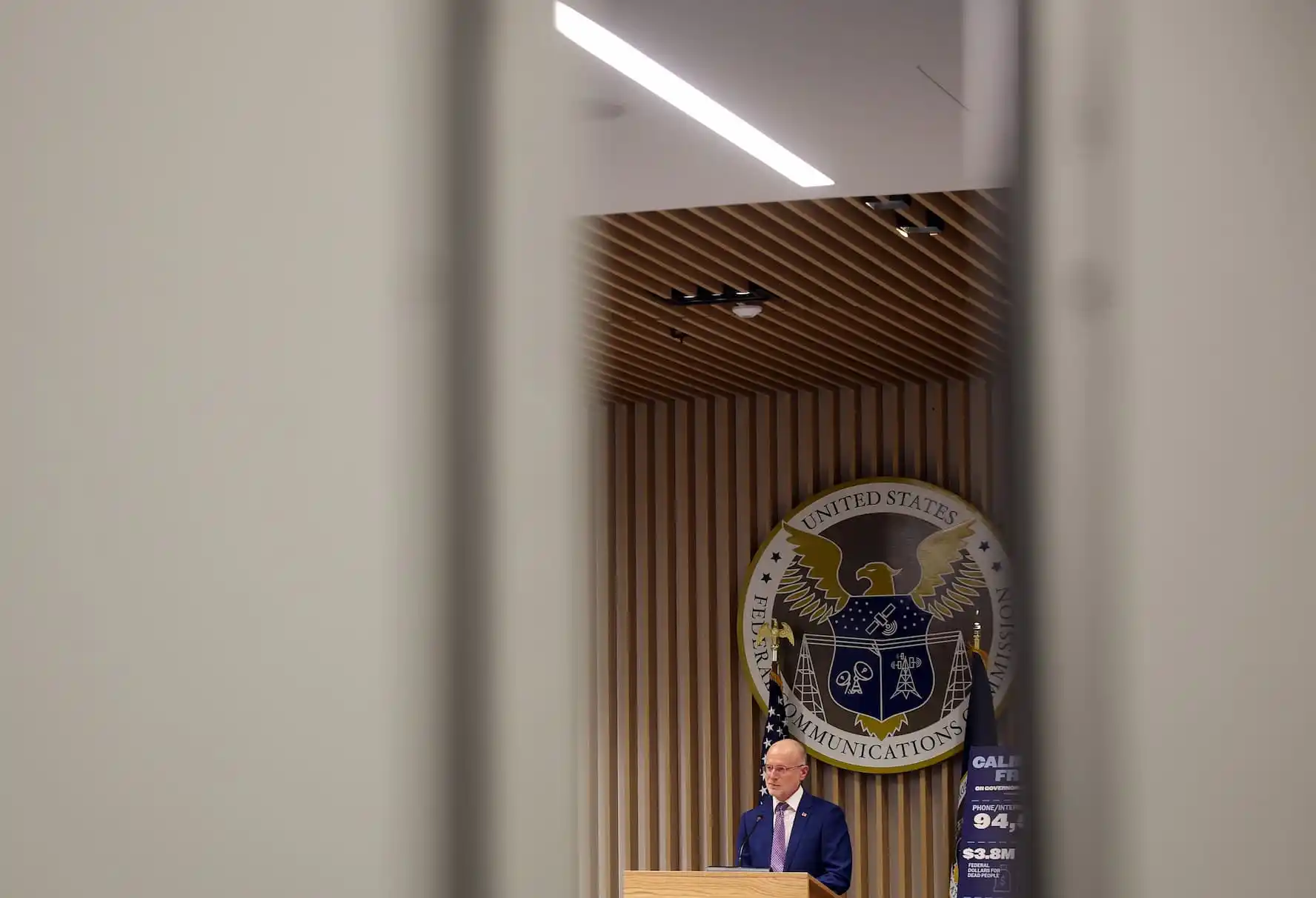
The Transition from Independent Oversight to Executive Instrument
By early 2026, the FCC has transitioned from its historical role as a non-partisan technical regulator to a central tool for executive policy enforcement. The Brookings report highlights that the current commission is increasingly using its licensing and regulatory powers to reward political allies and punish perceived adversaries in the media and tech sectors. Consequently, the “independence” of the commission—a core tenet of U.S. administrative law—is being redefined to align more closely with the “Unitary Executive Theory.” This suggests that the boundary between federal agencies and the executive office has become porous, fundamentally altering the checks and balances within the U.S. telecommunications landscape.
Origins and the “Media Loyalty” Doctrine
Originally, FCC intervention was focused on consumer protection, spectrum management, and anti-trust oversight. However, the origin of the current shift lies in the 2024-2025 push for “Media Accountability,” where the commission began reviewing broadcast licenses based on content “fairness” and “national interest” standards. For 2026, this has evolved into a “Media Loyalty” doctrine, where the threat of license revocation or regulatory fees is used as a lever against major news organizations. Furthermore, the report emphasizes that the FCC’s new leadership has prioritized the dismantling of net neutrality and the expansion of rural broadband in a manner that favors specific, politically connected telecommunications giants.
The Structure of Regulatory Leveraging
The structure of this new regulatory environment is organized around the “leveraging” of public trust. Specifically, the FCC has adopted a strategy of “Informal Coercion,” where public statements and investigations are used to influence corporate behavior without the need for formal rulemaking. This creates an environment of “Regulatory Uncertainty,” where tech firms and broadcasters must constantly gauge the political climate before making business or editorial decisions. Moreover, the article highlights the “Institutional Friction” between the FCC and the judicial system, as civil society groups challenge the commission’s new authorities in federal court, alleging a violation of First Amendment protections and administrative procedure.
Synthesis of Bureaucratic Power and the Future of Information Sovereignty
The successful implementation of this executive-aligned agenda now faces a paradox where the “restoration of order” in the media landscape may permanently erode the Public Trust that the agency is mandated to protect. This objective is essential to understand because it signals that in 2026, information is no longer treated as a public utility but as a strategic asset to be managed for political stability. Simultaneously, there is a clear intent to use the FCC’s authority to restrict foreign tech influence—particularly from China—aligning with broader “Digital Sovereignty” goals (Article #78). Ultimately, the Brookings report provides a stable warning: when an independent agency becomes an arm of the executive, the “public interest” becomes a subjective tool for the preservation of power.
Reference
The Brookings Institution. (2026, March 12). The Trump FCC is leveraging public trust for political gain. Center for Technology Innovation. https://www.brookings.edu/articles/the-trump-fcc-is-leveraging-public-trust-for-political-gain/