
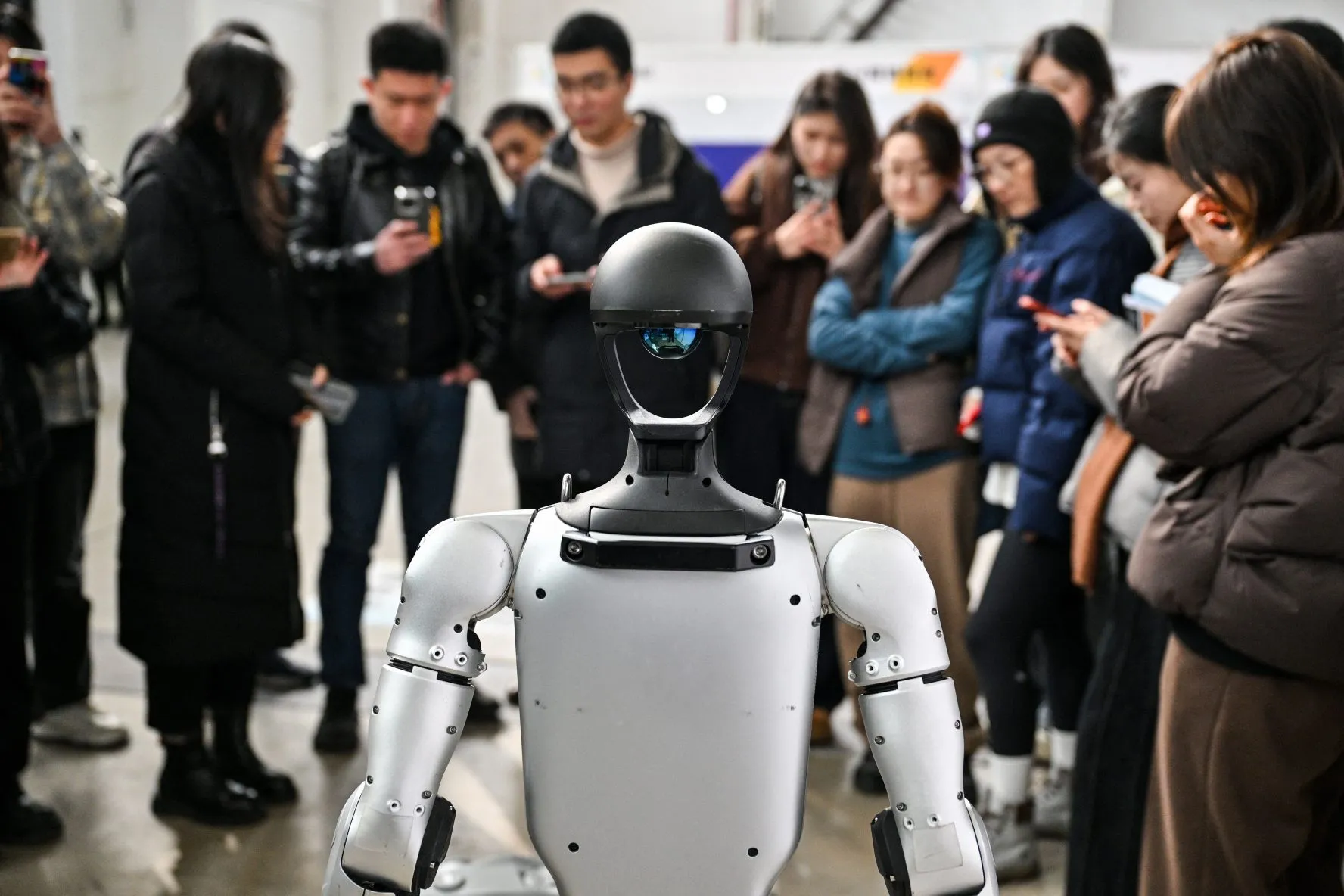
The rapid race for technological supremacy has placed the United States and China in a position of historic rivalry. However, a recent analysis from the Brookings Institution suggests we are at a strategic turning point.
As the May 2026 summit approaches, the central question is no longer just who will dominate Artificial Intelligence. Instead, the world is watching to see if both powers can establish a minimum security framework to prevent this technology from becoming an uncontrollable threat. This potential collaboration does not stem from mutual trust, but rather from a pragmatic response to shared existential risks.
Currently, both Washington and Beijing fear that non-state actors, such as terrorist groups or criminal networks, could use advanced models to attack critical infrastructure. Consequently, the Brookings proposal emphasizes that competition and cooperation should not be mutually exclusive concepts.
To achieve global stability, experts suggest creating unified security standards that prevent the malicious use of AI. This would stop criminals from exploiting models with fewer restrictions in either country to develop biological weapons or large-scale cyberattacks.
In addition to technical security, it is essential to implement direct communication channels between both nations. Establishing a digital “hotline” would allow for the real-time management of algorithmic incidents. In this way, a technical error in a military system could be prevented from escalating into an accidental armed conflict due to a simple lack of dialogue.
While strategic interests remain divergent, they find common ground in global governance. China seeks recognition as an architect of international norms, while the United States aims to universalize its ethical standards to protect its competitive edge.
Ultimately, the risk in the AI ecosystem is so high that even the fiercest rivals must agree on basic rules of coexistence. The survival of the global order depends on understanding that algorithm security must be a neutral ground.
Although the struggle for semiconductors will certainly continue on other fronts, controlling the existential risks of AI requires a joint commitment. Only through this cooperation can we ensure a safe technological future for the entire international community.
Referencias
Chan, K., & Hass, R. (2024, May 1). Can the U.S. and China cooperate on AI? Brookings. https://www.brookings.edu/articles/can-the-us-and-china-cooperate-on-ai/