
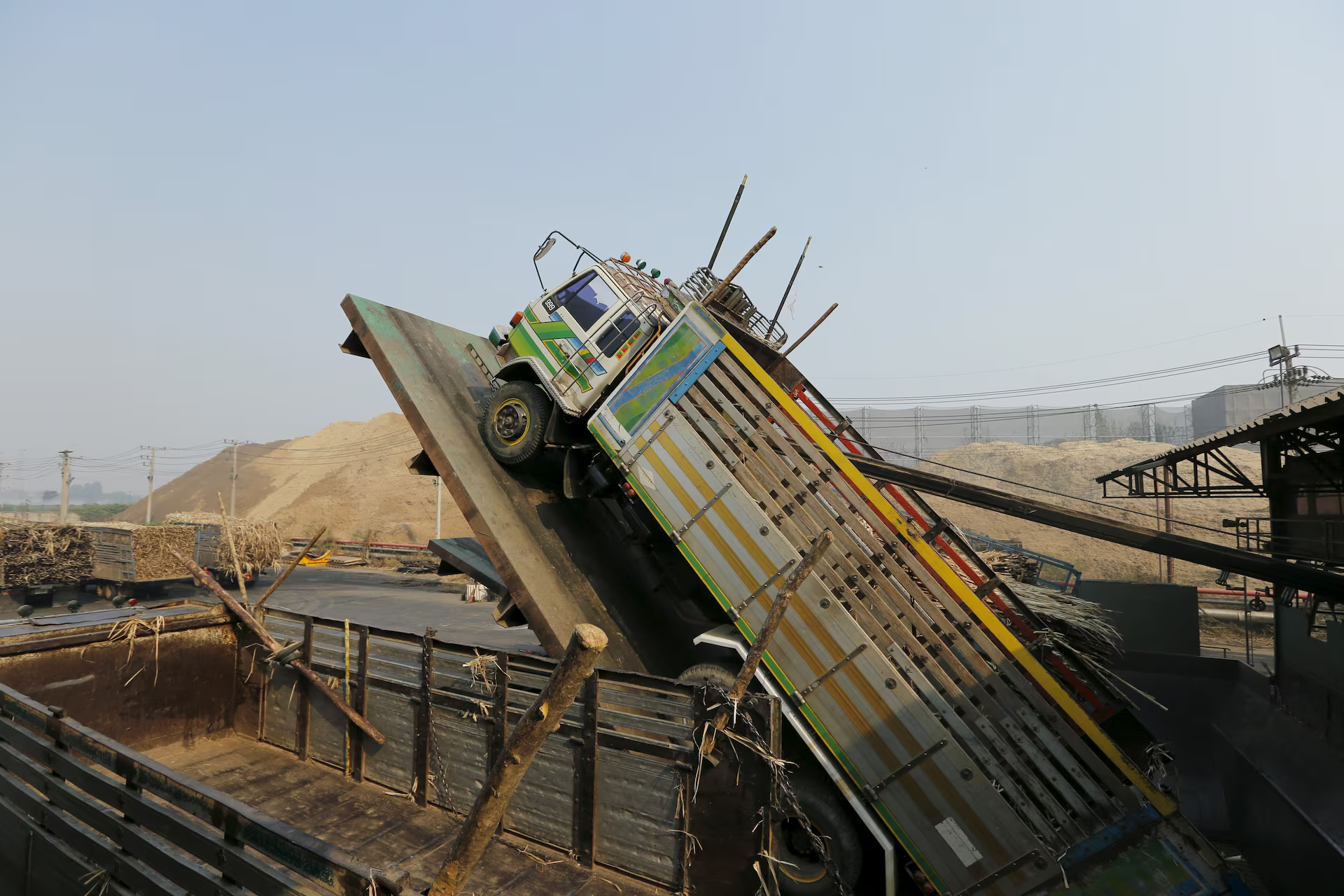
In June 2026, the government of Vietnam announced the extension of anti-dumping and countervailing duties on certain sugar imports from Thailand until 2031. According to Vietnamese authorities, these measures are necessary to protect domestic sugar producers from unfair competition and to preserve the stability of the national agricultural sector. The decision reflects Vietnam’s continued concern about the impact of imported sugar on local industries despite its strong commitment to regional economic integration.
The origins of these trade measures can be traced to concerns raised by Vietnam’s domestic sugar industry regarding the influx of lower-priced Thai sugar into the Vietnamese market. Producers argued that imported sugar benefited from subsidies and pricing practices that distorted competition, making it difficult for local firms to compete effectively.
Although Vietnam has embraced trade liberalization through participation in numerous regional and international agreements, the government maintains that anti-dumping measures are a legitimate instrument for ensuring fair competition. By extending these duties through 2031, policymakers seek to provide long-term stability for domestic producers while preventing further market disruption.
The structure of this policy highlights a broader contradiction within the global trading system. On one hand, Vietnam is a member of organizations and forums such as APEC that promote economic openness, market integration, and the reduction of trade barriers. On the other hand, the government continues to rely on protective measures when it believes strategic domestic sectors are threatened. This situation illustrates the ongoing challenge faced by many governments: balancing the benefits of globalization with the need to protect local industries and employment. While trade liberalization can increase efficiency and consumer choice, it can also create winners and losers within national economies, prompting governments to intervene when certain sectors experience significant pressure.
Vietnam’s decision can be interpreted as an example of defensive economic nationalism. Rather than rejecting globalization outright, the government is selectively using trade policy tools to shield vulnerable industries while remaining integrated into the global economy. It also demonstrates that states continue to play a central role in regulating economic activity despite increasing interdependence. International institutions and regional forums encourage cooperation and market openness, but national governments ultimately retain the authority to implement measures they consider necessary for economic security and domestic development.
Furthermore, the extension of these duties reflects a broader trend observed in many economies across the Asia-Pacific region, where concerns about supply chain resilience, food security, and industrial competitiveness have led governments to adopt more interventionist policies.
Bibliography:
Nguyen, P. (2026, June 3). Vietnam extends anti-dumping duties on some Thai sugar products to 2031. Reuters. https://www.reuters.com/world/asia-pacific/vietnam-extends-anti-dumping-duties-some-thai-sugar-products-2031-2026-06-03/