
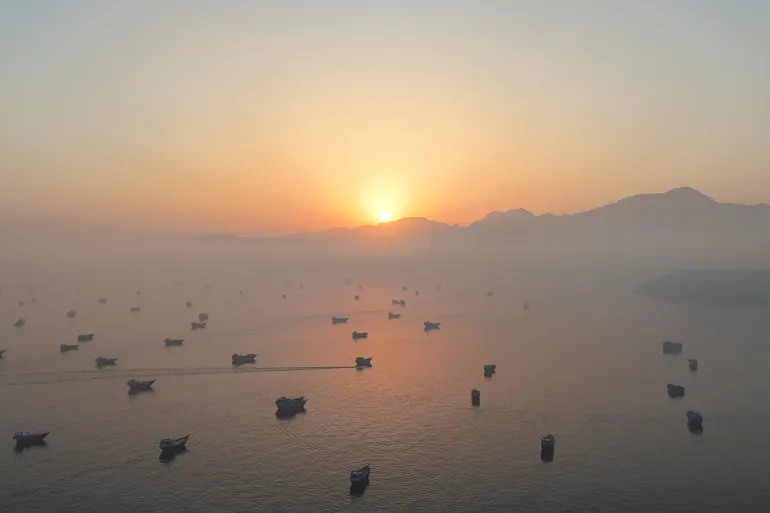
Recent reports indicate that commercial vessels have begun moving again through the Strait of Hormuz after months of disruption caused by the conflict between the United States and Iran. According to statements by U.S President Donald Trump, oil tankers are once again transiting between Washington and Tehran aimed at ending hostilities and restoring freedom of navigation in one of the world’s most important maritime chokepoints.
The Strait of Hormuz occupies a central posición in the global energy system, serving as the primary transit route for a significant portion of the world’s oil exports. Since the outbreak of the U.S.-Iran conflict in early 2026, maritime traffic through the Strait had been severely restricted, generating uncertainty in international markets, increasing energy prices, and raising concerns about the vulnerability of global supply chains. The recent movement of ships suggests a partial normalization of commercial activity and has already contributed to a decline in oil prices and improved market confidence.
From an analytical perspective, the significance of this development extends beyond the immediate resumption of shipping. The reopening of the Strait of Hormuz demonstrates how maritime chokepoints remain critical instruments of geopolitical leverage in the 21st century. Control over strategic waterways continues to influence not only regional security dynamics but also the stability of the global economy. The crisis has highlighted the extent to which international energy markets remain vulnerable to political and military tensions concentrated in specific geographical locations.
At the same time, the return of commercial traffic should not be interpreted as a definitive resolution of the conflict. Several unresolved issues persist, including disagreements regarding Iran’s nuclear program, the long-term governance of maritime transit through the strait, and the role of regional actors such as Israel, which has expressed reservations about aspects of the agreement. Furthermore, shipping companies and insurers remain cautious, reflecting broader uncertainty about the durability of the current diplomatic framework
This episode offers a broader lesson about the relationship between security and globalization. While global markets often appear highly integrated and resilient, they continue to depend on a limited number of strategic routes whose disruption can generate worldwide economic consequences. The tentative reopening of the Strait of Hormuz may alleviate immediate pressure on energy markets, but it also serves as a reminder that international stability remains closely tied to the management of geopolitical rivalries in key transit corridors.
Ultimately, the movement of ships through the Strait of Hormuz represents a cautiously optimistic development. However, the sustainability of this progress will depend not only on the implementation of the emerging U.S.-Iran agreement but also on the willingness of regional and international actors to transform a temporary de-escalation into a more durable framework fo security and cooperation in the Gulf
Reference:
Al Jazeera. (2026, June 15). Trump says ships starting to move through Strait of Hormuz. Al Jazeera. https://www.aljazeera.com/news/2026/6/15/trump-says-ships-starting-to-move-through-strait-of-hormuz