
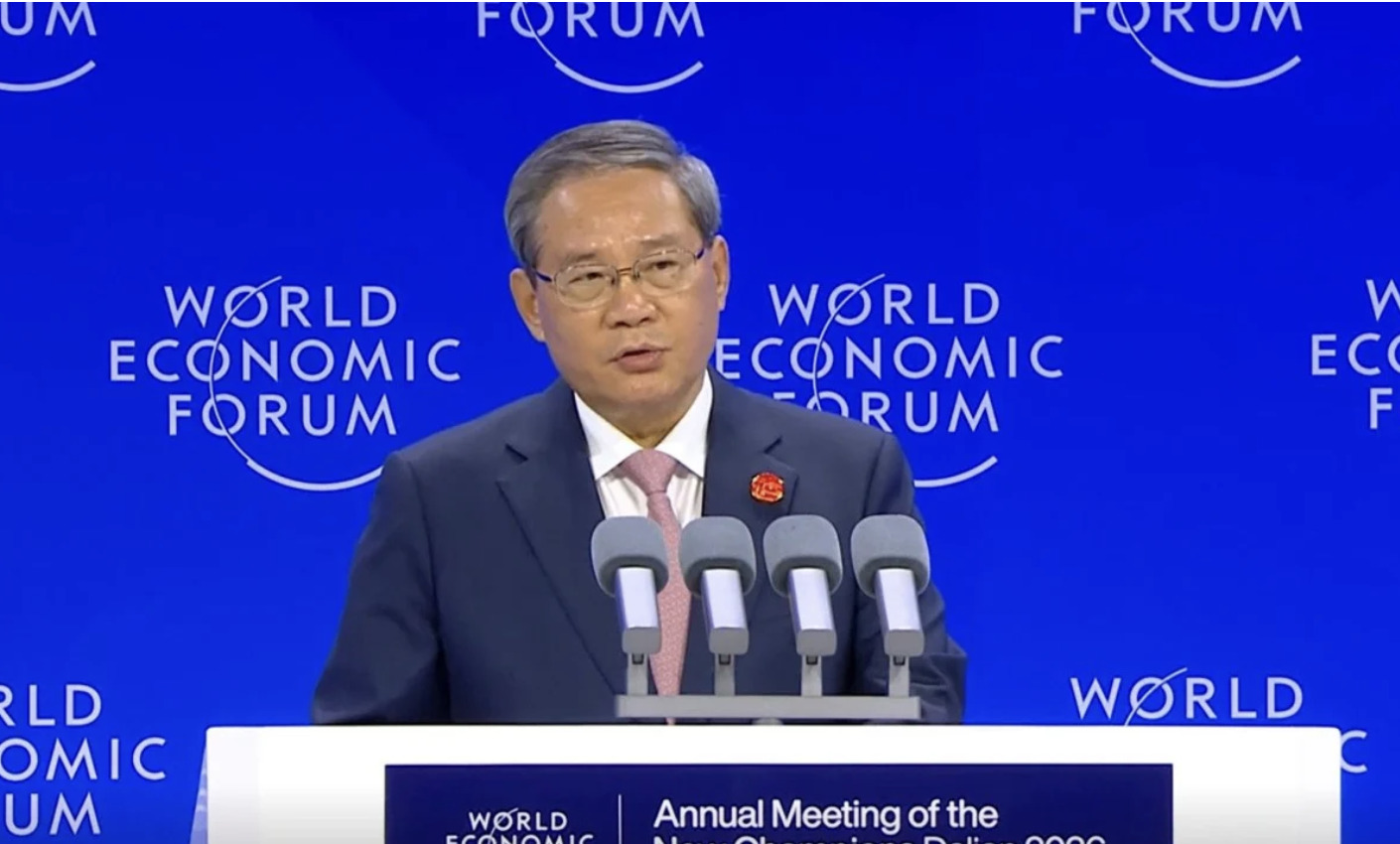
Chinese Premier Li Qiang stated on Wednesday that the western narrative of “China Shock 2.0” is not grounded in facts and should instead be phrased as “China Opportunity 2.0”. Speaking at the opening plenary of the 17th Annual Meeting of the New Champions—also known as Summer Davos—in Dalian, Li stressed that the country is serving as a catalyst for global economic growth. He added that China’s technologies in emerging fields bring an opportunity and empowerment to the world, rather than a shock or a threat.
Hard Work and Corporate Resilience
Li clarified that China’s competitiveness is not a result of state subsidies, noting that the Chinese government is not wealthy enough to afford them. Instead, innovation comes from hard work across its industries and a massive domestic market that provides a broad spectrum of applications. Li emphasized that there is no shortcut to scientific and technological research and development.
To illustrate this, Li pointed to Huawei Technologies. He noted that despite facing cost pressures and unfair external blockades, the company’s research and development expenditure has increased over the years. Huawei’s progress is credited to its sustained investments of 1 trillion yuan ($147.93 billion) into scientific research over the past decade.
Economic Imbalances and the “China Shock”
Li described China as an important safe haven for the world economy amid rising global turbulence, such as international energy shortages and the Iran war, which has inflated commodity prices and disrupted goods. However, despite being relatively insulated from the war, China’s economic growth momentum slowed in the past two months following a 5 percent expansion in the first quarter. Beijing has set its gross domestic product growth target between 4.5 and 5 percent this year.
In May, retail sales fell by 0.6 percent year on year, marking the first decline since the end of the Covid-19 lockdown in late 2022. Meanwhile, the country’s exports recorded a 19.4 percent year-on-year growth in the same month. This export machine has sparked alarm in Europe and elsewhere over potential industrial overcapacity. Critics point to Beijing’s record-breaking trade surplus of nearly $1.2 trillion in 2025, driven by a surge of low-cost, hi-tech exports like electric vehicles, which has intensified the “China Shock 2.0” theory.
Innovation Dividends and AI Risks
In the past, China primarily shared dividends through its massive market and low-cost production. Now, Li stated, it is providing “innovation dividends” and high-yield investment opportunities to global markets through technological progress. He cited Unitree Robotics as an example; the humanoid robotics company from Zhejiang province was valued at just 10 million yuan in 2016 and is now worth 42 billion yuan.
While emphasizing the importance of innovation in resisting downward economic pressures, Li also cautioned against uncontrollable issues, especially in artificial intelligence. He warned that while AI enhances innovation efficiency, risks such as technological runaway and ethical repercussions are becoming increasingly prominent. Consequently, he stated that closer cooperation is the only way to drive innovation and confront these diverse risks. The theme of this year’s Summer Davos is “Innovating at Scale”, featuring over 1,700 delegates from more than 90 countries and regions.
Reference
Siqi, J., & Siqi, J. (2026, 24 junio). ‘China Opportunity 2.0’: Li Qiang calls for revisal of Western narrative at Summer Davos. South China Morning Post. https://www.scmp.com/economy/china-economy/article/3358126/china-safe-haven-global-economy-says-premier-li-qiang-summer-davos?module=perpetual_scroll_0&pgtype=article