
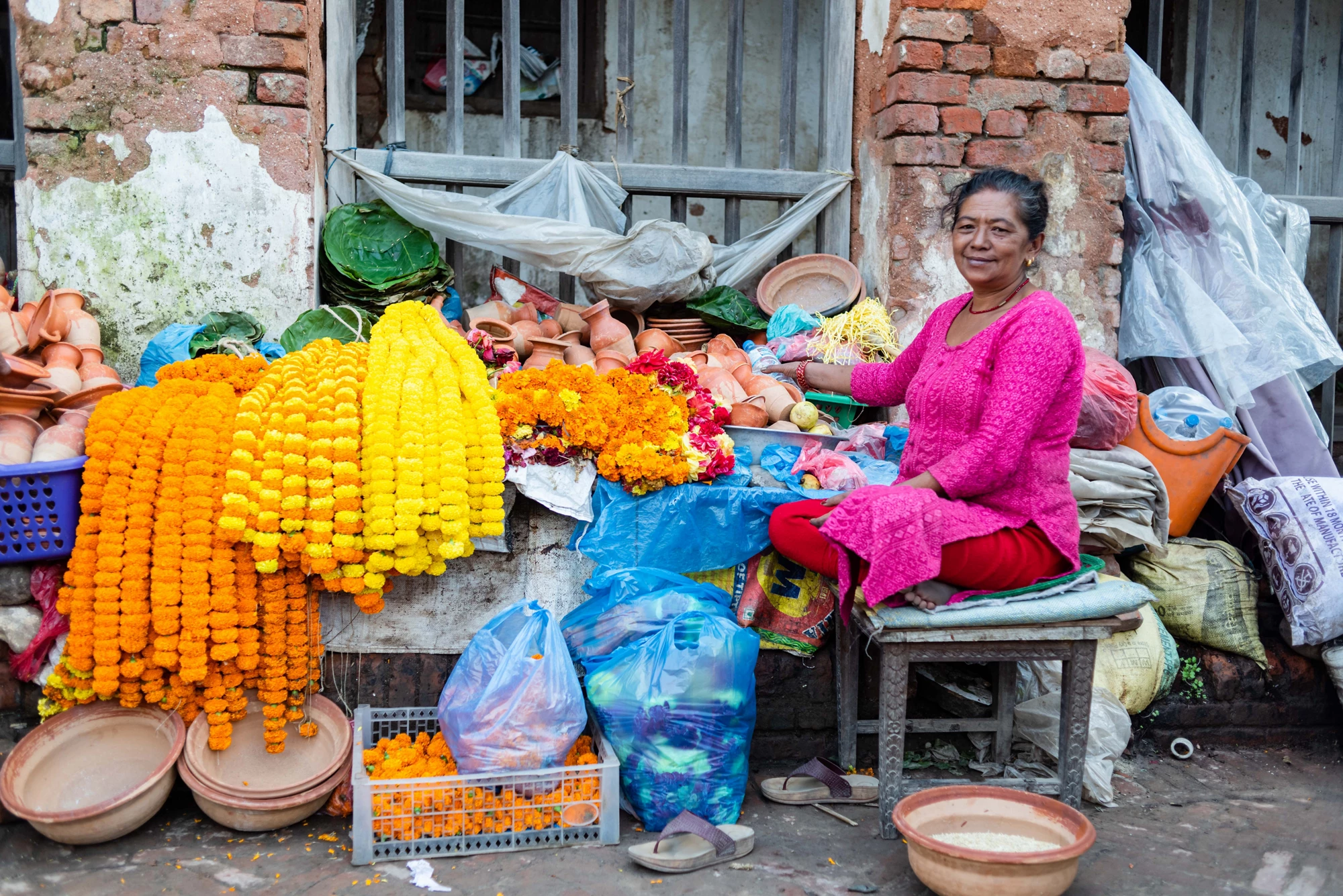
A recent World Bank report sheds light on Nepal’s smallest businesses, a sector that remains largely overlooked despite employing nearly 1.5 million people. The study examines formal and informal microenterprises, revealing their critical role in supporting livelihoods and highlighting the challenges they face in contributing to long-term economic growth.
Microenterprises as a Survival Strategy
The report finds that most informal microenterprises in Nepal are created out of necessity rather than entrepreneurial ambition. Many business owners turn to self-employment because formal wage jobs are scarce. These businesses often generate profits below the minimum wage and typically employ only the owner and a family member. Nearly half are owned by women, many of whom operate from home while balancing caregiving responsibilities.
The Productivity Gap
One of the study’s key findings is the significant productivity difference between formal and informal businesses. Formal microenterprises produce approximately six times more output per worker than informal firms. However, the report challenges the assumption that formalization alone leads to growth. Most successful formal businesses were registered from the beginning, suggesting that productive firms choose to formalize rather than becoming productive because they formalized.
Different Businesses Need Different Policies
The World Bank emphasizes that informal businesses are not all alike. About 22 percent demonstrate growth potential and could benefit from improved access to credit, technology, business training, and easier pathways to formal registration. For the larger group of subsistence businesses, policymakers should focus on reducing vulnerability through income support, childcare services, and opportunities for wage employment.
Nepal’s widespread informal sector reflects broader economic challenges, particularly the shortage of quality jobs. While targeted support can help promising businesses grow, long-term progress depends on reforms that improve the business environment, attract investment, and create more formal employment opportunities. Understanding the diverse realities of microenterprises is essential for designing effective economic policies and promoting sustainable development
Alaref, J., Patil, A., & Ajwad, M. I. (2026, June 27). What Nepal’s smallest businesses reveal. World Bank Blogs. https://blogs.worldbank.org/en/endpovertyinsouthasia/what-nepal-s-smallest-businesses-reveal-