
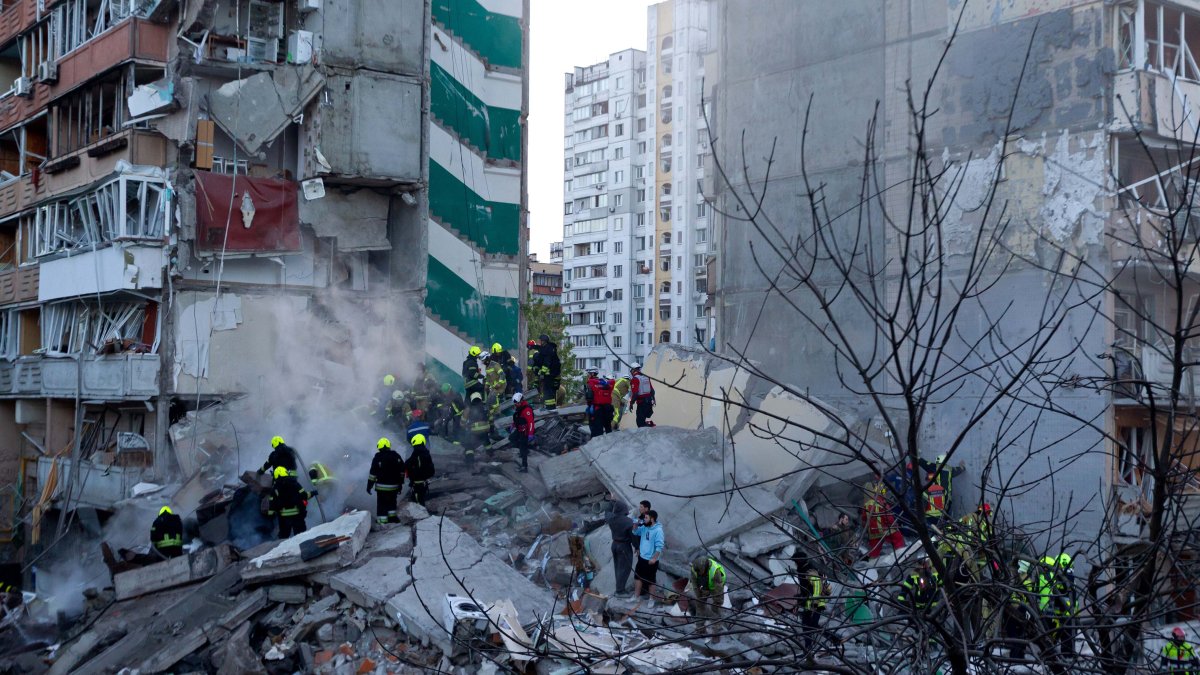
The Russian long-range missile and drone campaign in Ukraine operates as a highly geographic strategy of coercion. By deploying a calculated mix of ballistic missiles, cruise missiles, glide bombs, and low-cost one-way attack drones. Moscow aims to alter Ukraine’s strategic calculus and force political concessions. Analysis of localized damage data spanning 2023 through early 2026 reveals that Russian strikes have steadily intensified. Moving away from uniform distribution to become heavily concentrated in frontline and southern regions, critical logistical nodes, major urban centers, and economic hubs like ports and energy grids. This geographic distribution is designed to systematically cripple Ukraine’s ability to wage war, maintain its economy, and sustain civilian life.
Russia’s coercive approach relies on distinct weapon roles to maximize impact and strain Ukrainian defenses. While high-velocity ballistic and cruise missiles are reserved for penetrating deep-rear, high-value infrastructure. The massive scaling of inexpensive, Shahed-type one-way attack drones has allowed Russia to expand its reach and mount frequent, complex salvos. These mass drone strikes serve an asymmetric purpose: they force Ukraine to deplete expensive air defense interceptors. Keep repair crews under constant duress, and signal to the population that no area is safe. Proximity to Russian-controlled territory and borders still heavily dictates the frequency of strikes. Keeping western regions relatively safer while eastern and southern oblasts endure the brunt of the onslaught. Seasonal timing further refines this coercion, as seen in Russia’s deliberate winter campaigns targeting the power grid. To compound human suffering when dependence on heating and electricity is highest.
In conclusion, the geography of Russia’s firepower campaign demonstrates that modern strategic coercion. Is fundamentally about turning physical distance, critical infrastructure, and civilian vulnerability into political leverage. By concentrating strikes on the precise nodes that connect Ukraine’s military logistics with its domestic survival. Russia seeks to impose a cumulative, exhausting toll on Ukrainian society. Ultimately, the campaign’s strategic leverage depends not just on physical destruction. But on whether these geographic pressures can successfully break Ukraine’s political and military resolve.
Reference
Welsch, M., Yasir Atalan, Jensen, B., & Tiersten-Nyman, E. (2026, July 9). The Geography of Coercion: Russian Missile and Drone Campaigns in Ukraine. CSIS; Center for Strategic and International Studies. https://www.csis.org/analysis/geography-coercion-russian-missile-and-drone-campaigns-ukraine