
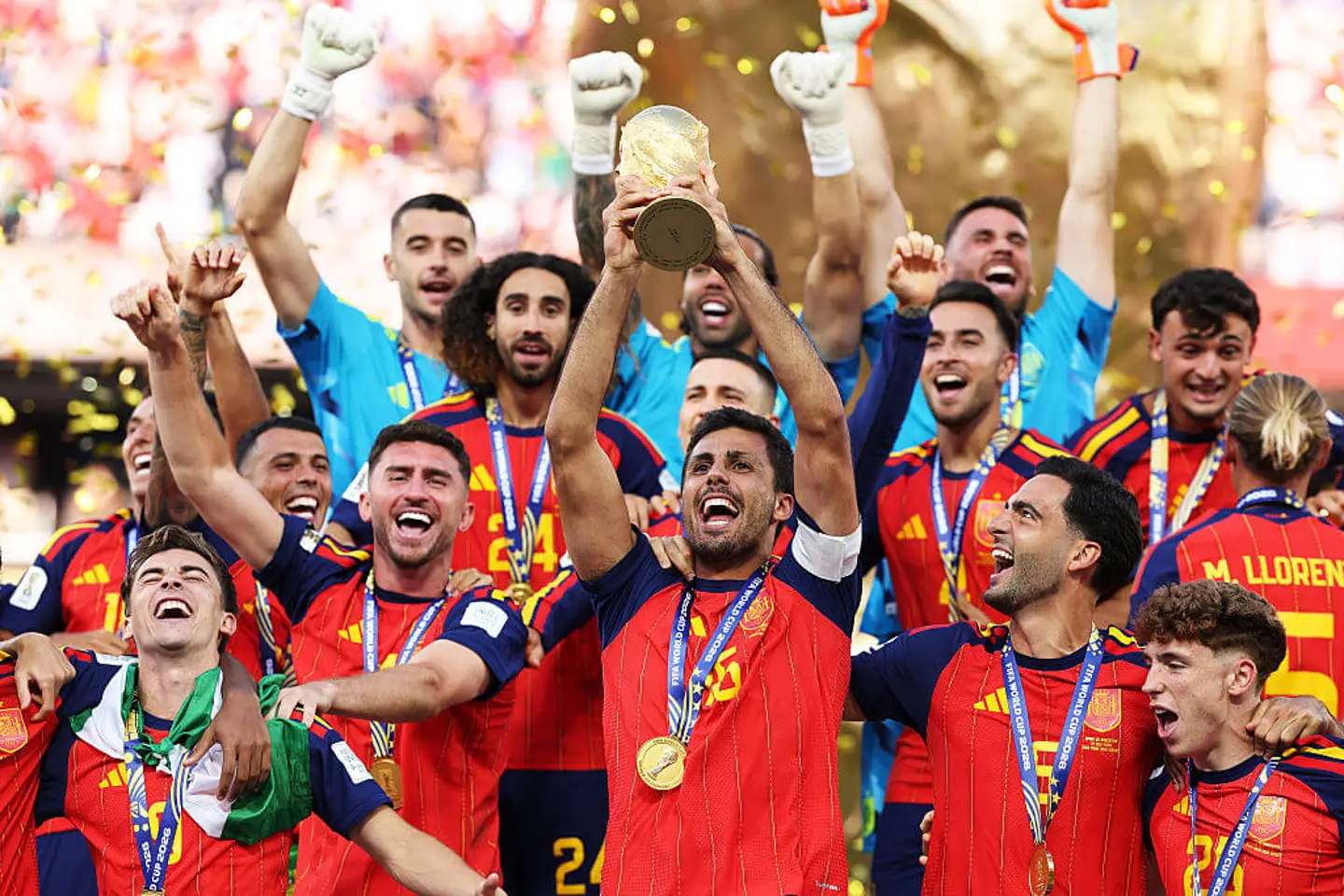
Spain Claims the World Cup Title
Spain captured the FIFA World Cup after defeating Argentina in a highly anticipated final, marking one of the country’s greatest achievements in international football. According to The Athletic, Spain combined tactical discipline, attacking efficiency and defensive organization to overcome the defending champions. The victory represents the culmination of a new generation of Spanish players capable of restoring the nation’s position among football’s elite.
Ferran Torres Leads the Victory
One of the decisive figures in the final was Ferran Torres, whose performance played a crucial role in Spain’s success. His attacking movement, finishing ability and leadership in the final third created constant pressure on Argentina’s defense. The match demonstrated the importance of experienced players who can deliver under the intense pressure of a World Cup final.
Argentina Falls Short
Argentina entered the match hoping to secure another World Cup title but struggled to impose its style of play against Spain’s organized defense. Despite creating scoring opportunities and maintaining periods of possession, Argentina was unable to capitalize on key moments. The defeat highlights the increasingly competitive nature of international football, where tactical execution often proves more decisive than individual talent alone.
A New Generation of Spanish Football
Spain’s triumph reflects years of investment in youth development and technical football. The national team’s success illustrates how long-term planning, strong domestic academies and tactical continuity can produce sustained international competitiveness. The victory also signals the emergence of a new generation ready to continue Spain’s football tradition on the global stage.
The Global Impact of the World Cup
Beyond the sporting result, the World Cup final attracted millions of viewers worldwide and reinforced football’s role as one of the most influential global sporting events. International tournaments generate significant economic activity, tourism, media attention and cultural exchange. The Spain-Argentina final also demonstrated how football continues to serve as a platform for national identity and international visibility.
International Relevance
Overall, The Athletic presents Spain’s victory as more than a sporting achievement. The World Cup final highlights the economic, cultural and diplomatic influence of global sporting events while showcasing the importance of youth development, competitive balance and international cooperation through sport. For the OGU, the event is internationally relevant because it reflects the global reach of football and its impact on international relations, media and national image.
Reference: The Athletic. (2026, July 19). Spain defeats Argentina in the FIFA World Cup Final. https://www.nytimes.com/athletic/7441998/2026/07/19/spain-world-cup-argentina-final-result-ferran-torres/