
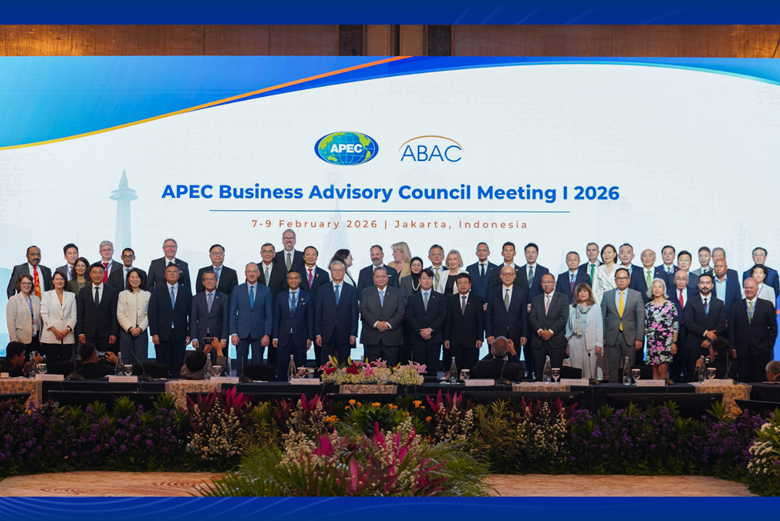
Overview: A Business-Driven Agenda for Regional Resilience
The APEC Business Advisory Council (ABAC) officially initiated its 2026 work program this week under the integrated theme “Openness, Connectivity, Synergy.” This strategic launch represents the first of four major business gatherings planned for the year, aiming to align private sector priorities with the broader policy goals of APEC’s “China Year.” Consequently, the program underscores a collective determination to champion collaborative innovation and open markets as the essential foundations for sustainable growth across the Asia-Pacific.
Origins and Strategic Context of ABAC 2026
Originally established to provide a direct link between the business community and APEC leaders, the council’s current agenda responds to an increasingly complex global trade environment. By late 2025, regional integration efforts faced significant headwinds from non-tariff barriers and fragmented regulatory frameworks. Furthermore, the 2026 program builds upon the outcomes of previous summits to ensure that the Free Trade Area of the Asia-Pacific (FTAAP) remains a central pillar of the region’s economic architecture.
Structure of the “Openness” and “Connectivity” Pillars
The framework of the new work program is organized around three critical focus areas designed to strengthen regional economic synergy. Specifically, the “Openness” pillar seeks to uphold liberalized trade and investment frameworks while addressing equal access to economic opportunities. Moreover, the “Connectivity” aspect focuses on reducing operational friction for businesses by promoting the digital transformation of customs procedures and enhancing regional infrastructure networks.
Synergy and Collaborative Innovation
In contrast to traditional trade-only approaches, the 2026 agenda emphasizes the role of technological “synergy” in driving long-term prosperity. This includes a robust focus on aligning artificial intelligence governance with business needs to optimize cross-border e-commerce and industrial productivity. Therefore, the council is prioritizing the development of voluntary frameworks that address emerging challenges in the digital economy, ensuring that innovation benefits both large enterprises and small-to-medium-sized businesses alike.
Synthesis of Business-Policy Alignment
The successful implementation of this work program relies heavily on the continuous dialogue between business leaders and APEC senior officials to ensure policy coherence. This coordination is intended to maximize the impact of collective efforts by transforming business-driven solutions into practical policy recommendations. Simultaneously, there is a clear intent to strengthen workforce adaptation to AI-driven changes, which is seen as vital to maintaining regional competitiveness. Ultimately, the iterative nature of this program allows the council to adjust its strategies in real-time, providing a stable yet flexible roadmap for the Asia-Pacific community to prosper together.
Source
APEC Business Advisory Council. (2026, February 11). ABAC launches 2026 work program under theme “Openness, Connectivity, Synergy”. APEC Secretariat. https://www.apec.org/press/news-releases/2026/0210_abac1