
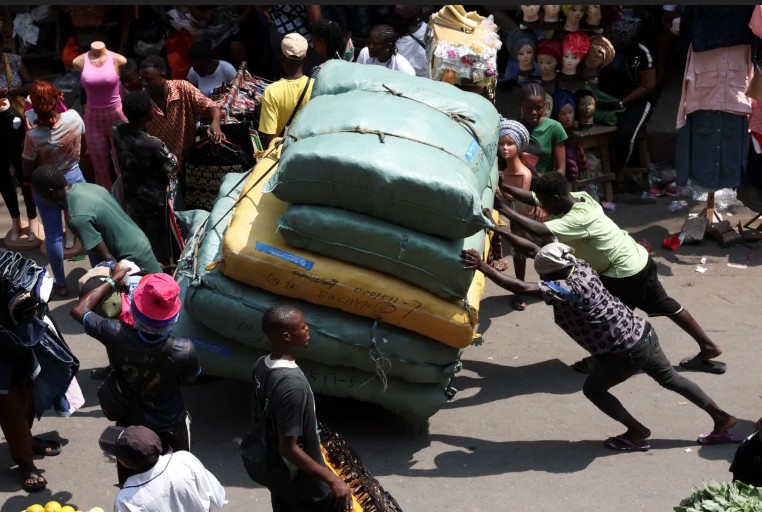
Cuts Have Revealed the Continent’s Economic Resilience
In the article “Africa After Aid: Cuts Have Revealed the Continent’s Economic Resilience,” published in Foreign Affairs, economist Landry Signé challenges the conventional narrative that African economies are overly dependent on foreign aid and vulnerable to external shocks. The article argues that recent reductions in international aid have revealed a more complex reality: many African countries have demonstrated significant economic resilience, adapting to global disruptions through stronger institutions, diversified trade relationships, and domestic policy responses.
Aid Cuts and Unexpected Economic Resilience
Recent global developments (including trade disruptions, geopolitical tensions, and reductions in foreign aid) have forced governments and investors to reassess economic risks. Africa has often been portrayed as highly vulnerable to such shocks. However, the economic outcomes following major aid reductions have contradicted these assumptions.
When the United States closed the U.S. Agency for International Development (USAID) and other donors reduced assistance, many analysts predicted severe economic consequences across the continent. Yet several African economies continued to perform strongly. Ethiopia, for example, revised its projected economic growth upward to 10.2 percent in 2026, while projections from the International Monetary Fund suggest that 11 of the world’s 15 fastest-growing economies in 2026 will be in Africa.
These results highlight that African economies are not uniformly dependent on aid. Instead, structural characteristics such as institutional strength, economic diversification, and domestic policy capacity significantly influence how countries respond to external shocks.
Understanding Africa’s Structural Resilience
Signé analyzes the resilience of African economies by examining two key dimensions: exposure and vulnerability.
Exposure refers to how susceptible a country is to external shocks, including geopolitical instability, trade disruptions, energy dependence, demographic pressures, technological change, and climate risks. Vulnerability, by contrast, measures a country’s capacity to respond to those shocks, which depends on institutional quality, infrastructure, governance, and economic stability.
Based on these two indicators, African economies fall into four categories:
- Trailblazers: Countries with low exposure and low vulnerability, meaning they possess strong institutions and diversified economies.
- Builders: Countries with low exposure but high vulnerability, suggesting strong potential if institutional weaknesses are addressed.
- Adapters: Countries facing higher exposure to global shocks but equipped with relatively strong institutions that allow them to adapt effectively.
- Stabilizers: Countries experiencing both high exposure and high vulnerability, often due to conflict, weak governance, or structural fragility.
This framework demonstrates that African economies are far more heterogeneous than global narratives often suggest.
Evidence of Economic Adaptation
Several examples illustrate how African countries have responded to economic disruptions. When aid reductions threatened health programs, governments in Nigeria, Ethiopia, and Ghana mobilized domestic resources to offset funding losses. Nigeria redirected government spending to compensate for lost assistance, while Ethiopia introduced new taxes to support public health financing.
Similarly, many African economies have diversified trade relationships to reduce reliance on single markets. While U.S. tariffs disrupted industries in countries heavily dependent on American markets (such as Lesotho’s garment sector) other economies had already diversified their trade partners. Countries including Côte d’Ivoire, Egypt, and Morocco expanded trade with regional, European, and Asian partners, reducing their vulnerability to U.S. trade policy.
Financial markets have also responded positively. African governments raised $18 billion in international capital markets in 2025, an increase from the previous year, while borrowing costs declined, suggesting that investors increasingly view African debt as less risky.
Structural Drivers of Long-Term Growth
Signé argues that several structural factors are strengthening African economic resilience.
One important factor is domestic fiscal capacity. Many resilient African economies maintain relatively high tax-to-GDP ratios, allowing them to sustain public investment even when external funding declines.
Economic diversification also plays a key role. Morocco, for example, has successfully expanded its manufacturing sector into automotive, aerospace, and renewable energy industries, while countries such as Tunisia have pursued diversified economic development strategies.
Regional integration is another important trend. Although intra-African trade remains relatively low, it is growing rapidly. The African Continental Free Trade Area (AfCFTA) is expected to significantly expand regional trade, with projections suggesting that intra-African exports could increase by 109 percent by 2035 if the agreement is fully implemented.
Reference
Signé, L. (2026, March 10). Africa after aid: Cuts have revealed the continent’s economic resilience. Foreign Affairs.
https://www.foreignaffairs.com/africa/africa-after-aid