
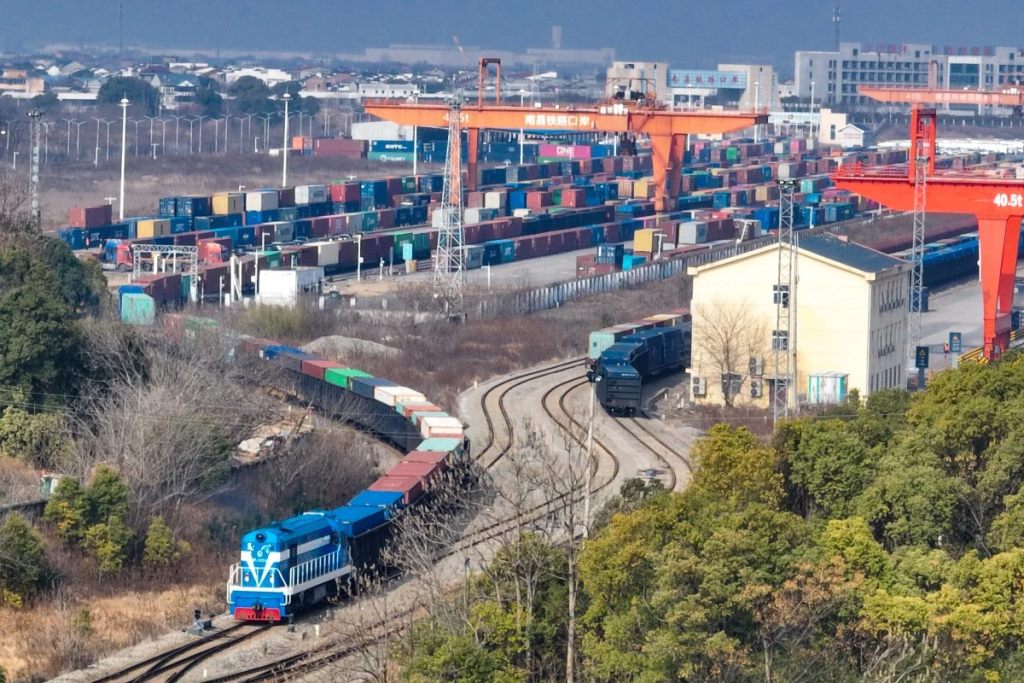
traditional trade routes face severe disruptions due to recent military conflicts. According to the South China Morning Post, sanctions on Russia complicate northern transit. In fact, instability in the Red Sea makes the southern maritime route very dangerous.
Moreover, the Chinese government must guarantee the constant flow of its technology exports. Consequently, they are financing key infrastructure across Central Asia and the Caucasus. As a result, freight trains can cross into Europe much more safely.
The Strategic Middle Corridor
On the other hand, this alternate project requires massive logistical coordination between several nations. For example, Kazakhstan and Turkey play absolutely critical roles in this new terrestrial path. Furthermore, new dry ports and high-capacity rail terminals are currently under construction. This ambitious plan promises to transform the logistical map of the Eurasian continent.
Crucially, reducing transit times is vital to maintain global economic competitiveness. Secondly, this corridor diversifies transport options in the face of future global crises.
Economic Implications and Future Challenges
Additionally, long-term viability will depend on continuous regional diplomatic cooperation. Surprisingly, several European countries have shown great interest in co-financing specific sections of the project. Analysts suggest initial investments will easily exceed billions of dollars.
Conversely, critics point out that initial operating costs will remain very high. For instance, multiple customs crossings still generate significant logistical delays for companies. In conclusion, consolidating the China Europe cargo corridor is essential to stabilize the global economy.
Reference South China Morning Post. Alternate route: China invests in Europe cargo corridor that avoids Russia, Middle East. SCMP Economy.