
A Shrinking Technological Gap
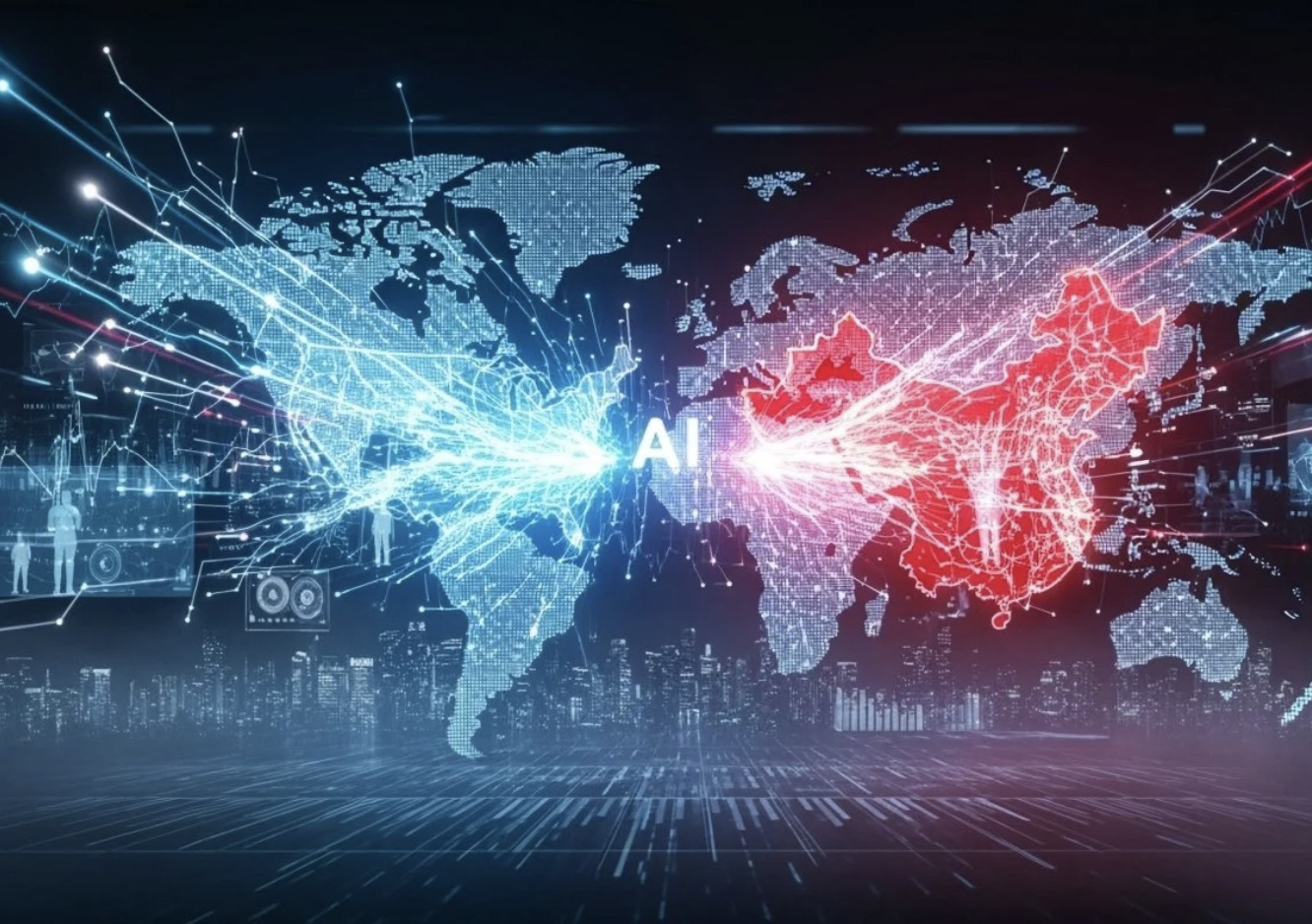
For years, Washington actively fixated on the artificial intelligence gap between the United States and China. Initially, the release of OpenAI’s ChatGPT established a clear early lead for American technology. However, this significant advantage has seemingly shrunk from months to weeks for the first time. This rapid shift followed the recent arrival of highly capable Chinese models from Moonshot AI and Alibaba Group Holding. Consequently, American AI policy currently stands at a crucial crossroads. Policymakers must urgently decide how tightly to control access to frontier US models and whether to heavily restrict open-weight Chinese models at home.
Regulatory Actions and Open-Source Debates
Recently, the Trump administration forced the leading company Anthropic to suspend access to its Fable 5 and Mythos 5 models over severe national security concerns. In contrast, Chinese systems like Moonshot’s Kimi K3 and Alibaba’s Qwen3.8 continue to launch as freely available open-weight models. Furthermore, Chinese President Xi Jinping officially endorsed open-source AI during a landmark address at the World AI Conference in Shanghai. Meanwhile, users of leading American models increasingly voice immense frustrations with restrictive cyber guardrails that block routine tasks like coding. Former White House AI tsar David Sacks explicitly noted that Kimi K3 successfully fixed 15 critical security bugs that US models refused to process.
Shifting Strategies and Infrastructure Competition
Because of these rapid developments, analysts suggest the US should quickly adopt a more forward-looking strategy. Specifically, Ryan Fedasiuk from the American Enterprise Institute argued that the rivalry is shifting toward an all-out global infrastructure competition. While strict US export controls have not stopped China’s AI development, they successfully slow its expansion by severely limiting available computing power. For example, Moonshot recently suspended new user subscriptions due to a massive compute shortage. Finally, Treasury Secretary Scott Bessent stated that the Trump administration still supports open-source models. However, he firmly threatened to sanction Chinese companies that illicitly train their systems on American model outputs.
Reference
Chow, V., & Chow, V. (2026, 21 julio). As US-Chinese AI model gap narrows, what next for Washington? South China Morning Post. https://www.scmp.com/news/china/diplomacy/article/3361393/us-chinese-ai-model-gap-narrows-what-next-washington?share=FoX2jrlkLC9LAR73kkBvti0dazwPRpfa2eXGxpFgaPIKtl6zI2L%2B%2Fu%2FrpRUhI5ic5Psd9U6ODiObOxpuCr3%2Fs7GW0wK%2FH2%2BmdTHvLwjpNmI%3D&utm_campaign=social_share