
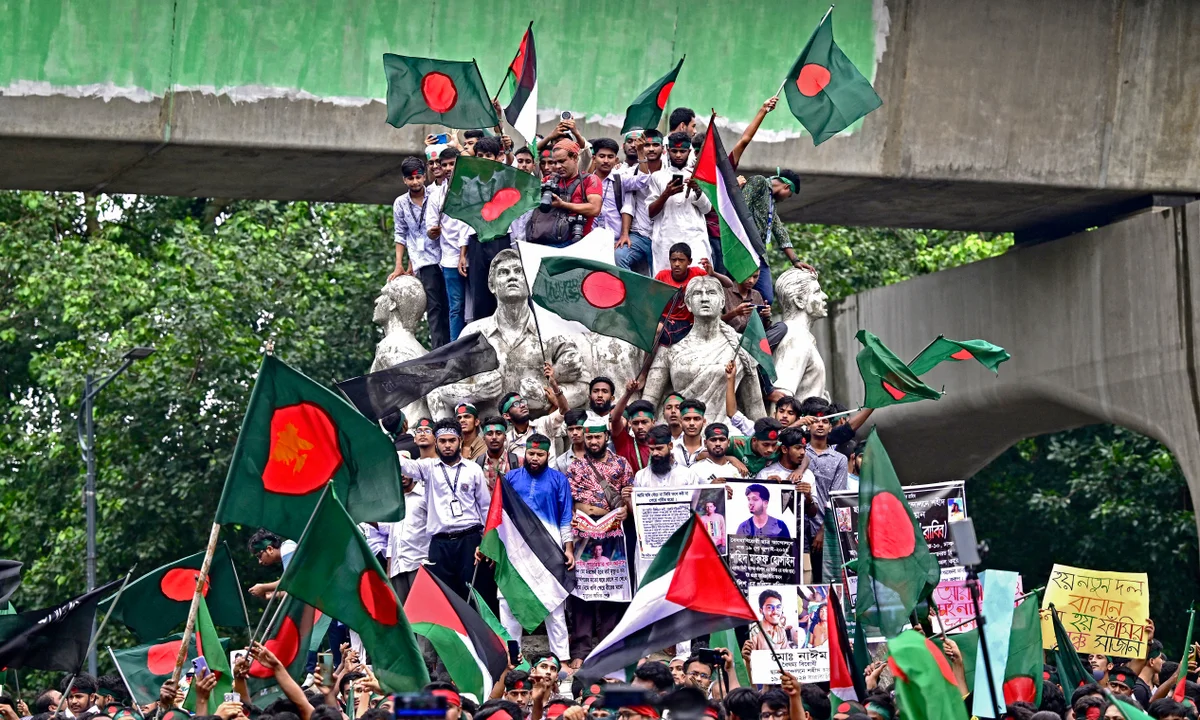
The historic February 2026 general election in Bangladesh marked the country’s first credible vote in nearly two decades. This concluding a turbulent transition after the August 2024 mass student uprising. That ousted the increasingly authoritarian Prime Minister Sheikh Hasina. The newly elected Prime Minister Tarique Rahman led his Bangladesh Nationalist Party (BNP). To a decisive victory alongside a strong showing by the revived Bangladesh Jamaat-e-Islami (BJI) and a smaller student-led party. Simultaneously, voters strongly passed a referendum on the “July Charter”. A sweeping set of constitutional and electoral reforms designed to end the overcentralization of power. This by enacting prime ministerial term limits, a bicameral parliament, and proportional representation.
The successful vote was enabled by an eighteen-month interim government led by Nobel laureate Professor Muhammad Yunus. Which effectively rescued Bangladesh’s economy from a post-uprising collapse. Prior to Hasina’s exit, systemic corruption, large-scale bank plundering by oligarchs, and severe unrest had drained foreign exchange reserves. Furthermore, brought the vital readymade garment export sector to a grinding halt. The interim administration enacted aggressive banking restructuring. Dissolved corrupt corporate boards, floated the currency, and unlocked vital emergency loans from the International Monetary Fund and the World Bank. These interventions successfully stabilized inflation, rebuilt foreign reserves, and brokered labor agreements. In order to keep global retail brands from fleeing the country.
Despite these critical macroeconomic achievements, the political terrain remains inherently unstable. Due to the non-inclusive nature of the 2026 election. Under pressure from student and religious groups, the interim government barred Hasina’s Awami League (AL) from participating in the vote. Structurally mirroring the past practice of suppressing opposition parties. Furthermore, the International Crimes Tribunal sentenced the exiled Hasina to death in absentia for the state violence committed during the 2024 crackdown. In addition, observers warn that because the AL retains pockets of public support and holds deep historical ties to the nation’s founding. Its forced exclusion risks creating a future political crisis and paving the way for an eventual comeback should the new coalition falter.
Ultimately, the ultimate trajectory of Bangladesh’s new era depends on. Whether Prime Minister Rahman can dismantle the entrenched patronage networks that have long dictated the country’s political economy. Armed with the democratic mandate of the July Charter reforms and an economically stable foundation left by the interim government. The BNP-led administration faces the monumental challenge of moving past dynastic, transactional politics. If the new leadership fails to deliver on these systemic changes, the country risks sliding back into old cycles of centralized power and instability. In conclusion, leaving the long-term promises of its “Monsoon Revolution” unfulfilled.
Reference
Avinash Paliwal. (2026, May 28). Bangladesh’s Unfinished Revolution. Carnegie Endowment for International Peace. https://carnegieendowment.org/research/2026/05/bangladeshs-unfinished-revolution