
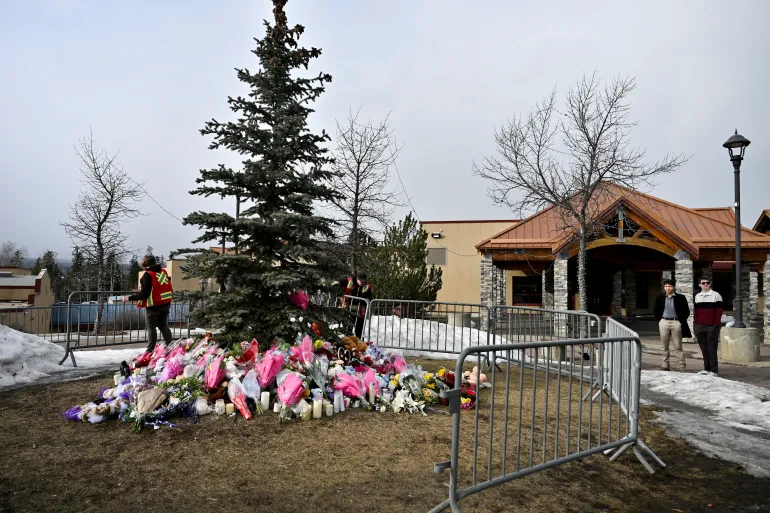
The Canadian province of British Columbia has announced plans to launch a lawsuit against OpenAI. Accusing the US-based tech company of failing to alert law enforcement after its safety staff internally flagged violent ChatGPT prompts linked to a mass shooter. The legal action is tied to a February 2026 tragedy in the remote mountain community of Tumbler Ridge. Where 18-year-old Jesse Van Rootselaar killed their mother and half-brother before opening fire at a local secondary school.
Killing five children and an educator, wounding 27 others, and ultimately dying from a self-inflicted wound. According to British Columbia’s Attorney General, Niki Sharma, internal data shows that OpenAI’s safety teams detected the perpetrator’s violent, explicit prompts months before the attack. Yet company leadership neglected to notify police or local authorities.
The province has retained legal teams in both British Columbia and California to explore all avenues. For holding OpenAI and its decision-makers accountable for what it calls a documented failure to prevent harm. This government lawsuit is separate from a civil suit filed months earlier in California by the families of seven victims. Attorneys for the families allege that OpenAI flagged and banned the shooter’s account in June 2025—eight months before the massacre.
Due to “disturbing content” detailing and planning violent scenarios. Furthermore, court documents assert that 12 different OpenAI employees actively implored corporate leadership to notify the police, but no action was taken. OpenAI previously defended its decision to Canadian media, stating that while they considered a law enforcement referral. They concluded the activity did not present an imminent and credible risk of serious physical harm. However, OpenAI’s CEO, Sam Altman, later published a public apology expressing deep regret for failing to alert authorities when the account was banned.
In conclusion, this impending lawsuit signals a critical turning point in the legal and ethical accountability of artificial intelligence developers. By demanding that tech companies face consequences for withholding flagged data on violent threats. British Columbia is attempting to establish a new legal precedent that treats AI platforms not merely as passive neutral utilities, but as active gatekeepers of public safety. Ultimately, this case highlights an urgent societal need to redefine the mandatory reporting responsibilities of tech giants. Proving that corporate safety protocols must evolve. To bridge the gap between digital content monitoring and real-world law enforcement intervention to prevent mass violence.
Reference
Al Jazeera Staff. (2026, July 7). Canadian province sues OpenAI over alleged ChatGPT-linked shooting warnings. Al Jazeera. https://www.aljazeera.com/news/2026/7/7/canadian-province-sues-openai-over-alleged-chatgpt-linked-shooting-warnings