
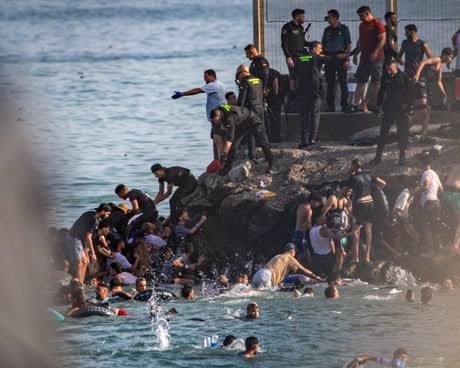
A massive surge of approximately 50,000 individuals crossing from North Africa into the small Spanish border enclave of Ceuta has sparked severe humanitarian and political fallout. The local administration described the sudden influx as a direct violation of territorial integrity that was at least encouraged or permitted by neighboring border authorities. Drawing comparisons to a similar incident in 2021. Intelligence assessments suggest the event was triggered by social media rumors about altered deportation policies. This which gained momentum as border controls on the other side dropped to a minimum. While around 48,300 people have already been turned back, dozens of deaths have been recorded in the surrounding waters. In short, hundreds remain stranded without food or shelter while searching for missing family members.
The geopolitical repercussions have extended across the European Union, igniting sharp internal friction over border security. Some member nations criticized the handling of the incident and suggested suspending free-movement privileges. While local authorities called for European solidarity against coordinated disinformation campaigns allegedly aimed at destabilizing the region.
In conclusion, the mass border crossing in Ceuta underscores how digital misinformation and lax border enforcement can swiftly evolve into a severe humanitarian catastrophe. As regional authorities work to manage the immediate human toll and restore order. Ultimately, the incident highlights persistent diplomatic vulnerabilities and deep political divisions within the broader European security framework.
Reference
Kassam, A., Mohammad, O., & Lisa O’Carroll. (2026, August 3). Ceuta leader accuses Morocco over ‘atrocity’ of mass border crossing. The Guardian; The Guardian. https://www.theguardian.com/world/2026/aug/03/ceuta-leader-border-crossing-morocco-spain