
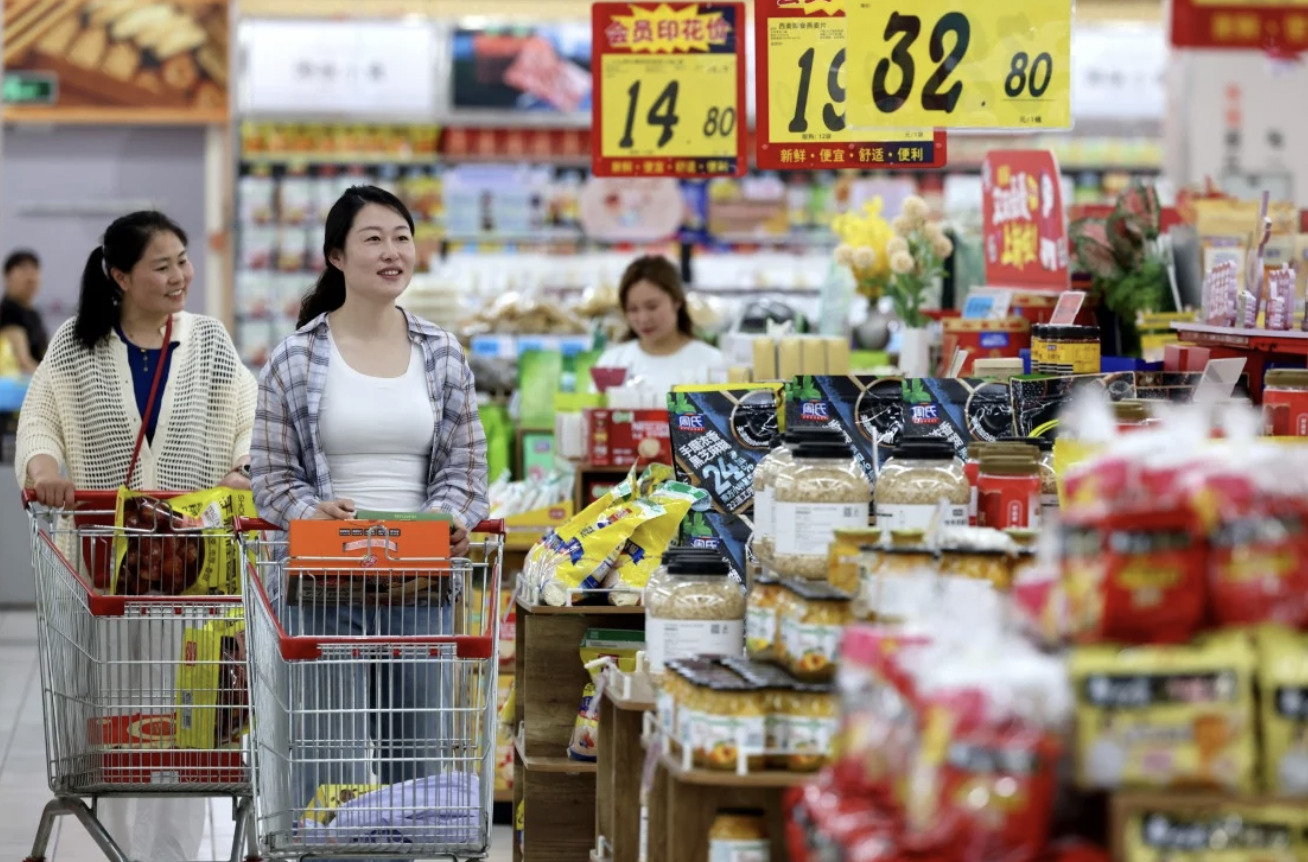
China reported sluggish retail sales figures in May. Consequently, this highlighted persistent weakness in domestic demand. Therefore, analysts predict the deployment of additional stimulus measures to address the widening imbalance. Meanwhile, Chinese exports skyrocketed simultaneously.
First Retail Decline Since Lockdown
Retail sales fell by 0.6 percent year on year in May. Notably, this is the first decline since China lifted its pandemic lockdown. Moreover, April previously showed a 0.2 percent increase. The National Bureau of Statistics released this data on Tuesday. Economists had forecasted a modest 0.09 percent increase. However, the lacklustre reading missed this mark completely. Additionally, consumer activity saw a temporary bump over the Labour Day holiday. Despite this, household spending remains cautious amid an uncertain job market.
Industrial Output and Stimulus Hopes
Meanwhile, industrial output grew by 4.5 percent year on year in May. Consequently, this represents an increase from 4.1 percent the previous month. Therefore, Chinese factories relied heavily on soaring exports. This growth helped offset the apparent softening of domestic demand.
Ding Shuang, chief economist at Standard Chartered, noted that the country’s growth model remains heavily reliant on exports. Furthermore, earlier trade-in programs for appliances and vehicles simply pulled demand forward. Therefore, the boost from these consumption incentives was always temporary. Ultimately, driving sustained consumption through policy alone is quite difficult.
Beijing will likely roll out additional stimulus measures soon. Consequently, these actions could follow the upcoming Politburo meeting in late July. They may accelerate fiscal spending to strongly support credit demand. Otherwise, second-quarter growth could slip below 4.5 percent. Therefore, this would put GDP growth below the government’s target range.
Trade Tensions and Property Struggles
The disappointing retail figures arrive at a critical time. Beijing seeks to position domestic demand as a stronger growth engine. However, the external economic environment remains increasingly uncertain. Meanwhile, exports have consistently outperformed expectations this year. Conversely, both consumption and the property sector have remained notably weak.
Zhang Zhiwei, chief economist at Pinpoint Asset Management, stated that weak data puts pressure on the government. Consequently, they must consider policy measures to stabilize consumption. Furthermore, sustained export growth could fuel international trade tensions. For instance, Europe is emerging as a potential source of risk.
Overall fixed-asset investment fell by 4.1 percent recently. Consequently, the struggling property sector heavily weighed on the economy. Real estate investment saw a severe 16.2 percent year-on-year fall. Furthermore, sales of new homes contracted by 10.8 percent. Finally, the urban unemployment rate stood at 5.1 percent in May.
Reference
Nurmamat, M., & Nurmamat, M. (2026, 16 junio). China sees first retail sales drop in over 3 years, prompting talk of stimulus. South China Morning Post. https://www.scmp.com/economy/economic-indicators/article/3357227/chinas-economic-imbalances-deepen-may-retail-sales-drop-first-decline-late-2022?module=perpetual_scroll_0&pgtype=article