
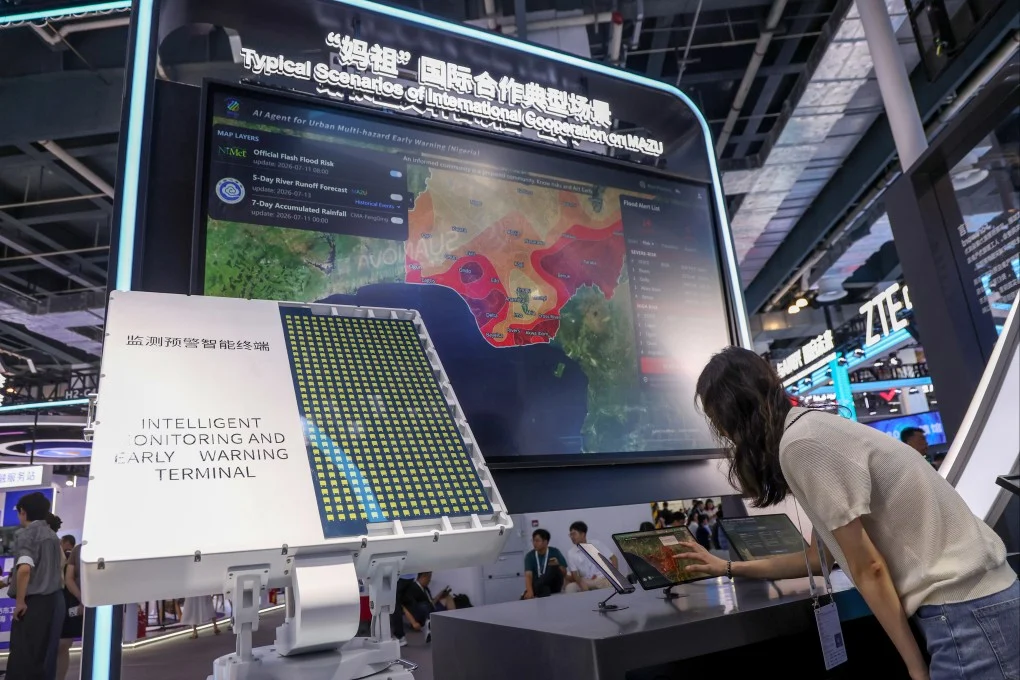
As intensifying meteorological disruptions challenge traditional disaster relief frameworks across developing economies, the deployment of China’s AI weather warning system Mazu marks a critical milestone in international technological cooperation. Unveiled prominently at the World AI Conference in Shanghai, the advanced platform has officially expanded operations into seven developing nations. By providing highly customized forecasting frameworks, this state-backed infrastructure initiative aims to narrow the digital divide and protect vulnerable populations from increasingly volatile natural disasters.
Tailored Meteorological Intelligence for Emerging Markets
To evaluate the operational significance of this technological rollout, digital infrastructure planners are looking closely at how the system adapts to varied regional climates. Traditional meteorological software frequently falls short in the Global South due to a fundamental lack of localized computing infrastructure and historical data gaps.
According to regional summit reports, the platform bypasses conventional modeling limitations by processing unstructured atmospheric data directly through deep learning frameworks.
The system is engineered specifically to deliver predictive warnings for sudden, high-impact events like severe typhoons, extreme rainstorms, and rapid flash floods. Rather than forcing developing states to purchase expensive, generic software packages, the platform offers specialized configurations designed to fit localized geographic baselines. Consequently, the expansion of China’s AI weather warning system Mazu serves as a vital bridge, transforming raw satellite information into actionable community safety measures.
A Soft-Power Pillar in the Geopolitical Tech Space
This expanding computational network alters the international technology landscape through more than just simple climate forecasting. It functions as a core component of digital soft-power diplomacy across Asia, Africa, and Latin America.
By providing these essential safety tools to developing countries, Beijing is establishing an alternative global computing ecosystem. This strategic positioning comes amid growing discussions regarding weather-manipulation technologies and cross-border digital rivalries. As a result, participating states gain high-performance disaster readiness tools without remaining entirely dependent on Western scientific networks or commercial data systems.
Enhancing Supply Chain Stability and Corporate Risk Mitigation
For multinational logistics networks, agricultural raw material buyers, and global insurance groups, this expanded predictive infrastructure introduces a much higher degree of commercial predictability. Unpredictable extreme weather consistently triggers sudden factory shutdowns, shipping lane gridlocks, and heavy agricultural losses across emerging markets.
Furthermore, having access to precise, localized early warnings enables cross-border enterprises to execute proactive supply adjustments and secure physical capital before major storms arrive. While implementing these predictive AI networks into everyday corporate resource planning demands initial training and adaptation, it radically reduces structural business vulnerabilities. Ultimately, utilizing real-time digital monitoring helps prevent localized weather shocks from spiraling into broad, multi-market financial supply shocks.
The Future of Climate Adaptation Networks
Rebalancing global data resources and building long-term environmental safety nets will naturally require continued international technical cooperation. The fragmented, isolated prediction systems of previous decades are entirely inadequate for managing the realities of a changing climate.
Moving forward, developing nations must continue to expand their access to flexible, high-capacity computing tools to protect local populations. Success in this unstable environmental arena requires maintaining a careful balance between adopting foreign technology and developing domestic regulatory literacy. Ultimately, the immediate challenge for global leadership is fully distributing these predictive lifelines before the next historic storm exposes the remaining gaps in global disaster readiness.
South China Morning Post Science Desk. (2026, July 19). China’s AI weather warning system Mazu expanding across Global South. South China Morning Post. https://www.scmp.com/news/china/science/article/3361108/chinas-ai-weather-warning-system-mazu-expanding-across-global-south