
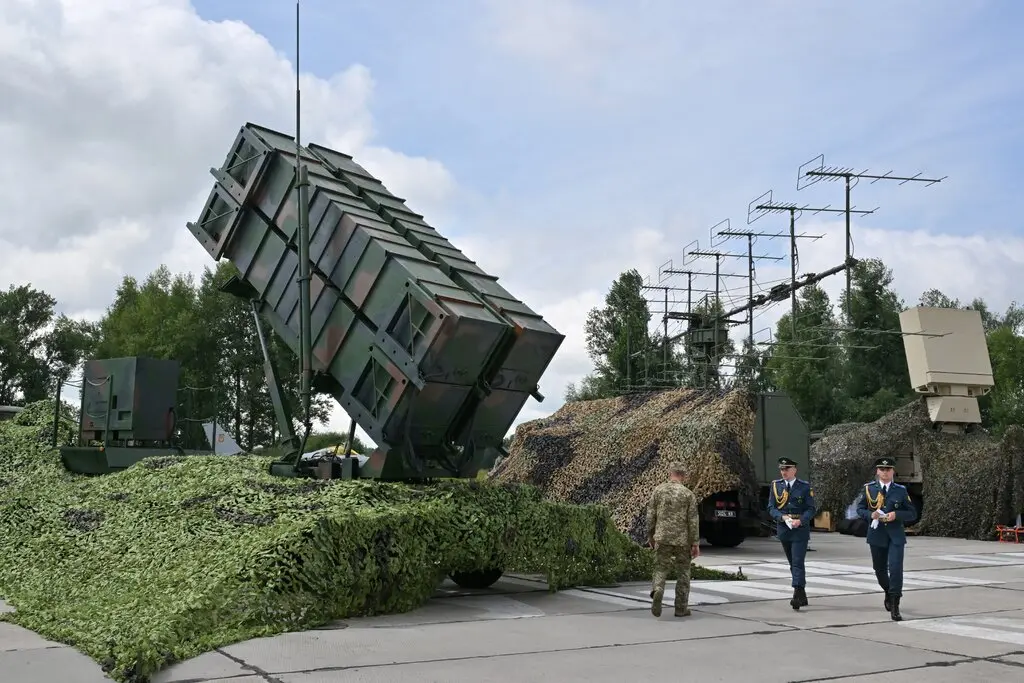
A Landmark Shift in Continental Defense Manufacturing
The structural framework governing Western military industrial production is undergoing a historic realignment. According to an extensive defense report by The New York Times, a landmark licensing agreement will allow the mass production of Patriot air defense interceptors inside Europe. The joint venture connects American defense titan RTX (formerly Raytheon) with European missile pioneer MBDA. Specifically, the localized manufacturing operations will take place at a dedicated facility in Schrobenhausen, Germany. Consequently, this strategic initiative marks a profound shift away from total reliance on direct United States factory exports. The agreement establishes a more resilient, distributed defense supply chain capable of sustaining long-term security commitments.
The Strategic Boost for Ukraine’s Long-Term Air Defense
The immediate operational catalyst for this massive industrial expansion is the ongoing military conflict in Eastern Europe. Currently, Ukraine’s armed forces face persistent, large-scale aerial bombardments against critical energy networks and urban centers. While Western allies have supplied various advanced air defense assets, the global supply of Patriot interceptor missiles remains critically bottlenecked. Therefore, establishing a high-volume assembly pipeline in Western Europe provides a guaranteed hardware pipeline for Kyiv. This reliable supply will heavily reinforce Ukraine’s capability to defend its sovereign airspace over the coming years.
Replenishing NATO Arsenals and European Stockpiles
Beyond the immediate theater of war, the newly authorized manufacturing hub aims to fix widespread military inventory depletions. For instance, multiple European NATO members have severely drained their domestic air defense reserves to support regional security partners. The long-term defense contract includes an initial order of one thousand Patriot missiles backed by a coalition of European nations. This collective purchasing model guarantees the manufacturing facility a steady, multi-year production backlog. As a result, participating European states can systematically replenish their national defense stockpiles while simultaneously lowering unit costs through massive economies of scale.
Overcoming Industrial Bottlenecks and Tech Transfer Hurdles
Despite high diplomatic enthusiasm, translating a complex military license into immediate factory output presents severe operational hurdles. The precision manufacturing of advanced surface-to-air missiles requires highly specialized raw materials, secure microelectronic components, and rare chemical propellants. Furthermore, navigating strict United States export control regulations and technology transfer laws often delays international aerospace ventures for years. To address these vulnerabilities, European aerospace engineers are working to build localized supply chains for critical subcomponents. Therefore, reducing external dependencies remains vital to achieving the facility’s ambitious production timelines.
International Relevance
The licensing and localized production of Patriot defense systems in Europe carries immense significance for global governance, international law, and transnational military economics. By decentralizing the production of highly sensitive, elite military hardware outside the United States, this agreement redefines the parameters of Western defense technology transfers. Furthermore, it strengthens the long-term deterrence posture of the NATO alliance, directly influencing the strategic calculations of competing regional superpowers. This industrial pivot demonstrates that modern security requires a robust fusion of state diplomacy and manufacturing capability. Ultimately, the successful deployment of this European missile pipeline will set new global standards for multilateral weapons procurement, defense supply chain security, and the long-term protection of sovereign airspace worldwide.
Reference: The New York Times. (2026, July 8). A license to make Patriot defense systems may be a big boost for Ukraine. https://www.nytimes.com/2026/07/08/world/europe/a-license-to-make-patriot-defense-systems-may-be-a-big-boost-for-ukraine.html