
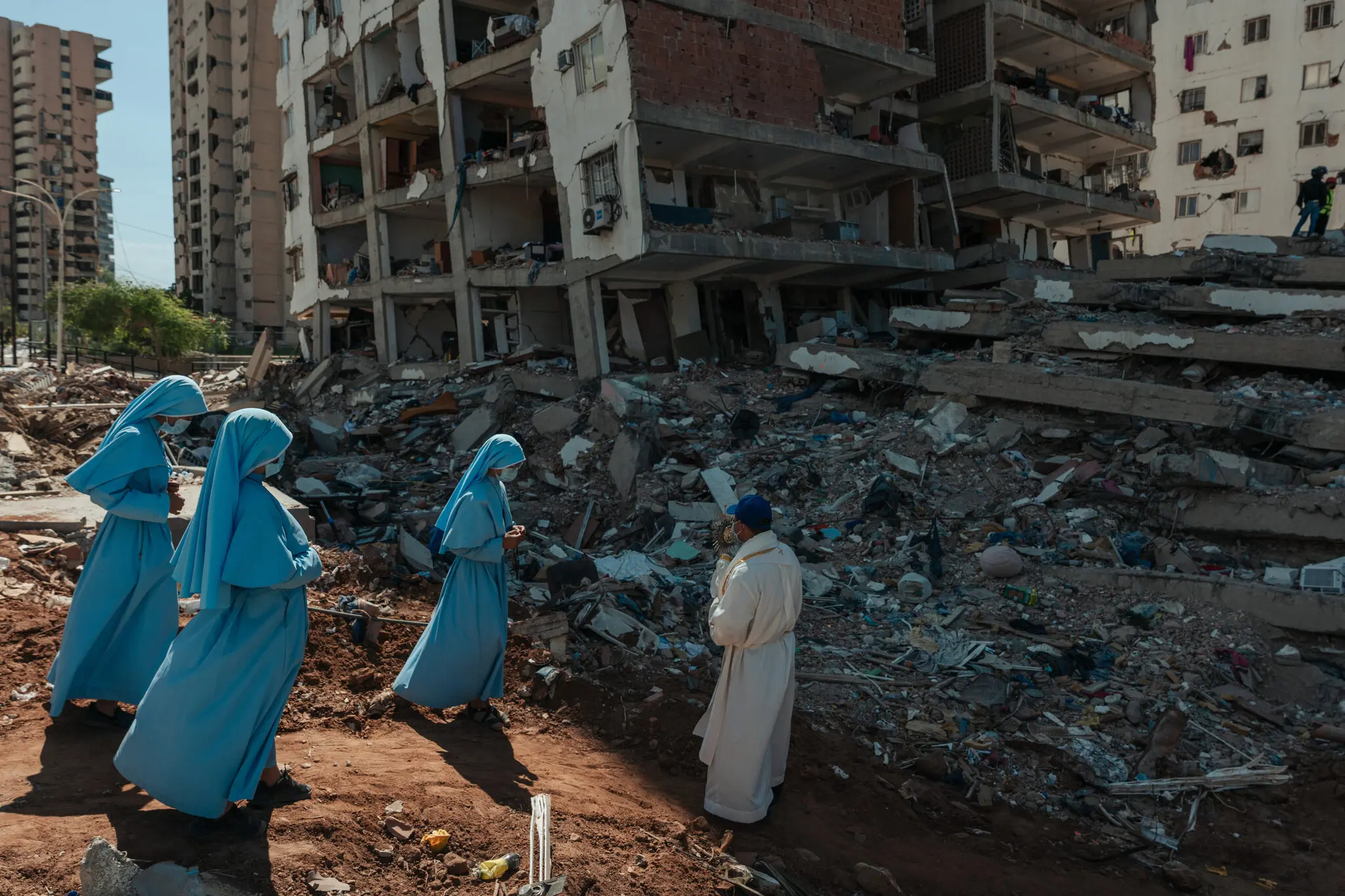
A Grim Reality Along the North-Central Coast
The scale of the humanitarian tragedy in South America is becoming painfully clear. According to a harrowing on-the-ground report by The New York Times, emergency response teams are uncovering a rising number of casualties following the massive seismic disaster. The powerful twin earthquakes that rocked the northern coast have left a trail of unprecedented physical devastation. Specifically, entire residential blocks and commercial districts have been flattened into dense concrete traps. Consequently, state officials have significantly raised the official death toll as specialized recovery personnel gain access to heavily isolated coastal towns.
The Exhausting Race Against Structural Collapse
Search and rescue brigades are operating under extremely dangerous and unstable physical conditions. For instance, frequent and powerful aftershocks continue to rattle the fragile foundations of remaining coastal structures. Because major highways and mountain bridges were completely severed by the initial tremors, heavy earth-moving machinery cannot reach several high-priority disaster zones. Therefore, rescue workers and local volunteers are forced to manually clear massive piles of twisted steel and heavy debris using basic hand tools. This logistical bottleneck severely reduces the window of opportunity for locating potential survivors trapped deep beneath the rubble.
A Heartbreaking Recovery Operations Phase
The focus of the emergency response is gradually and tragically shifting from active rescue to the systematic recovery of human remains. In several hard-hit municipalities, local morgues and community hospitals have completely exceeded their operational capacities. To address this crisis, authorities have established temporary refrigerated storage facilities and makeshift identification centers in public plazas. Families are gathering in agonizing lines outside these structures, waiting hours for updates on missing relatives. Furthermore, mental health professionals emphasize that the lack of clear communication is compounding the deep psychological trauma gripping affected communities.
The Logistics of Strategic International Relief
This profound localized catastrophe has triggered a complex, highly coordinated international relief operation to stabilize the region. For example, specialized humanitarian flights carrying heavy emergency equipment, field hospitals, and advanced water purification systems are arriving at functioning regional airstrips. International agencies are working closely with local civilian coordinators to guarantee the transparent distribution of survival supplies. Moreover, neighboring democratic nations have pledged long-term financial assistance packages to help rebuild ruined public infrastructure. Therefore, this collective global mobilization remains vital to prevent widespread outbreaks of waterborne diseases.
International Relevance
The escalating humanitarian crisis in Venezuela carries immense implications for global governance, transnational migration dynamics, and international crisis response models. When a major natural disaster paralyzes a country experiencing a delicate institutional transition, it severely tests the efficiency of multilateral diplomatic frameworks. Furthermore, the massive displacement of coastal populations could trigger sudden, unpredictable waves of regional migration across the Western Hemisphere, directly impacting border management policies in neighboring states. By illustrating the critical importance of rapid, unhindered international aid coordination during large-scale catastrophes, this tragic event forces global development banks, non-governmental organizations, and transnational logistics networks to completely update their emergency protocol standards for highly vulnerable zones worldwide.
Reference: The New York Times. (2026, July 8). Venezuela earthquakes: Death toll rises as more remains are recovered. https://www.nytimes.com/2026/07/08/world/americas/venezuela-earthquakes-deaths-remains.html