

Volume 105, Number 1
The January/February 2026 issue of Foreign Affairs examines a world shaped by democratic strain, authoritarian cooperation, and strategic uncertainty. Across regions, the essays explore whether the liberal order is weakening or adapting to new pressures. Together, they present a picture of a global system under stress but still in motion.
The Weakness of the Strongmen
What Really Threatens Authoritarians?
This essay challenges the idea that strongmen are invincible. Although authoritarian leaders project control, their power often rests on fragile elite coalitions and economic performance. When those foundations weaken, internal cracks begin to appear.
However, repression does not remove risk. It may silence opposition temporarily, yet it increases dependence on coercion and loyalty from insiders. Over time, this dependence can create instability rather than strength.
Ultimately, the article argues that authoritarian durability is conditional. The most serious threat often comes from elite fragmentation and institutional weakness, not only from public protest.
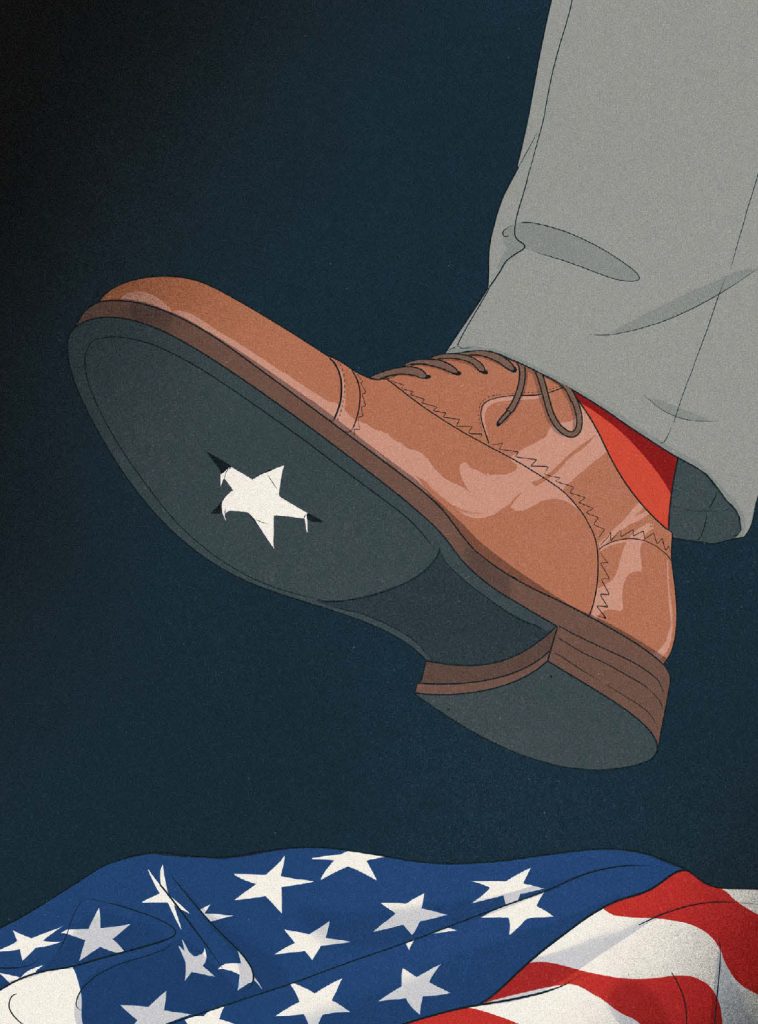
The Price of American Authoritarianism
What Can Reverse Democratic Decline?
This essay examines democratic backsliding in the United States and its global impact. Institutions remain intact; nevertheless, polarization and erosion of norms create lasting pressure.
In addition, democratic decline tends to unfold gradually. Legal changes, institutional capture, and normalization of extreme rhetoric weaken systems over time rather than overnight.
Therefore, recovery requires more than electoral victory. Rebuilding democratic trust and reinforcing institutional safeguards are central to reversing decline.
The Illiberal International
Authoritarian Cooperation Is Reshaping the Global Order
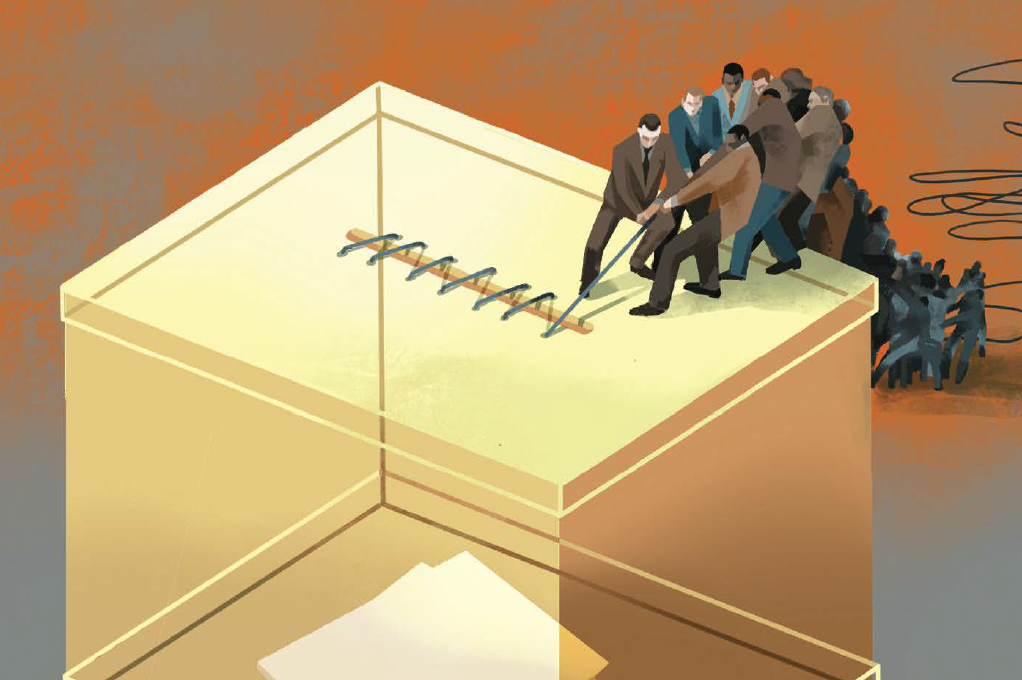
This article explains how authoritarian regimes increasingly coordinate across borders. Unlike Cold War alliances, this cooperation operates through flexible networks.
Moreover, states such as China and Russia provide diplomatic cover, economic support, and security assistance to one another. As a result, repression faces fewer international costs.
Consequently, democracy now confronts organized pressure beyond national borders. A coordinated democratic response becomes essential.
How China Wins the Future
Beijing’s Strategy to Seize the New Frontiers of Power
This essay analyzes China’s effort to lead in advanced technology, clean energy, and digital infrastructure. Beijing combines industrial planning with long-term investment.
At the same time, China aligns political authority with economic ambition. This coordination allows resources to move toward strategic priorities efficiently.
As a result, technological leadership becomes part of national strategy rather than market competition alone.
China’s Long Economic War
How Beijing Builds Leverage for Indefinite Competition
This article describes China’s economic policy as a sustained strategy for leverage. Instead of short-term confrontation, Beijing builds influence through trade and finance.
Through infrastructure projects and supply chain positioning, economic interdependence becomes a tool of strategic advantage. Meanwhile, competitors must respond to long-term structural pressure.
Therefore, economic statecraft emerges as a central arena of global rivalry.
The End of the Israel Exception
A New Paradigm for American Policy
This article reassesses U.S.–Israel relations in a changing Middle East. It argues that traditional bipartisan consensus is eroding amid shifting regional dynamics and domestic political debates.
The authors suggest that unconditional support has become harder to sustain politically and strategically. A recalibrated policy may better reflect evolving realities. It concludes that American policy must adapt. Strategic clarity, rather than automatic alignment, may define the next phase of the relationship.

The West’s Last Chance
How to Build a New Global Order Before It’s Too Late
This essay argues that Western democracies face a narrowing opportunity to renew leadership. Fragmentation and political division reduce collective influence.
However, rebuilding alliances and modernizing institutions remain possible. Updated cooperation frameworks could restore credibility.
Thus, the moment is urgent but not irreversible.
How to Survive in a Multialigned World
The Indian Way of Strategic Diversification
This article explores India’s strategy of multialignment. Rather than choosing sides, New Delhi cultivates partnerships across competing blocs.
As a result, flexibility becomes a strategic asset. India maximizes autonomy while engaging multiple powers.
Consequently, its approach reflects a broader global shift toward diversification.
Latin America’s Revolution of the Right
The Forces Remaking the Region in the Age of Trump
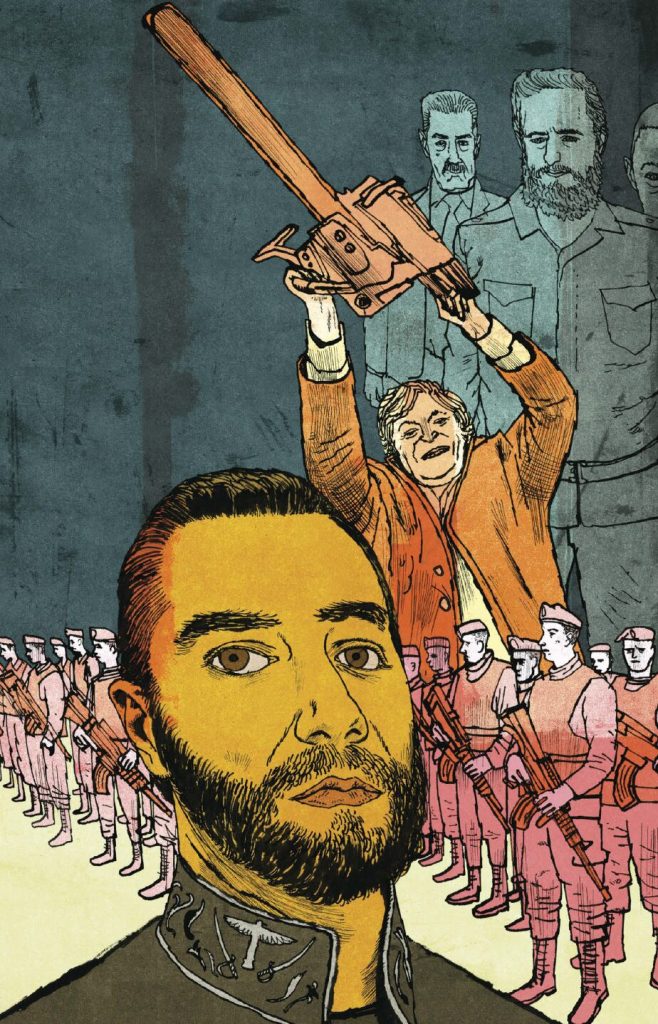
This essay analyzes the resurgence of right-wing movements in Latin America. Economic dissatisfaction and security concerns drive political shifts.
However, these movements vary widely in ideology and structure. Some emphasize populism, while others focus on institutional reform. Overall, the region enters a phase of political volatility shaped by governance performance.
The Allies After America
In Search of Plan B
This article considers how U.S. allies might respond to potential American retrenchment. Strategic autonomy debates intensify across Europe and Asia.
Some seek greater strategic autonomy, while others deepen regional partnerships. The question is not whether alliances matter, but how resilient they are without U.S. leadership. The article suggests that uncertainty about American reliability is already reshaping alliance planning worldwide.
How Europe Lost
Can the Continent Escape Its Trump Trap?
This essay evaluates Europe’s strategic vulnerability amid political shifts in the United States. Dependence on American security guarantees limits autonomy.
For instance, economic stagnation and political fragmentation further complicate Europe’s position. The continent faces pressure from both external rivals and internal divisions. Europe must rethink its strategic posture. Greater defense coordination and economic reform may determine whether it regains influence.
Taken together, the January/February 2026 issue of Foreign Affairs presents a world in transition. Authoritarian systems coordinate more actively, democratic institutions face strain, and middle powers redefine alignment strategies.
Rather than predicting collapse, the issue highlights structural tension. In this sense, global order appears contested but not predetermined. The outcome will depend on how states adapt to interconnected pressures in the years ahead.
Reference:
Foreign Affairs. (2026). January/February 2026 issue (Vol. 105, No. 1). Council on Foreign Relations. https://www.foreignaffairs.com