
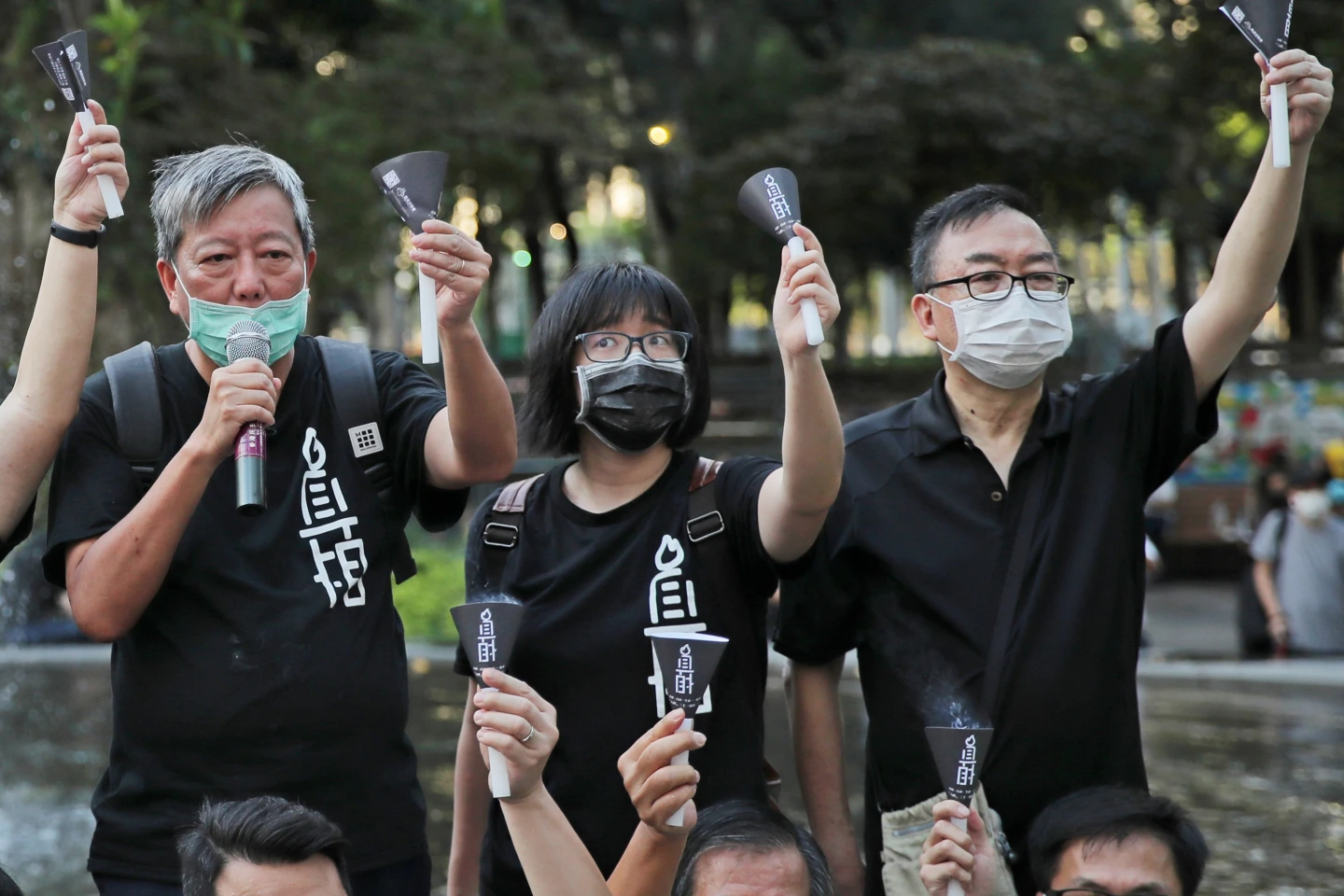
Verdict against former Tiananmen vigil organizers
A Hong Kong court convicted two former organizers of the city’s annual Tiananmen commemorations under the national security law imposed by Beijing. Lee Cheuk-yan and Chow Hang-tung were found guilty of inciting subversion.
The two activists were former leaders of the Hong Kong Alliance in Support of Patriotic Democratic Movements of China. The organization had organized annual candlelight vigils commemorating victims of the 1989 Tiananmen crackdown for decades.
Specifically, prosecutors argued that the activists’ calls to end one-party rule constituted an attempt to undermine China’s political system. However, the defendants maintained that their activities promoted democracy and peaceful political reform rather than the violent overthrow of the government.
The case is particularly significant because the annual vigil had become one of the most visible public commemorations of Tiananmen in Chinese territory. Authorities prohibited the gathering in 2020, shortly before the national security law came into effect.
National security law and official positions
The charges were brought in 2021 under the national security framework introduced by Beijing in Hong Kong. The law has been used extensively against figures associated with the territory’s pro-democracy movement since its implementation.
Lee and Chow face a maximum sentence of 10 years in prison. A third former Alliance leader, Albert Ho, previously pleaded guilty. The organization itself was also found guilty in the case. Sentencing for the defendants is expected at a later stage.
Meanwhile, Hong Kong authorities defended the verdict as necessary to protect national security. Chief Executive John Lee argued that the Alliance had sought to generate opposition toward the Chinese Communist Party and the central government.
However, international observers have criticized the ruling. The United Kingdom and other international actors have expressed concern that peaceful forms of political expression and commemoration are increasingly being treated as security threats.
Implications for Hong Kong’s political and legal system
The ruling could further restrict the space available for civil society organizations in Hong Kong. Moreover, the case demonstrates how the national security framework can be applied to political speech, organizational activities and public commemorations.
The development also raises questions about the evolution of Hong Kong’s autonomy under the “one country, two systems” framework. Before the recent political changes, the territory maintained broader civil and political freedoms than mainland China, including the ability to publicly commemorate Tiananmen.
Consequently, the verdict may reinforce the broader transformation of Hong Kong’s political environment since the 2019 protests. Numerous civil society organizations have dissolved, while prominent pro-democracy activists have been arrested or imprisoned under national security legislation.
Therefore, the case will remain relevant beyond the individual defendants. Its consequences may influence how political expression, historical memory and civil society activities are regulated in Hong Kong in the coming years.
International Relevance
The news has a high international relevance because it concerns the implementation of China’s national security framework in Hong Kong and its consequences for political freedoms, civil society and human rights. The case also provides an important indicator of how Beijing’s approach to governance in the territory continues to evolve.
For the OGU, the note is particularly relevant because it allows analysis of the relationship between human rights, national security, political institutions, freedom of expression and the “one country, two systems” framework. Furthermore, the international criticism surrounding the verdict highlights the tensions between domestic security legislation and international expectations regarding civil and political rights. The case therefore offers an important perspective on Hong Kong’s political transformation and its broader implications for China’s relations with Western governments and international institutions.
Reference / Referencia: Associated Press. (2026, August 21). 2 organizers of Hong Kong’s Tiananmen vigils convicted in national security case. AP News — Original article