
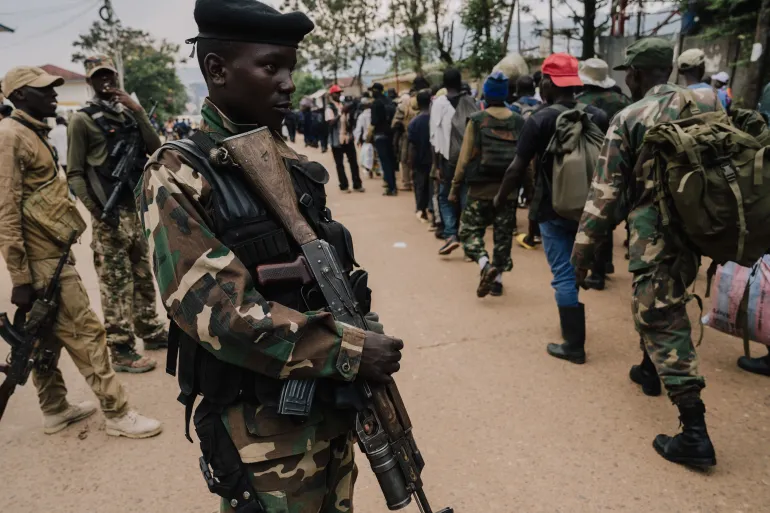
The United States Department of the Treasury has imposed targeted sanctions on Rwandan businessmen and mining corporations. Accused of financing the M23 rebellion in the eastern Democratic Republic of the Congo (DRC) through the illicit smuggling of conflict minerals. The punitive measures specifically penalize Jean Malic Kalima and Bosco Kayobotsi, the top executives of Gasabo Gold Refinery Ltd. Alongside four Rwanda-based mining and processing firms. According to US officials, the M23 insurgency actively plunders the DRC’s vast mineral resources—such as coltan. To purchase weaponry, pay combatants, and sustain a violent campaign that has triggered a severe humanitarian crisis. While United Nations experts and independent watchdogs like Global Witness have documented large-scale mineral flows from rebel-held Congolese territory into Rwanda’s refining supply chains. Rwandan Foreign Minister Olivier Nduhungirehe dismissed the US sanctions as biased and unjustified, arguing that selective blame fails to address the root causes of regional instability.
The diplomatic actions have drawn starkly different reactions across the African Great Lakes region. In the DRC, both the government and local citizens welcomed the sanctions. As a long-overdue international validation of their claims that Kigali acts as a middleman for stolen resources. Kinshasa officials pointed out the contradiction of Rwanda possessing extensive mineral refining infrastructure despite minimal domestic production, accusing its neighbor of sponsoring systemic theft. Conversely, the M23 rebel group denies profiting from the mineral trade, claiming they only provide security for independent local miners. While accusing the Congolese government of leveraging trafficking allegations to mask its own military failures. Local economists caution that while the shifting stance from Washington is notable, external restrictions. Cannot replace the need for domestic leadership and accountability to resolve an economic war that has devastated the eastern DRC for three decades.
In conclusion, the imposition of these US sanctions underscores the critical role that conflict minerals play in driving and sustaining armed insurgencies in Central Africa. By target-locking the economic pipeline that transforms smuggled resources into military financing international authorities. Are shifting from purely diplomatic appeals to direct financial warfare against the networks enabling the M23 rebellion. Ultimately, while these economic penalties represent a significant step toward disrupting state-sponsored resource exploitation. Achieving lasting peace in the region will depend on comprehensive regional accountability. And the establishment of a fully transparent, legitimate mining sector that benefits the Congolese populace rather than proxy militias.
Reference
Al Jazeera Staff. (2026, July 6). How conflict minerals fuel war in eastern DR Congo amid US sanctions. Al Jazeera. https://www.aljazeera.com/news/2026/7/6/us-sanctions-target-rwandan-firms-linked-to-conflict-minerals-funding-m23