
A Glacier Collapse, Not a Dam Failure
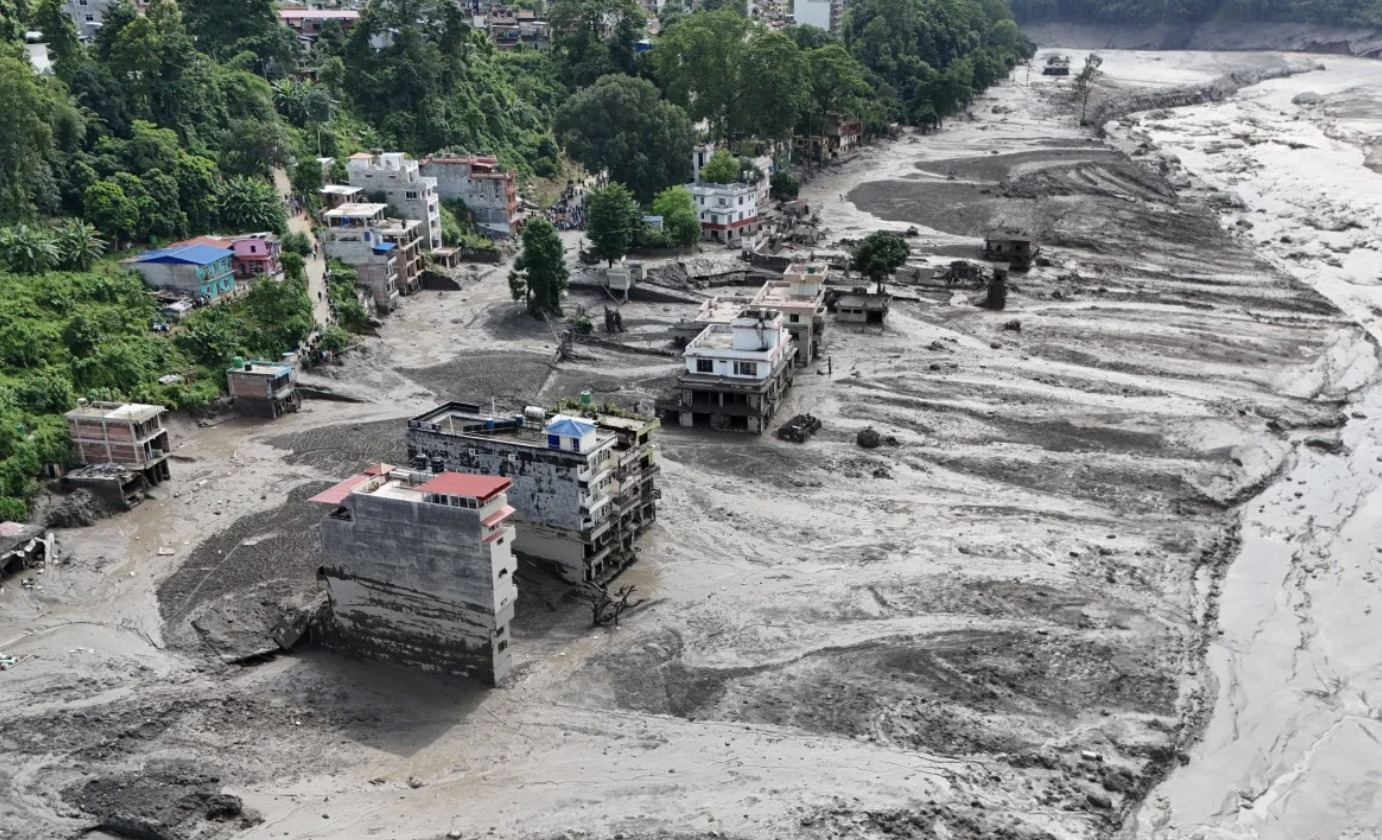
Scientific analysis determined that the deadly border flood began with a glacier collapse on Nepal’s side of the Himalayas. Satellite images placed the failure near Langtang Lirung peak rather than Chinese infrastructure in Tibet. Initial analysis indicated that a large ice mass fell from approximately 5,200 metres. It dropped about 1.2 kilometres before ice and rock entered a river, producing a destructive debris flow. China’s Ministry of Natural Resources later confirmed the Nepalese origin.
Although the location became clear, scientists still do not know exactly what caused the glacier to fail. Strong impacts registered on seismographs as a magnitude 5.2 tremor, encouraging early earthquake theories. Clearer imagery suggested that the bedrock beneath the glacier may also have collapsed. Researchers noted that similar mountain failures have occurred elsewhere in the Himalayas, including India’s Chamoli disaster in 2021.
Misinformation Spreads Online
Early uncertainty created space for claims that a Chinese dam or large construction projects had caused the flood. Nepal Correspondence described the event as a deliberate ecological disaster linked to Chinese building activity. Journalist Tunku Varadarajan also blamed China in a broad social-media statement. These accusations continued even after authorities in Beijing and Kathmandu accepted the glacier-collapse analysis.
Despite acknowledging a natural trigger, Indian commentator Brahma Chellaney later argued that Chinese hydrological projects had worsened the damage. He connected the disaster to China’s planned Yarlung Tsangpo dam and described that project as dangerous. However, the scientific evidence presented in the article located the glacier failure inside Nepal. The episode therefore developed into a wider online information battle about China’s regional activities.
Warnings and Future Hazards
Debate later shifted toward whether Nepal received adequate warning from the Tibetan side. Nepal’s disaster authority reportedly learned about the flood only after it had passed through Gyirong Port. Chinese researcher Ouyang Chaojun said the debris travelled at 40 to 50 metres per second. It reached the border crossing in roughly seven minutes, leaving almost no time for evacuation. Hydrologist Hannah Cloke said warnings near such a flood’s source are exceptionally difficult.
Looking ahead, scientists warned that warming may increase the likelihood of glacier failures, thawing permafrost, and dangerous meltwater runoff. They did not conclude that climate change directly caused this collapse. Several slopes became unstable after the mudslide, making continued monitoring essential. Authorities were also watching a new barrier lake upstream from Gyirong containing water equivalent to about 1,000 Olympic swimming pools.
References
Bela, V. (2026, August 28). How the Nepal flash flood unleashed a wave of anti-China misinformation. South China Morning Post. https://www.scmp.com/news/china/science/article/3365633/how-nepal-flash-flood-unleashed-wave-anti-china-misinformation