
Historical Context of Zimbabwe’s Political System
Initially, Zimbabwe’s democracy developed after independence in 1980, when majority rule replaced colonial governance that had restricted political and economic rights for Black citizens.
Subsequently, the ruling party ZANU-PF remained dominant for decades, governing under leaders such as Robert Mugabe and later Emmerson Mnangagwa.
However, political competition gradually weakened as state institutions, security forces, and patronage networks reinforced ruling party control.
Consequently, Zimbabwe evolved into a hybrid political system combining elections with authoritarian practices and limited accountability.
Structural Weaknesses in Democratic Governance
First, opposition parties and civil society organizations face severe institutional disadvantages, limiting their capacity to challenge government authority.
Meanwhile, continued militarization of politics constrains democratic accountability and influences political outcomes.
Furthermore, corruption has expanded within state structures, weakening rule of law and undermining public trust in government institutions.
As a result, political participation exists formally through elections but operates within an uneven and restrictive political environment.
Electoral Politics and Limited Democratic Competition
Although elections occur regularly, many results remain contested due to accusations of intimidation, patronage politics, and military influence.
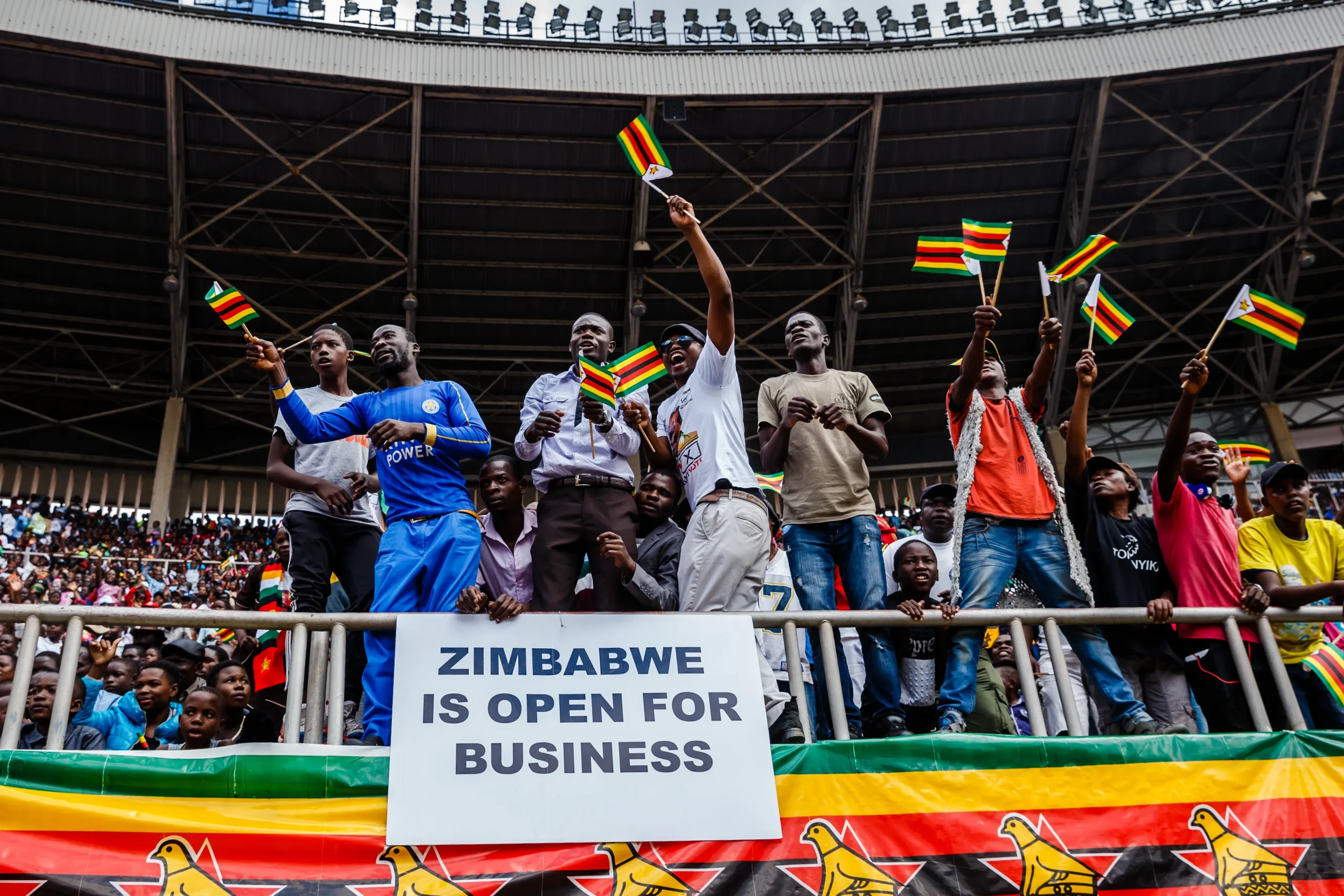
Nevertheless, citizens continue voting despite repression, demonstrating persistent civic engagement and belief in electoral participation.
Simultaneously, opposition parties participate in elections while criticizing structural inequalities in the political playing field.
Role of Civil Society and External Actors
Domestically, civil society organizations provide voter education, advocate for constitutional rights, and monitor political developments.
In parallel, international actors support democratic initiatives through financial assistance and diplomatic pressure.
For example, sanctions and financial restrictions have targeted ruling elites accused of corruption and human rights violations.
However, government leaders often portray sanctions as the primary cause of economic hardship, reinforcing nationalist narratives.
Limits of Traditional Democracy Promotion
Despite these interventions, diplomatic pressure and sanctions have produced mixed results in encouraging democratic reform.
Moreover, geopolitical changes and declining global support for democracy complicate efforts to influence Zimbabwe’s political trajectory.
Proposed Interventions for Democratic Strengthening
Therefore, a multidimensional strategy is recommended to strengthen democratic accountability and institutional resilience.
First, increased international economic engagement and trade relations could create incentives for governance reforms.
Second, gradual adjustments in foreign aid policies may encourage transparency and discourage corruption.
Third, Zimbabwe’s diaspora can play an important role by advocating for human rights exposing corruption internationally.
Finally, sustained investment in independent media and civil society organizations could strengthen democratic participation and oversight.
Toward Long-Term Democratic Resilience
Ultimately, improving democracy requires coordinated domestic activism and international engagement focused on accountability, economic opportunity, and institutional reform.
Accordingly, strengthening civic institutions and fostering inclusive political participation remain central to addressing Zimbabwe’s democratic vulnerabilities.
Source:
Dendere, C. (2026, March 6). Interventions to address democratic frailties in Zimbabwe. Brookings Institution. https://www.brookings.edu/wp-content/uploads/2026/03/INTERVENTIONS-TO-ADDRESS-DEMOCRATIC-FRAILTIES-IN-ZIMBABWE.pdf