
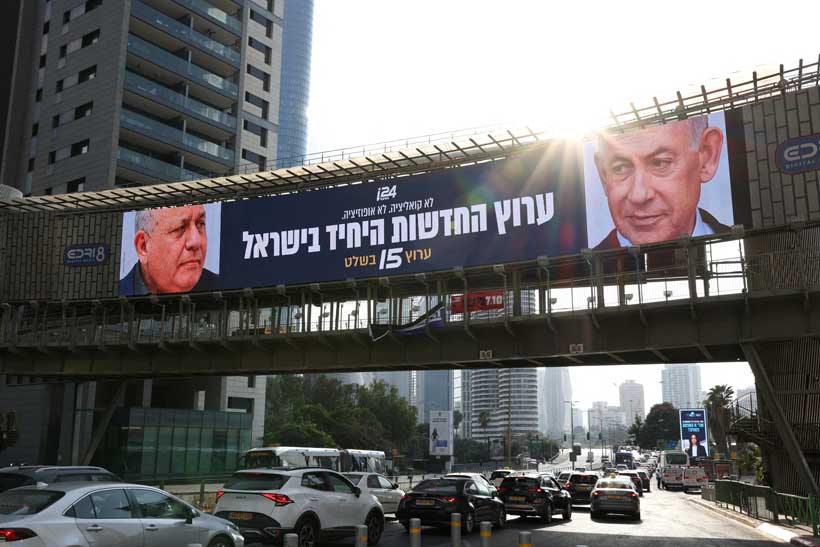
China does not publicly support a specific candidate in Israel’s elections. However, according to Dr. Nadia Helmy’s analysis in Modern Diplomacy, Chinese tink tanks may view Benjamin Netanyahu’s departure as an opportunity to improve relations with Israel and reduce tensions in the Middle East. Beijing’s main concerns are economic stability, regional security, and its competition with the United States.
China’s Economic and Technological Interests
China has invested in Israeli infrastructure, including ports and railways, and has developed technological partnerships with the country. Beijing wants to protect these investments and maintain access to regional trade routes.
However, U.S. pressure on Israel to restrict Chinese involvement in strategic infrastructure and technology has complicated these relations. China would therefore prefer an Israeli government more willing to preserve economic cooperation with Beijing.
The Impact of the Gaza War
Relations between China and Israel have become more strained since the Gaza war began in October 2023. China has called for a ceasefire and supported the establishment of a Palestinian state, while criticizing Israeli military actions. Netanyahu’s government, in turn, has accused Beijing of contributing to Israel’s international isolation.
The article argues that China would benefit from an Israeli government more inclined to pursue diplomacy and reduce regional tensions. Continued conflict threatens Chinese investments, energy supplies, and trade routes connected to the Red Sea and the Eastern Mediterranean.
Netanyahu’s Political Future and Possible Alternatives
The author suggests that Chinese analysts may view opposition figures and potential alternative coalitions, including those associated with Naftali Bennett, Yair Lapid, and Gadi Eisenkot, as possible partners for a less confrontational relationship.
A change in government would not necessarily shift Israel away from its close alliance with Washington. Instead, Beijing would hope for a more pragmatic Israeli foreign policy and fewer direct disputes with China.
The Wider U.S.–China Rivalry
Israel has become another arena for competition between Washington and Beijing. The United States has pressed Israel to limit Chinese involvement in sensitive sectors, including port infrastructure and telecommunications networks such as Huawei’s 5G technology.
The article also argues that China sees Israel’s diplomatic isolation as an opportunity to strengthen its own international message, particularly among countries in the Global South.
In conclusion, China’s preferred outcome is not necessarily an Israeli government aligned with Beijing, but one that reduces regional tensions and maintains room for economic cooperation. A change in Israeli leadership could offer China an opportunity to protect its investments, trade routes, and regional interests while managing its broader rivalry with the United States.
Helmy, N. (2026, 24 de octubre). Israel’s Elections: Who Does China Want to Win, and What Is at Stake for Beijing? Modern Diplomacy. Israel’s Elections: Who Does China Want to Win, and What Is at Stake for Beijing? https://moderndiplomacy.eu/2026/10/24/israels-elections-who-does-china-want-to-win-and-what-is-at-stake-for-beijing/