
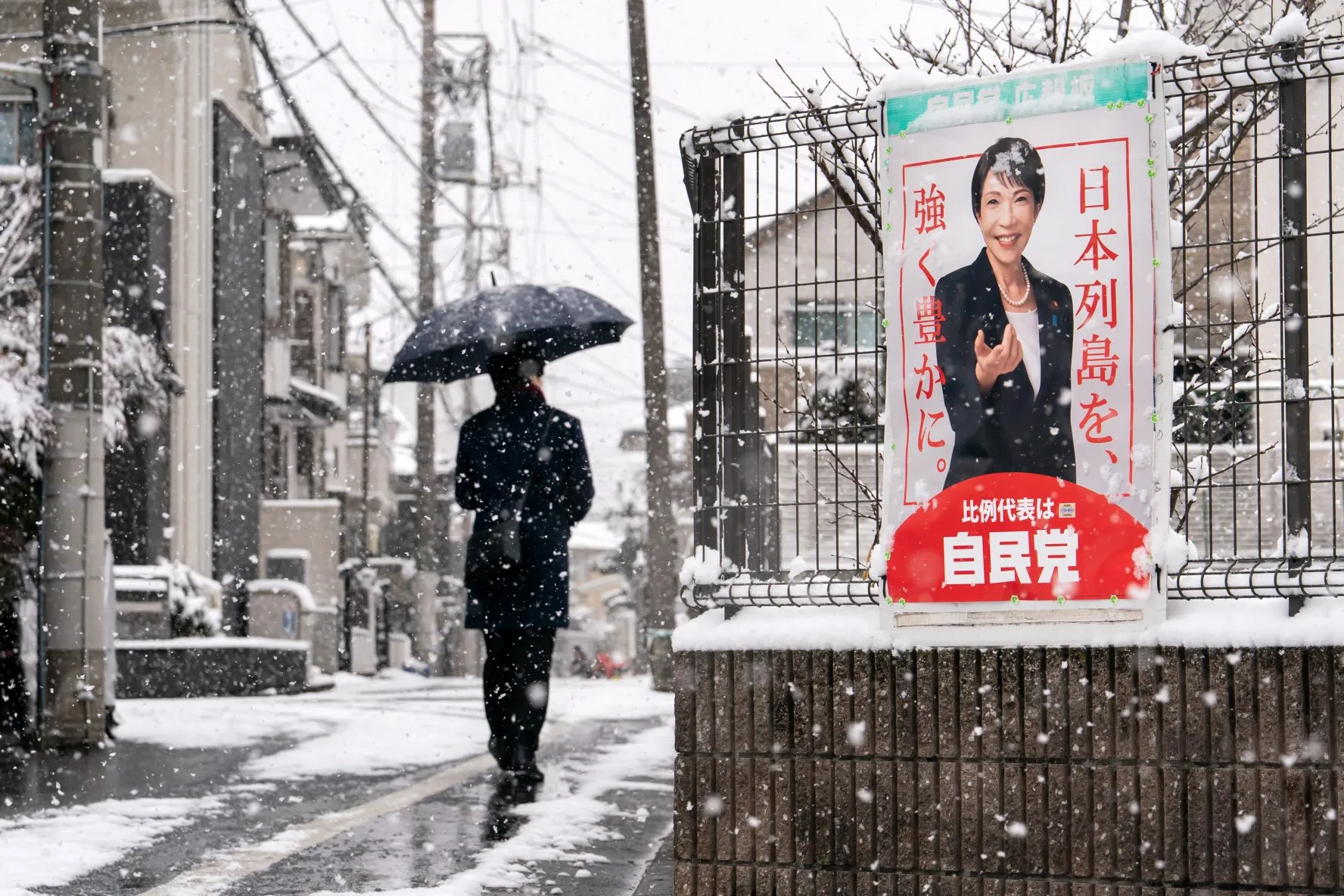
Japan’s Election Surprise
Japan’s recent Lower House election shocked many observers. Prime Minister Sanae Takaichi called a snap election only three months after taking office.
Unexpectedly, her Liberal Democratic Party (LDP) won a commanding supermajority with 316 seats.
Because of this result, the LDP-led coalition now holds 352 of 465 seats. This marked the largest victory for the party since its founding over seven decades ago.
High-Stakes Political Gambit
Just weeks before the vote, Takaichi took bold risks. She dissolved the lower house knowing her leadership rating hovered near 70%.
Meanwhile, opponents united into a new Centrist Reform Alliance (CRA) to challenge conservative dominance.
Still, shifting alliances and competition among opposition parties diluted their impact. In particular, rival parties sometimes competed against each other within the same district.
Voter Dynamics and Youth Impact
Takaichi drew support from traditional conservative voters who had drifted away. Importantly, many independent and younger voters also turned out for her.
By contrast, the CRA lost two-third of its previous seats. Thus, the election revealed continuing volatility in Japanese voter preferences.
Domestic Policy Shifts Ahead
This victory gives Takaichi strong control over domestic policymaking. She now can pursue fiscal and economic strategies distinct from previous leaders.
Unlike Abe’s era of repeated tax increases, she campaigned to freeze the food consumption tax for two years. She also plans broader fiscal spending to ease living costs and spark growth.
However, markets remain wary due to Japan’s debt at roughly 230% of GDP. Consequently, balancing fiscal ambition and debt sustainability will be difficult.
Security and Industrial Focus
Takaichi’s economic plans merge security concerns with industrial policy. She identifies defense industry investment as part of broader economic strategy.
In addition, she emphasizes “crisis management” spending targeted at strategic sectors. This blend of economics and security reflects Japan’s changing global context.
Diplomatic Implications
Internationally, this electoral outcome matters. A strong mandate enhances Takaichi’s standing ahead of upcoming summit meetings abroad.
Notably, her visit to Washington and Trump’s trip to Beijing loomed large. Despite past Chinese attempts at pressure, her resolve hardened support, not weakened it.
This dynamic highlights limits of coercion in a resilient democracy. Still, Tokyo-Beijing relations may remain tense due to strategic disagreements.
Looking Forward
With a secure majority, Takaichi must now deliver policy results. Public expectations for tangible improvements remain high.
Her challenge will be balancing economic relief, fiscal discipline, and diplomatic strategy. Success could reshape Japan’s political, economic, and foreign policy direction in the years ahead.
Source:
Solís, M. (2026, February 10). Japan’s thunderbolt election: Takaichi resets politics, economics, and diplomacy. Brookings Institution. https://www.brookings.edu/articles/japans-thunderbolt-election-takaichi-resets-politics-economics-and-diplomacy/